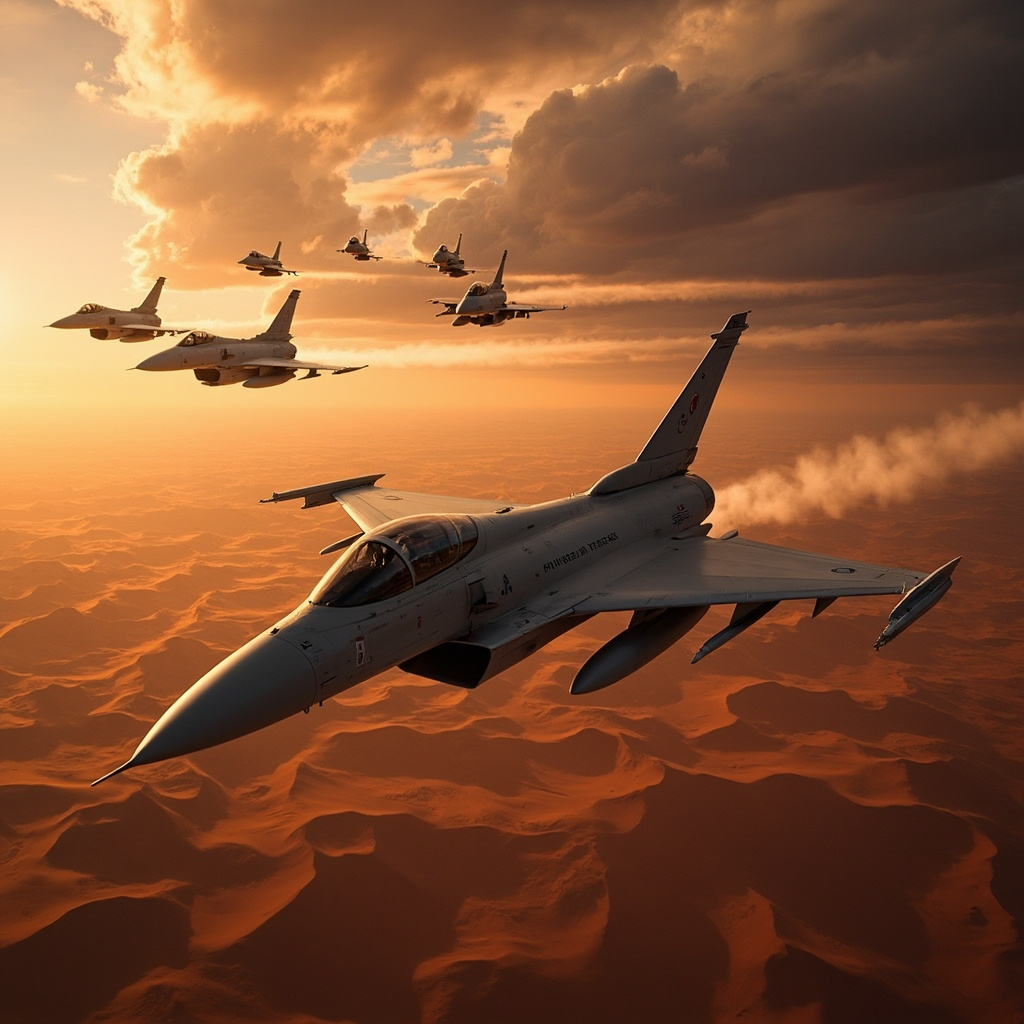
The revelation that Saudi Arabia secretly struck Iranian territory in late March 2026 is the most significant undisclosed fact to emerge from this war. It changes the geography of the conflict, the dynamics of the ceasefire, and the calculus of every party now engaged in diplomatic maneuvering.
Key Developments
Reuters, citing four officials, reported on May 12–13 that the Saudi Air Force launched covert airstrikes against Iranian targets in retaliation for Iranian attacks on Saudi Arabia — marking the first time Riyadh is known to have directly attacked Iranian soil. The operations were conducted without public acknowledgment. Neither side confirmed them. An understanding to de-escalate followed, transmitted through backchannels and underwritten by Saudi threats of further strikes.
This is not a footnote. It is the story.
Consider what it means. For years, the Iran-Saudi rivalry operated through proxies — Yemen’s Houthis, Iraq’s militias, Syria’s battlefield geometry. Both governments built deterrence by delegation. The March 2026 strikes represent a deliberate break from that architecture. Riyadh chose direct kinetic action and then chose to keep it secret. The first choice reflects genuine escalation fatigue after months of Houthi barrages and Iranian ballistic missile launches against Saudi infrastructure. The second choice reflects something equally important: neither side wanted a publiccasus belli.
The secrecy also tells us the diplomatic environment was more fragile than anyone admitted. A public Saudi strike on Iran would have required a public Iranian response. Silence allowed both governments to claim de-escalation while preserving domestic political space. It is, in its own way, a form of deniable diplomacy — the kind small states are assumed to practice, not G20 economies with armies of professional communicators.
For Washington, the revelation complicates an already difficult negotiating environment. US-Iran talks remain stalled. A bipartisan congressional letter signed by 52 senators and 177 House members arrived at the White House on May 14, demanding that any Iran deal prohibit any path to uranium enrichment — a formulation that Pakistani mediators have been working to preserve. The Senate simultaneously defeated, 49–50, a War Powers Resolution that would have required congressional approval for continued Iran operations. The margin was secured by three Republicans — Murkowski, Collins, and Paul — voting with Democrats, and by Pennsylvania Democrat John Fetterman crossing to preserve the administration’s position.
Add to this the extraordinary session of GCC interior ministers in Riyadh on May 14, convened to coordinate a unified Gulf response to the foiled IRGC infiltration of Kuwait’s Bubiyan Island. The ministers called for intensified security coordination within 48 hours of Kuwait’s formal summoning of the Iranian ambassador. The institutional mobilization — the fastest GCC response since the April ceasefire — reflects Gulf states’ calculation that the threat is not from drones alone but from a coordinated Iranian network operating across multiple fronts simultaneously.
What comes next is a test of whether the secret strikes produced durable restraint or merely temporary quiet. The ceasefire along the Iran-Israel line is holding, barely. The US-Iran talks show no signs of imminent breakthrough. The congressional pressure limits any phased compromise that leaves enrichment intact. And now, the exposure of Saudi Arabia’s direct involvement raises a question no one in Washington wants to answer publicly: what happens if Riyadh decides its interests require a second round — and this time, the Iranians do not stay quiet about it?
The Hormuz shipping lane remains effectively closed. Approximately 2,000 vessels carrying 20,000 seafarers are stranded in the area. Brent crude has eased to $105.87 per barrel, a marginal improvement, but the market has absorbed the reality that the disruption will not be resolved quickly. Energy traders are pricing a long disruption, not a short one.
For now, the war is paused, not ended. The secret Saudi strikes are a reminder that even paused conflicts have active chapters the public does not see — and that diplomacy conducted in silence is often the most consequential diplomacy of all.
