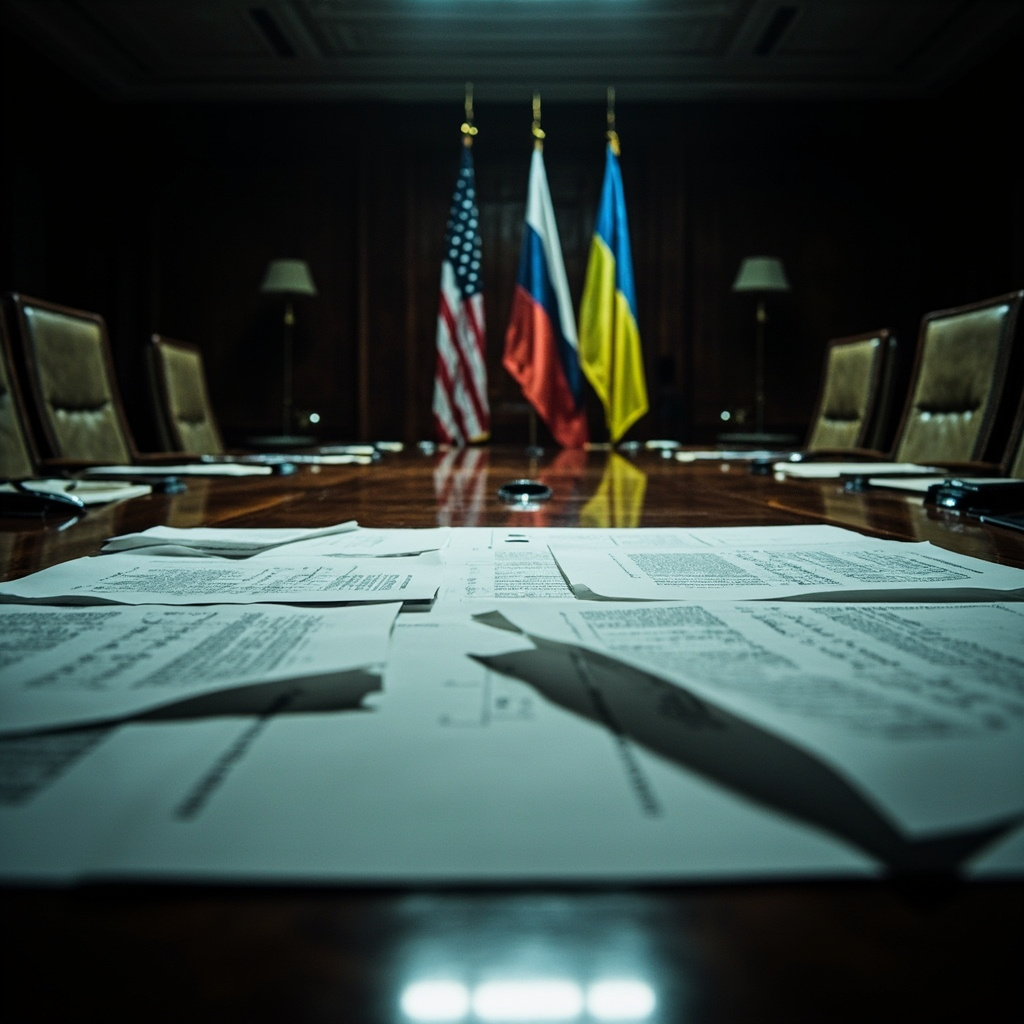
The fragile US-Iran ceasefire is fraying at the edges as Iran signals it may reject the terms of a proposed 14-point memorandum of understanding, while President Donald Trump warns that a much higher level and intensity bombing campaign awaits if Tehran does not sign — and sign fast. This is a developing story.
Diplomatic Talks on the Brink
The United States submitted a comprehensive ceasefire proposal to Iran on Thursday, May 7, 2026 — a 14-point memorandum of understanding that Washington hoped would form the framework for a permanent end to the two-month conflict that has engulfed the Middle East, paralyzed global oil markets, and sent shockwaves through the world economy. Secretary of State Marco Rubio said the proposal was “serious” and “comprehensive,” designed to address not only the immediate Hormuz strait crisis but also Iran’s nuclear program, its missile arsenal, and the broader regional proxy network activated against US and allied targets.
Iran’s Foreign Minister Abbas Araghchi, speaking after a critical meeting with Chinese counterpart Wang Yi in Beijing on Wednesday, delivered a blunt rejection. “Every time a diplomatic solution is on the table, the US opts for a reckless military adventure,” Araghchi posted on X. “Whatever the causes, the outcome is the same: Iranians never bow to pressure and diplomacy is always the victim.” He also stated that Iran’s ballistic missile stockpiles and launcher capacity had not only been repaired and restocked during the pause in hostilities, but actively expanded — a direct signal that Tehran is preparing for a potential resumption of large-scale conflict.
Ceasefire Collapses: US and Iranian Forces Exchange Fire in Strait of Hormuz
Early Friday morning, May 8, 2026, Iranian forces launched a coordinated attack on three US Navy warships transiting the Strait of Hormuz. US Central Command described the assault as “unprovoked,” deploying multiple missiles, drones, and small attack boats. US forces responded with overwhelming firepower, destroying incoming threats and striking Iranian military facilities on the coasts of Bandar Khamir, Sirik, and Qeshm Island.
Iran’s top military command accused the US of carrying out “aerial attacks” on several coastal areas and claimed it had inflicted “significant damage” on US military vessels — a version of events the Pentagon immediately disputed as “categorically false.” President Trump confirmed the US had destroyed multiple Iranian small boats, missiles, and drones, saying “great damage” was done to the attackers, and issued a stark warning: “Just like we knocked them out again today, we’ll knock them out a lot harder, and a lot more violently, in the future, if they don’t get their Deal signed, FAST!”
“Every time a diplomatic solution is on the table, the US opts for a reckless military adventure. Whatever the causes, the outcome is the same: Iranians never bow to pressure and diplomacy is always the victim.” — Abbas Araghchi, Iranian Foreign Minister, X, May 8, 2026
The Stakes: 1,500 Vessels, 22,500 Mariners Trapped Inside Persian Gulf
General Dan Caine, Chairman of the Joint Chiefs of Staff, said more than 1,500 vessels carrying approximately 22,500 mariners remain trapped inside the Persian Gulf — unable to exit because of the Iranian blockade and active conflict zone. The trapped ships include oil tankers, cargo vessels, liquified natural gas carriers, and container ships, many with Filipino, Indian, and Indonesian crews aboard. The International Maritime Organization has issued urgent distress calls, warning that food, water, and medical supplies aboard some vessels are running low.
Before the war, approximately 21 million barrels of oil per day transited the strait — roughly a fifth of global oil supply. With the waterway effectively closed since late February, oil prices have fluctuated wildly. AAA reported the average price for a gallon of regular gasoline in the United States at $4.48, with further spikes expected if the current round of fighting escalates.
China’s Role: Beijing Presses Tehran as Trump Trip Nears
Chinese Foreign Minister Wang Yi’s meeting with Araghchi in Beijing placed China at the center of the diplomatic equation. Wang told Araghchi that China was “deeply distressed” by the war, now in its third month, and called for a “comprehensive ceasefire.” Secretary of State Rubio, speaking in Rome, explicitly called on China to pressure Iran. “I hope the Chinese tell [Araghchi] what he needs to be told, and that is that what you were doing in the straits is causing you to be globally isolated,” Rubio told reporters.
Trump is scheduled to travel to China on May 14–15 to meet President Xi Jinping. The White House had hoped to arrive in Beijing with a signed interim deal in hand. That ambition now appears in serious doubt. Iranian hardliners in parliament have already dismissed the US proposal as a “wish list” — language that suggests Tehran’s leadership may be preparing the domestic political groundwork for a renewed intensification of the conflict.
“I hope the Chinese tell [Araghchi] what he needs to be told, and that is that what you were doing in the straits is causing you to be globally isolated.” — Secretary of State Marco Rubio, Rome, May 7, 2026
Escalation Calculus: Both Sides Hold Fire — For Now
The immediate military exchange appears to have ended without further escalation — for the moment. The UAE’s Ministry of Defence said its air defenses engaged two ballistic missiles and three drones launched by Iran on Friday, resulting in three “moderate injuries.” An Israeli intelligence source told the BBC there was “no Israeli involvement” in the latest attacks, intended to prevent the conflict from spreading to a second front. Iran’s parliament national security commission spokesperson Ebrahim Rezaei warned that Iran would “deliver a harsh and regret-inducing response” if the US did not “surrender and grant necessary conditions.”
Both sides have so far pulled back from all-out war. Trump declared the ceasefire still in place even as US forces were actively exchanging fire with Iranian vessels — a dissonance that reflects the administration’s dual-track strategy of negotiating hard while striking hard when provoked. With 1,500 ships stranded, oil markets on edge, and the US president warning of bombing at “a much higher level and intensity than it was before,” the next 72 hours will likely determine whether the US-Iran war ends at the negotiating table or returns to the skies over Tehran.