Venezuela Earthquake: Rescue Teams Race Against Time as Death Toll Tops 920
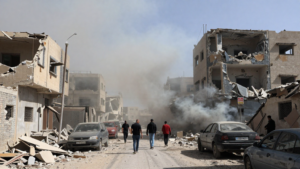
Venezuela faces a mounting humanitarian catastrophe as rescue teams dig through rubble for a third consecutive day following twin earthquakes that struck the nation’s northern coast, with the death toll climbing past 920 and officials warning the final count could far exceed early estimates. The first quake, a 7.2-magnitude tremor, struck at dawn on Thursday approximately 40 kilometers northeast of Caracas, followed hours later by a 7.5-magnitude aftershock that toppled structures already weakened by the initial impact. Entire neighborhoods in the Catia La Mar district were flattened, and the coastal city of La Guaira declared a state of emergency as hospitals overflowed with thousands of injured civilians.
The scope of destruction has overwhelmed local authorities. According to the United Nations Office for the Coordination of Humanitarian Affairs, more than 51,000 people remain unaccounted for as of Saturday, though officials caution that communication disruptions and damaged infrastructure have made accurate headcounts difficult. The International Federation of Red Cross and Red Crescent Societies said in a statement that its teams were racing against the clock as the critical 48-to-72-hour window for rescues narrows. “The earth is still shaking,” said María López, a spokesperson for the Venezuelan emergency management agency, in comments carried by Reuters. “We are operating around the clock, but we cannot do this alone.”
International Aid Arrives as Death Toll Mounts
World governments moved quickly to offer assistance as images of collapsed buildings and families sifting through debris circulated globally. The United States, which maintains limited diplomatic engagement with Caracas, issued a general license permitting humanitarian aid to flow through international organizations. Colombia and Brazil dispatched search-and-rescue teams equipped with seismic detection equipment, while Spain and France sent medical brigades to supplement overwhelmed local hospitals. The European Union pledged an initial emergency allocation of 5 million euros, and the World Health Organization activated its emergency medical teams protocol to coordinate incoming medical personnel.
Neighboring Trinidad and Tobago, which has historically had tense relations with Venezuela, opened its airspace to emergency medical evacuations and offered shelter to displaced Venezuelan nationals. “Whatever differences exist between our governments, the people of Venezuela are our neighbors, and in moments of crisis, humanity must come first,” said Dr. Keisha Mark, Trinidad and Tobago’s Minister of Health, in remarks to Caribbean news outlets.
Europe’s Record Heatwave Complicates Regional Response
The timing of the disaster has compounded an already strained regional capacity. Europe is enduring an unprecedented heatwave that has pushed temperatures to historic highs across the continent. Germany recorded its highest-ever temperature of 41.5 degrees Celsius on Saturday, surpassing the previous day’s record of 41.3 degrees, according to the German Weather Service. The Czech Republic also posted its highest-ever temperature, reaching 40.6 degrees north of Prague. Scientists from the World Meteorological Organization attributed the extreme heat to a persistent upper-level ridge that has stalled weather patterns across the continent for more than a week.
The extreme heat has forced several European countries to activate emergency health protocols, with hospitals preparing for a surge in heat-related illnesses. In Italy and Greece, wildfires have burned thousands of hectares of forest, diverting emergency response resources that might otherwise support international aid operations. The convergence of two major crises — the Venezuelan earthquake and Europe’s heat emergency — has tested the global humanitarian system’s ability to respond to simultaneous large-scale emergencies.
Diplomatic Fallout and What Comes Next
The disasters have also inserted themselves into broader geopolitical calculations. US Secretary of State Marco Rubio, wrapping up a visit to India on Saturday, addressed multiple international crises in a single press conference, a rare acknowledgment of the strain on American diplomatic capacity. “We are monitoring all of these situations simultaneously,” Rubio told reporters in New Delhi. “The United States must lead on multiple fronts, and we will not allow any single crisis to derail our attention from others.”
Venezuelan President Nicolás Maduro, in a televised address, thanked the international community for its pledges of assistance while appealing for calm. “Venezuela is strong, and Venezuela will recover,” Maduro said, though opposition leaders have questioned the government’s capacity to coordinate a response of this scale given years of economic collapse and infrastructure deterioration. The country’s healthcare system, already strained by chronic shortages of medicine and medical equipment, has been pushed to its limits, according to Médecins Sans Frontières, which said its teams in Caracas were working at maximum capacity.