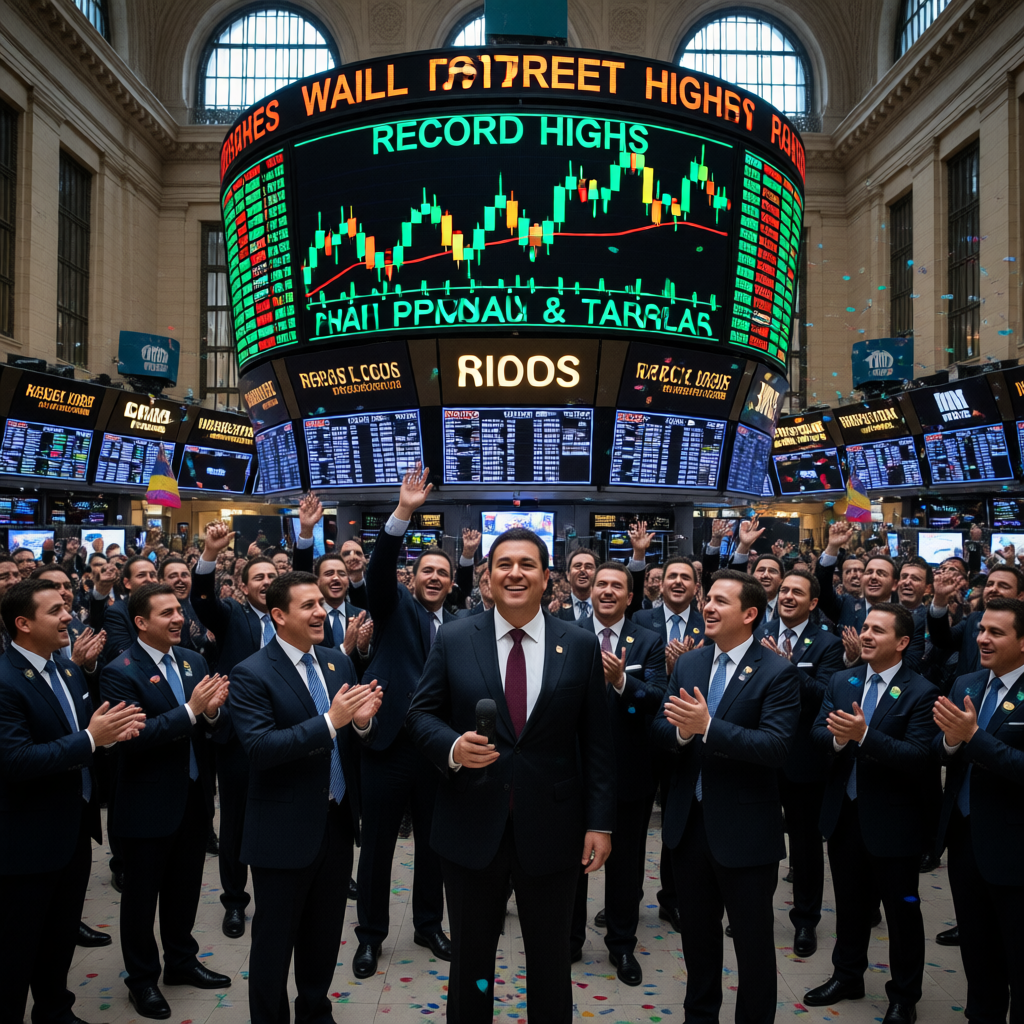
When Chair Kevin Warsh steps to the Federal Reserve podium at 2:30 p.m. Eastern on Wednesday, he will be reading the first Summary of Economic Projections of his tenure into a market that just took a 4.2 percent year-over-year inflation print — the highest in three years — and a 30-year Treasury auction that cleared at 4.84 percent. The policy decision itself is essentially a foregone conclusion: the FOMC will hold the target range at 3.50 to 3.75 percent for the fifth consecutive meeting. The real trade is the new dot plot, the language around “resolute,” and whether Warsh uses the press conference to ratify the market’s new reading of the path or to push back against it.
The May CPI Reset the Conversation
The Bureau of Labor Statistics reported on June 10 that the consumer price index rose 0.5 percent on the month and 4.2 percent on the year, the highest annual reading since April 2023 and well above the 3.8 percent April print. Core CPI, which strips out volatile food and energy, rose 0.2 percent on the month and 2.9 percent on the year — cooler than the headline but still sticky. The split matters. Headline inflation accelerated almost entirely on energy, with the energy index up 3.9 percent on the month and 23.5 percent on the year as gasoline and household utility bills caught up with the late-2025 crude move. Core commodities actually posted a 0.1 percent monthly decline. The Committee will read the same thing the market is reading: the energy shock is doing the headline damage, the underlying trend is still on a slow glide path to 2 percent, and a single print does not a regime change make.
Warsh’s First Dot Plot Will Set the Tone
Warsh inherits a Committee that is more fractured than the headline rate path suggests. At the April 28-29 meeting, Governor Stephen Miran dissented in favor of a 25-basis-point cut, and regional presidents Beth Hammack, Neel Kashkari, and Lorie Logan voted to hold but reportedly objected to language that left the door open to easing. The March SEP showed a 2026 median of two cuts; with another quarter without action and with energy-driven inflation pushing the headline back above 4 percent, several of those dots have likely moved. The center of gravity is what traders will dissect. A 2026 median of one cut would confirm a slower easing path and validate the recent backup in yields. A 2026 median of zero cuts would be a hawkish surprise. A wider dispersion of dots — with several officials wanting cuts and others holding steady — would confirm the April-meeting fractures and weaken the signal value of the median itself, which is arguably the most market-friendly outcome because it would let traders keep their optionality on both sides of the curve.
The 30-Year Auction Is the Other Tell
The Treasury’s $25 billion 30-year bond auction on June 11 cleared at 4.84 percent, the highest yield at a long-bond auction since November 2023, with a bid-to-cover of 2.41 — solid but not blowout. The tail of 1.6 basis points was uneventful, indirect bidders took 64.1 percent, and the primary dealer allotment was 19.8 percent, all consistent with a market that still wants duration at the right price. The signal to the Fed is the same one the bond market has been sending for two months: the term premium is widening because investors want compensation for the fiscal path, not because they expect runaway inflation. Warsh will have to decide whether to acknowledge the term premium explicitly, which would be a meaningful regime change, or to stick with the Powell-era framing that the long end is doing the Committee’s job for it. The first option is more honest and risks a hawkish reaction. The second keeps the dots-and-language consensus intact.
What the Market Is Now Pricing
Fed funds futures now imply 41 percent odds of a September cut, down from 56 percent a month ago. The 2-year Treasury yield closed Tuesday at 3.96 percent and the 10-year at 4.18 percent, and the 2s10s curve has flattened back to 22 basis points from 31 a month ago, a tell that the market is reading the inflation print as delay, not derail. CME FedWatch and the OIS strip are aligned on one cut this year, most likely September or October, with the December meeting as the backstop. The dovish tail has been compressed to about 18 percent.
What to Watch at 2 p.m. and 2:30 p.m.
The statement drops at 2 p.m. Eastern, the projections and dot plot drop with it, and the press conference begins at 2:30. The market will parse three things in order. First, the 2026 median dot: one cut, zero cuts, or held at two. Second, the language: does “resolute” survive in the inflation paragraph, and does the description of economic activity get upgraded from “expanding at a solid pace” to something more enthusiastic given the May retail sales and June consumer confidence prints. Third, the press conference tone on the long end — specifically, whether Warsh reads the 30-year tail as term premium or fiscal sustainability. The first is benign. The second opens a debate the Fed has not had publicly since 2023. Either way, the macro story has not finished writing itself, and the next 90 minutes will set the tape for the rest of the summer.