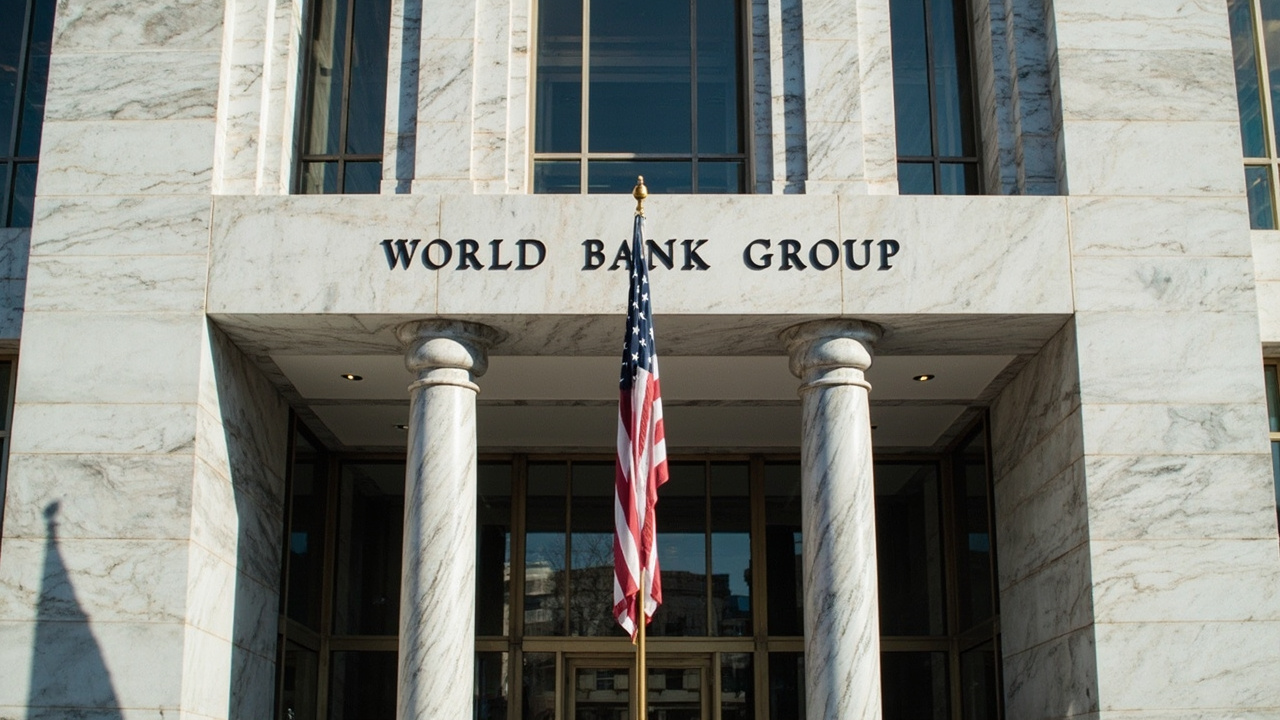
Global growth is forecast to slow to 2.5% in 2026 — the lowest rate since the onset of the COVID-19 pandemic — as the conflict in the Middle East disrupts energy markets, drives inflation higher, and tightens borrowing conditions worldwide, the World Bank warned in its latest Global Economic Prospects report released June 11.
A Decade of Progress Under Threat
The report, published from Washington, paints a stark picture for the year ahead. Global growth is expected to drop from 2.9% in 2025 to 2.5% in 2026, with forecasts for two-thirds of the world’s economies downgraded relative to January’s projections. Looking further out, growth is projected to recover only modestly to 2.8% in 2027 — still 0.4 percentage points below the decade-average recorded during the 2010s.
The closure of the Strait of Hormuz — the world’s most critical oil chokepoint — has been the primary driver of the deterioration. Brent crude oil is now projected to average $94 a barrel in 2026, a 36% increase over 2025 levels, assuming the most severe disruptions ease by July. If they do not, the outlook darkens considerably: the World Bank’s downside scenario projects global growth could fall to just 1.3% in 2026, with inflation rising to 4.4%.
Energy Shock Ripples Through Food and Inflation
The consequences extend well beyond the energy sector. Fertilizer prices are forecast to rise sharply this year, with direct knock-on effects for food prices globally. The FAO food price index has already reached its highest level since February 2023. Global inflation is now expected to climb to 4.0% in 2026, up substantially from 3.3% in 2025 — reversing a trend toward monetary easing that had defined policy from mid-2024 through early 2025.
Developing economies are bearing the heaviest burden. Growth in these markets is expected to drop to a post-pandemic low of 3.6% in 2026, down from 4.4% in 2025, before recovering to 4.2% in 2027. For the poorest nations — other than China and India — the report warns of nearly a decade of stalled progress in closing the per capita income gap with advanced economies by 2028.
World Bank Pledges $100 Billion Response
In response to the mounting crisis, the World Bank Group has pledged up to $100 billion in financing, guarantees, and private-sector solutions for affected countries over the next 15 months. President Ajay Banga described the immediate challenge as one of steadying the ship while preserving long-term reform momentum.
“Developing countries have faced a series of challenges over the last decade,” Banga said in the report’s foreword. “The impact differs by country, but the basic test is the same: protect people and preserve stability today, without giving up on growth and jobs tomorrow.”
Central Banks Face Diverging Paths
The World Bank’s findings arrive as major central banks confront radically different domestic conditions. The European Central Bank is widely expected to raise rates to 2.25% on June 11, defying the coordinated easing cycle that had characterized global monetary policy just twelve months earlier. The U.S. Federal Reserve, which holds its own decision on June 17, faces internal division with an 8-4 dissent risk over whether to hold at the current 3.50–3.75% range.
The Bank of Japan faces the prospect of raising rates primarily to defend the yen, while the Bank of England is expected to hold at 3.75%, with Governor Andrew Bailey publicly stating there is “no rush” to adjust. The Bank of Canada, which moved first on June 10, held at 2.25% as U.S. tariff uncertainty compounds the broader energy shock.
What Happens Next
The World Bank report makes clear that the window for containing the damage is narrowing. With energy markets acutely sensitive to further escalation in the Middle East, and inflation expectations becoming less anchored across both advanced and developing economies, the stakes for the next round of central bank decisions — and for international coordination on trade and energy policy — could hardly be higher.