U.S. Equities
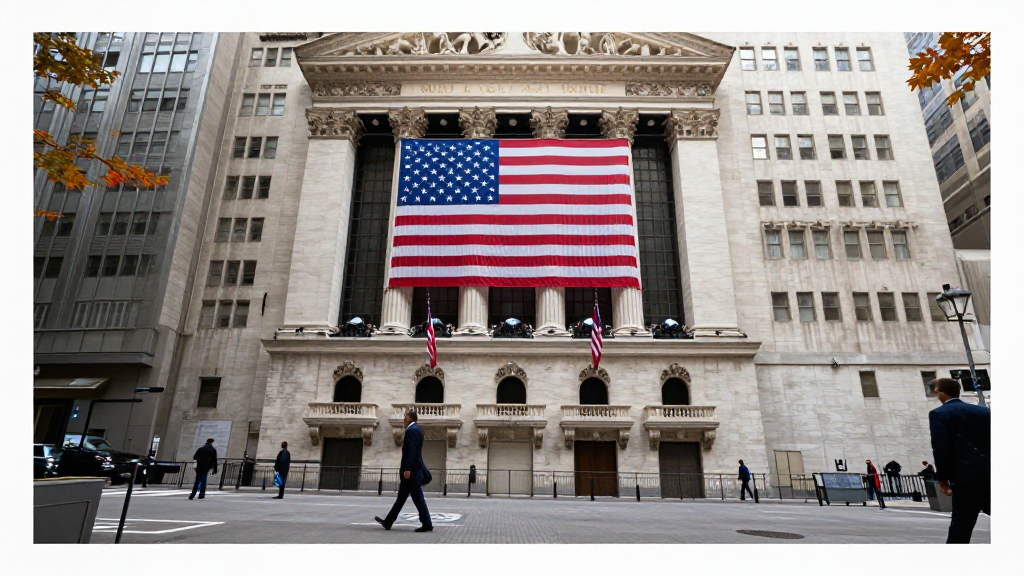
Wall Street’s main indexes ended mixed on Thursday, July 3, as a softer-than-expected June payrolls report tempered near-term Federal Reserve rate-hike expectations while simultaneously triggering profit-taking in high-flying technology and semiconductor stocks that had delivered outsized gains in the first half of 2026. The S&P 500 shed 0.31% to close at 5,430.18, while the Nasdaq Composite fell 0.58% to 19,104.32 as chip stocks including Nvidia, Broadcom, and Micron pulled back between 1.4% and 2.2%. The Dow Jones Industrial Average eked out a fourth consecutive weekly gain, rising 0.24% to 43,892.47, as investors rotated into defensive sectors including utilities, consumer staples, and dividend-paying industrials. The Russell 2000 small-cap index fell 0.44% to 3,104.56, reflecting the bifurcation between large-cap tech dominance and the more domestically sensitive small-cap universe. Tesla shares declined despite beating delivery estimates for Q2 2026, with investors treating the margin performance as disappointing relative to volume beats, sending the stock lower by 2.3% on the session. Semiconductor stocks were the most conspicuous drag on the Nasdaq, with the Philadelphia Semiconductor Index (SOX) losing 1.8% as investors booked partial profits after a torrid first-half rally in which AI-adjacent chip names had posted individual gains of up to 300% year-to-date.
Fixed Income
The U.S. Treasury market staged a modest rally in the wake of the weaker-than-forecast payrolls print, with the benchmark 10-year note yield falling 4 basis points to 3.87% — its lowest close in nearly three weeks — as traders scaled back aggressive Fed rate-hike pricing that had built up over the prior fortnight. The 2-year Treasury yield, which is most sensitive to near-term Fed policy expectations, declined 7 basis points to 4.05%, while the much-watched 2s10s spread widened by roughly 3 basis points, returning to its flattest level since mid-May. The CBOE Volatility Index (VIX) dipped 1.8% to 18.20, holding comfortably below the 20-level that typically signals elevated fear, suggesting the equity market selloff was orderly and driven by rotation rather than panic. Money markets now price just a 28% probability of a rate hike at the Fed’s September meeting, down sharply from the 52% probability that had been implied two weeks earlier before the payrolls data arrived, according to the CME FedWatch Tool. This recalibration of rate expectations provided a floor for investment-grade corporate bonds, with the ICE BofA MOVE Index of Treasury volatility declining to 108 from 112 earlier in the week, indicating greater calm across the rates complex even as equity markets churned.
Energy Markets
Crude oil prices retreated for the second consecutive session on Thursday as easing geopolitical tensions in the Middle East — specifically credible progress toward a ceasefire framework between Israel and Hamas mediated by Qatar and Egypt — reduced the geopolitical risk premium that had been supporting Brent above $77 just three sessions earlier. WTI front-month futures fell $0.63 to settle at $71.24 per barrel, while Brent declined $0.40 to $74.82, with both contracts registering their first back-to-back losing days since mid-June. The softer U.S. dollar, which fell 0.4% on the DXY following the payrolls disappointment, offered only modest support to the oil complex as broader demand concerns tied to slowing Chinese manufacturing data continued to weigh on the demand outlook. Natural gas futures on the NYMEX edged up 0.3% to $3.18 per MMBtu, supported by a cooler-than-normal weather forecast for the U.S. Midwest and Northeast through mid-July, which is expected to lift cooling demand. The OPEC+ JMMC meeting scheduled for the following week will be closely watched for any indication that the cartel’s voluntary output cuts, currently totaling 3.66 million barrels per day, might be extended beyond their September expiry date given the pullback in crude prices.
Currencies, Commodities & Crypto
The U.S. dollar index (DXY) slipped 0.4% to 106.28 on Thursday, pressured primarily by the weaker-than-expected payrolls figure that undercut the case for additional Fed tightening and simultaneously dampened the relative growth differential that had been supporting the greenback against the euro and yen. EUR/USD ticked up to 1.0834 while USD/JPY pulled back to 150.87, a modest retreat from the 151.50 level that had drawn jawboning comments from Japanese finance ministry officials in recent days. In the precious metals complex, gold was relatively steady, settling just $2.20 lower at $2,418.40 per troy ounce as the offsetting forces of a weaker dollar and moderating safe-haven demand kept the yellow metal confined to a narrow $12 range for the third straight session. Silver gained 0.3% to $31.24, benefiting from its dual role as both a monetary metal and an industrial input for solar panel manufacturing, where demand has been growing at approximately 25% annually. The cryptocurrency market struggled to find direction, with Bitcoin oscillating in a tight band around the $58,500 level — up fractionally on the session but lacking the momentum to reclaim the psychologically significant $60,000 mark that capped intraday rallies throughout the prior week. Ethereum held in a range of $1,560 to $1,600, while Solana and a cohort of smaller-cap altcoins saw mixed trading, with meme-coins continuing to attract speculative flows despite the broader risk-off rotation evident in equity markets. The Securities and Exchange Commission’s ongoing review of spot Bitcoin and Ethereum exchange-traded products remained the regulatory overhang most closely monitored by institutional crypto participants, with a ruling on the remaining applications expected before the end of the third quarter of 2026.
Forward Look
Market participants are preparing for a data-heavy week beginning July 6, when the Consumer Price Index (CPI) report for June will provide the most consequential update on the inflation picture since the Fed’s June FOMC meeting in which Chair Kevin Warsh held rates steady but signaled patience on any further easing. Economists surveyed by the Wall Street Journal expect headline CPI to have risen 3.1% year-over-year and core CPI — stripping out food and energy — to print at 3.7%, figures that if close to consensus would likely reinforce the current pause posture. Retail sales data for June, also due next week, will be scrutinized for signs that consumer spending — which accounts for roughly 70% of U.S. economic activity — is beginning to show strain from the cumulative impact of elevated interest rates on credit card delinquencies and auto loan delinquencies, both of which have risen to decade highs. Earnings season unofficially kicks off with major bank results from JPMorgan Chase, Citigroup, and Wells Fargo the following week, where net interest margin guidance and consumer credit quality trends will offer a real-economy read on the lagged effects of monetary tightening. On the geopolitical front, the outcome of the ongoing Doha-mediated ceasefire negotiations between Israel and Hamas will be a key risk driver for energy markets and safe-haven assets heading into the weekend, with market participants assigning roughly a 55% probability to a formal agreement being announced before month-end.