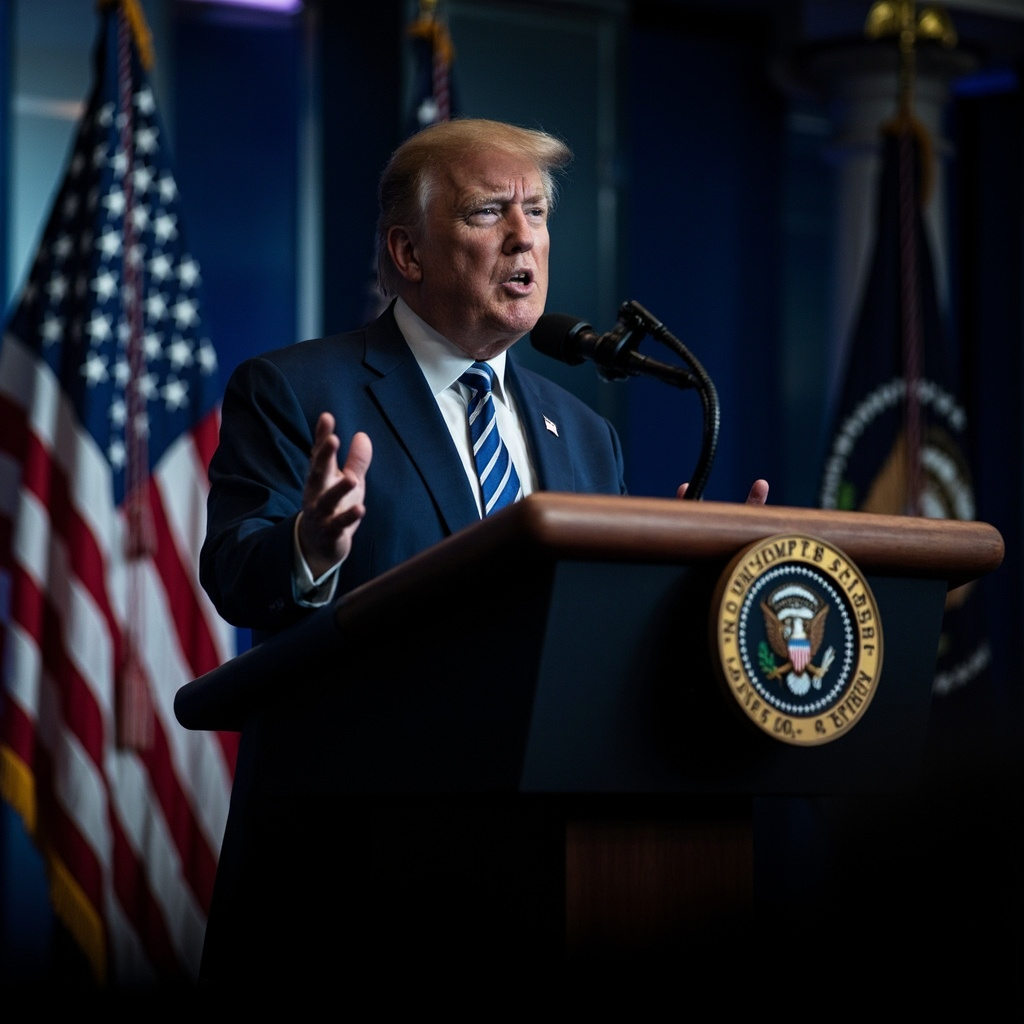
WASHINGTON — President Donald Trump announced a sweeping 90-day pause on his signature tariff escalation campaign Wednesday, offering a rare reprieve to global markets that have been reeling under the weight of mounting trade tensions. The announcement, delivered from the Rose Garden of the White House, marks the most significant reversal of the administration’s aggressive trade posture since tariffs were first imposed earlier this year.
“We want to give diplomacy a chance,” Trump told reporters, flanked by senior trade officials. “Markets around the world have responded with tremendous concern, and I’ve heard those concerns clearly. This pause will give our team time to negotiate bilateral agreements that will truly serve American workers and our allies.”
What Triggered the Reversal?
The administration’s tariff campaign had sent shockwaves through global supply chains. Beginning with an initial wave of tariffs on steel and aluminum, the White House subsequently expanded levies to cover a broad swath of consumer goods, semiconductors, and technology products. The escalation drew sharp criticism not only from trading partners but from American businesses and economists who warned of inflationary consequences and potential recession.
Financial markets reacted violently to the tariff announcements, with the Dow Jones Industrial Average experiencing its sharpest single-day decline in months. Major technology stocks, particularly those with extensive international supply chains, bore the brunt of the selloff. The uncertainty forced many corporations to pause investment decisions and reassess expansion plans.
International Reaction
European Union trade officials welcomed the pause as a constructive step, though they emphasized that the underlying tariff framework remains in place. “This is a positive signal, but we need to see concrete negotiations begin,” said an EU spokesperson. “Our businesses have been operating under enormous uncertainty. A 90-day pause is not a solution — it’s an opportunity.”
China’s response was notably cautious. Beijing, which had been locked in tit-for-tat escalation with Washington, offered no immediate comment on the pause. Chinese state media emphasized that any resolution would require the United States to fully retract the additional tariffs — a position that the White House has thus far refused to adopt.
In Asia, Japan and South Korea — both major US trading partners and hosts to significant American military presences — expressed cautious optimism. Both nations have been aggressively lobbying for tariff relief.
What Comes Next
The pause technically reduces tariff rates to the levels in place before the most recent escalation, while maintaining the underlying framework. Administration officials insist this is not a retreat but a tactical repositioning designed to facilitate bilateral negotiations.
Economists remain divided on the long-term implications. Some argue that the pause provides critical breathing room for businesses and may prevent a recessionary spiral. Others warn that the underlying uncertainty remains: the tariffs could be reimposed at the end of the 90-day period, potentially at even higher rates depending on negotiation outcomes.
“The question isn’t whether tariffs will go back up — it’s a matter of which ones and by how much,” said a senior economist at a major policy institute. “Businesses need stable, predictable trade rules. A 90-day pause doesn’t provide that.”
For now, global markets have responded positively to the news. But beneath the relief, business leaders and foreign governments understand that the underlying tensions have not been resolved — only deferred.
The next 90 days will determine whether Trump’s tariff pause becomes a turning point toward freer global trade, or simply a ceasefire in an escalating commercial war that will resume with even greater intensity.