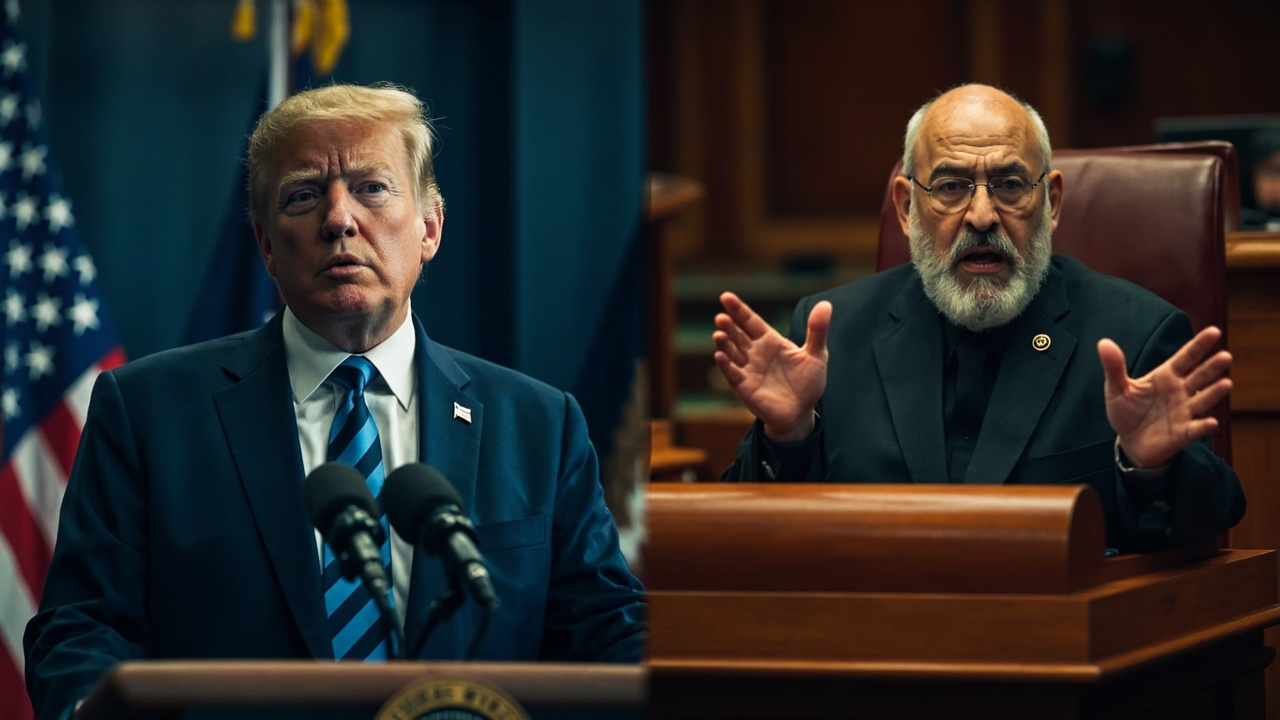
US President Donald Trump publicly rejected Iran’s latest peace proposal on Thursday, declaring himself “not satisfied” with Tehran’s offer and threatening to “blast the hell out of them” as negotiations to end the 62-day war stall.
Trump Lists Two Options: Deal or Destruction
Speaking to reporters at the White House before departing for Florida, Trump laid out his stark assessment of the diplomatic standoff. “We have two options: blast the hell out of them or make a deal,” the president said. “And right now, I am not satisfied with what they are offering.”
The comments came hours after Iran submitted a revised peace proposal through Pakistani mediators in Islamabad, the second such offer in a week. Tehran’s earlier proposal, delivered on April 28, had been met with cautious optimism from European diplomats. But Trump’s blunt rejection signals that the gap between the two sides remains vast.
The president’s rhetoric marks a sharp escalation from his tone just days ago, when he described Iran as “figuring things out” and suggested a deal was within reach. The shift suggests frustration within the White House at what officials privately describe as Tehran’s refusal to make meaningful concessions on its nuclear programme.
What Iran Proposed and Why Trump Rejected It
Details of Iran’s revised proposal remain closely guarded, but sources familiar with the negotiations told AP and CNN that Tehran offered to extend the current ceasefire indefinitely, allow limited IAEA inspections of disputed facilities, and release detained dual nationals. In return, Iran demanded a full lifting of US sanctions and an end to the naval blockade of the Strait of Hormuz.
The White House has consistently demanded that Iran dismantle key elements of its nuclear infrastructure, a condition Tehran has flatly rejected as a sovereign red line. Supreme Leader Ayatollah Ali Khamenei has repeatedly vowed to safeguard Iran’s nuclear capabilities, framing them as non-negotiable.
“The Iranians are offering cosmetic concessions while protecting the core of their programme,” a senior US official told the Times of Israel. “That is not going to fly.”
War Powers Deadline Adds Urgency
The diplomatic impasse is unfolding against a critical domestic deadline. Under the War Powers Resolution, Trump was required to seek congressional authorisation for the war within 60 days of notifying Congress of hostilities, a deadline that effectively expired on May 1.
In letters sent to both the House and Senate, Trump declared that “hostilities that began on February 28, 2026, have terminated.” The claim has drawn sharp criticism from both parties. Senator Tim Kaine called the argument a fiction. Republican Senator Rand Paul warned that no president should be able to wage war without Congress.
Trump told reporters he would not seek congressional authorisation. “It has never been used. It has never been adhered to. And every other president considered it totally unconstitutional. And we agree with that,” he said.
The Ceasefire That Is Not
While Trump claims hostilities have terminated, the reality on the ground tells a different story. The US naval blockade of the Strait of Hormuz remains in full effect, intercepting vessels suspected of carrying Iranian oil or weapons components. Iran’s proxy forces in Iraq and Yemen have continued low-level attacks on US positions, though at a significantly reduced pace since the April 7 ceasefire.
The blockade has sent global oil prices to four-year highs, with Brent crude trading above $120 per barrel. Shipping costs through the Persian Gulf have tripled since the war began, and the International Energy Agency has warned that a prolonged blockade could trigger a global recession.
Meanwhile, the humanitarian toll inside Iran continues to mount. The February 28 strikes damaged critical infrastructure across the country, and the subsequent blockade has restricted the flow of medical supplies and food. Iranian state media reports that over 4,000 civilians have been killed, though independent verification remains impossible due to internet restrictions.
China and Russia Weigh In
Beijing has called for a lasting ceasefire and the reopening of the Strait of Hormuz, warning that the prolonged blockade is destabilising global energy markets and harming the interests of all nations. China, which imports significant quantities of Iranian oil, has been quietly circumventing US sanctions through shadow tanker fleets.
Russia has offered to host direct talks between Washington and Tehran, an offer the White House has not publicly responded to. Moscow’s involvement adds a layer of complexity, given its own strained relations with Washington over the Ukraine war.
What Happens Next
Three scenarios now loom over the conflict. First, a diplomatic breakthrough, still possible if either side makes a significant concession, but increasingly unlikely given Trump’s rhetoric. Second, a continuation of the status quo: an indefinite ceasefire enforced by blockade, with periodic negotiations that go nowhere. Third, a resumption of military strikes, the blast-the-hell-out-of-them option that Trump has now publicly placed on the table.
Pakistan’s mediation role remains critical. Islamabad has positioned itself as a neutral broker, and its ability to keep both sides at the table may determine whether this war ends at the negotiating table or on the battlefield. The coming days will reveal whether Trump’s bluster is a negotiating tactic, or a genuine preview of what comes next.