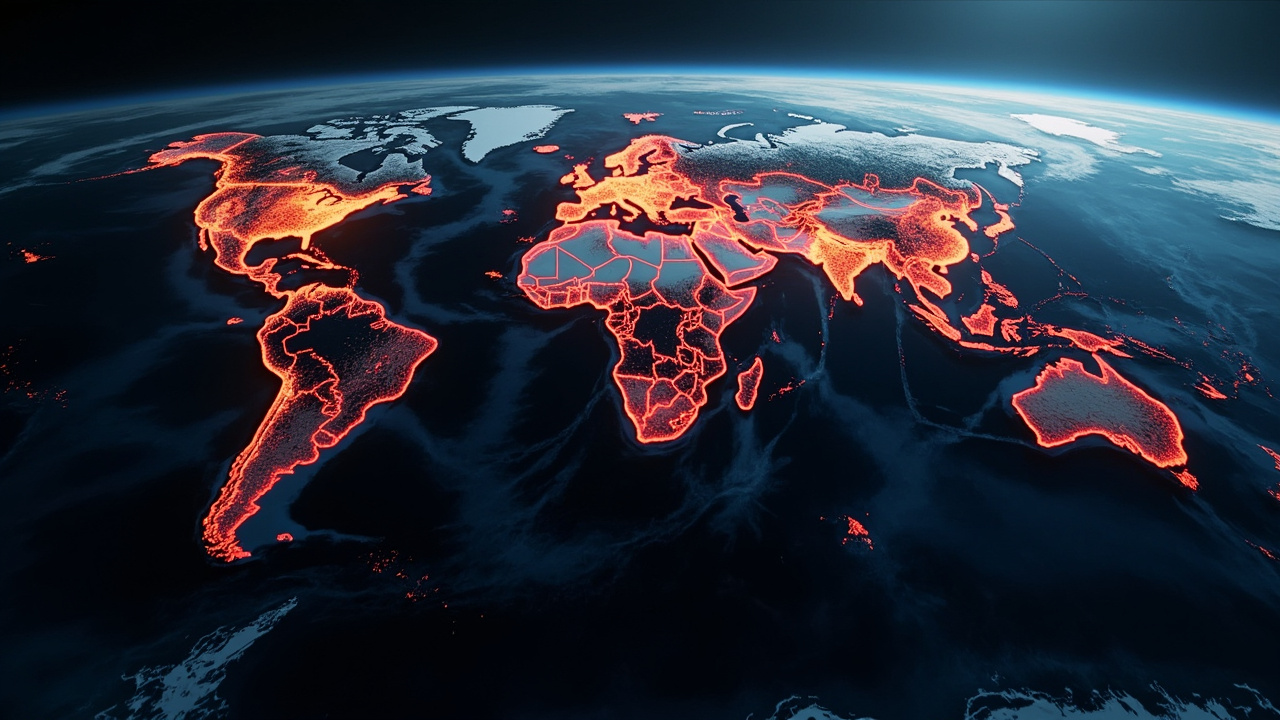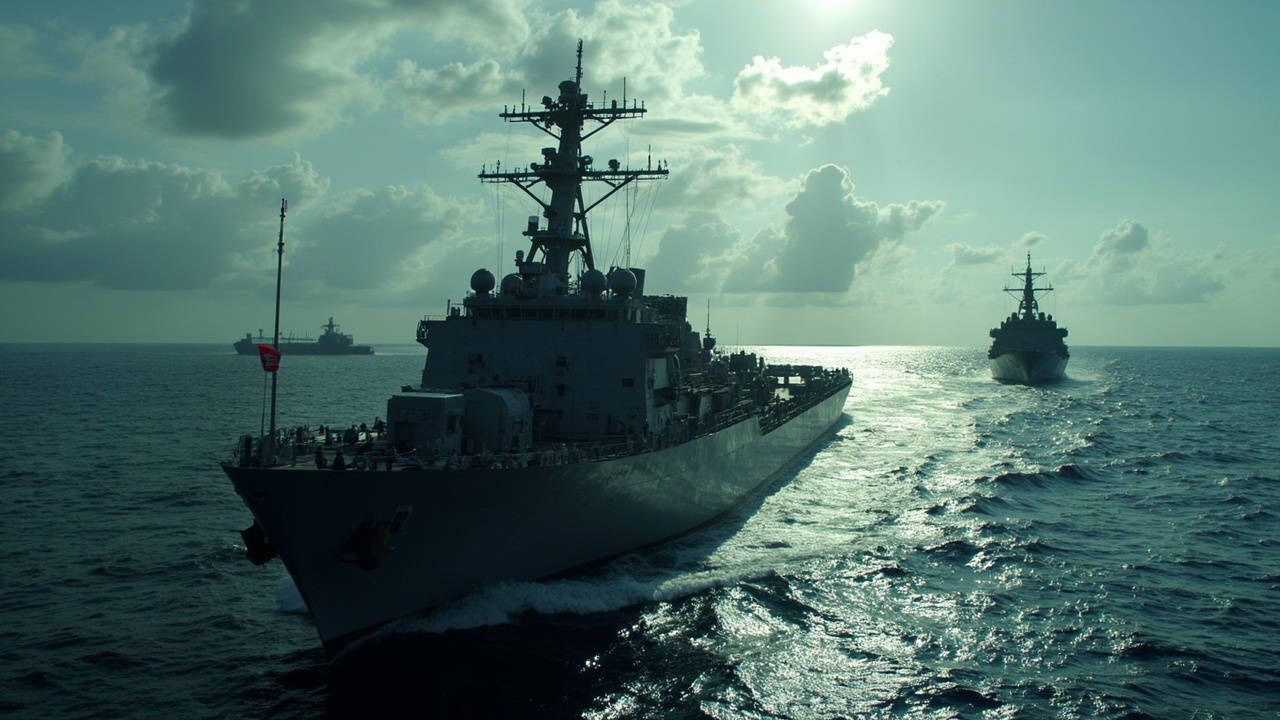
On May 5, 2026, the United States Navy began its most ambitious escort operation in the Persian Gulf since the Tanker War of the 1980s. Project Freedom, announced by the Pentagon in a terse three-paragraph statement, commits two carrier strike groups, twelve destroyers, and a Marine amphibious ready group to escorting commercial vessels through the Strait of Hormuz — the chokepoint through which one-fifth of global oil shipments pass. The operation comes after three weeks of escalating Iranian harassment of commercial shipping, including the seizure of a Marshall Islands-flagged tanker and the boarding of a Greek-owned vessel carrying Qatari LNG. The message from Washington is clear: the United States will not allow Iran to weaponise the world’s most important energy corridor.
But the military deployment is only the visible layer of a crisis that extends far beyond the Gulf. Behind the naval manouevres lies a diplomatic standoff that has split the United Nations Security Council, divided European allies, and exposed the fragility of the post-2023 regional order. Iran’s Revolutionary Guard Corps (IRGC) has threatened decisive retaliation against any vessel that cooperates with the US escort programme, while the Iranian foreign ministry has simultaneously opened back-channel talks with Oman and Qatar about a potential de-escalation framework. The contradiction is deliberate: Tehran wants to maintain pressure on global energy markets while avoiding the kind of direct military confrontation that could trigger a broader regional war.
The Military Calculus
The US Central Command (CENTCOM) briefing on May 4 laid out the operational parameters of Project Freedom with unusual specificity. Carrier Strike Group 12, led by the USS Gerald R. Ford, will establish a transit corridor running roughly 50 nautical miles wide through the Strait, with destroyers positioned at 15-mile intervals to provide radar coverage and rapid response. The rules of engagement authorise US forces to intercept, board, and if necessary, fire upon any vessel that attempts to harass or seize commercial shipping within the corridor. CENTCOM’s commander, General Michael Erik Kurilla, told reporters that the operation was not about provoking Iran — it is about denying Iran the ability to unilaterally dictate the terms of global energy security.
The Strait of Hormuz is not Iranian territorial water. It is an international waterway, and the United States will defend the right of free passage with whatever means are necessary. — General Michael Erik Kurilla, CENTCOM Commander, May 4, 2026
Iran’s military response has been calibrated to avoid direct engagement while maintaining pressure. The IRGC has deployed additional fast-attack craft to the Strait’s northern shore, increased drone surveillance of the transit corridor, and issued navigational warnings to commercial vessels suggesting that cooperation with US forces could expose them to unforeseen risks. Iranian state media has broadcast footage of IRGC naval exercises that appear designed to demonstrate the capacity to swarm and overwhelm individual US vessels — a tactic that analysts at the International Institute for Strategic Studies warn could be effective in a limited engagement but would likely trigger a devastating US response if attempted against a carrier group.
The Diplomatic Standoff
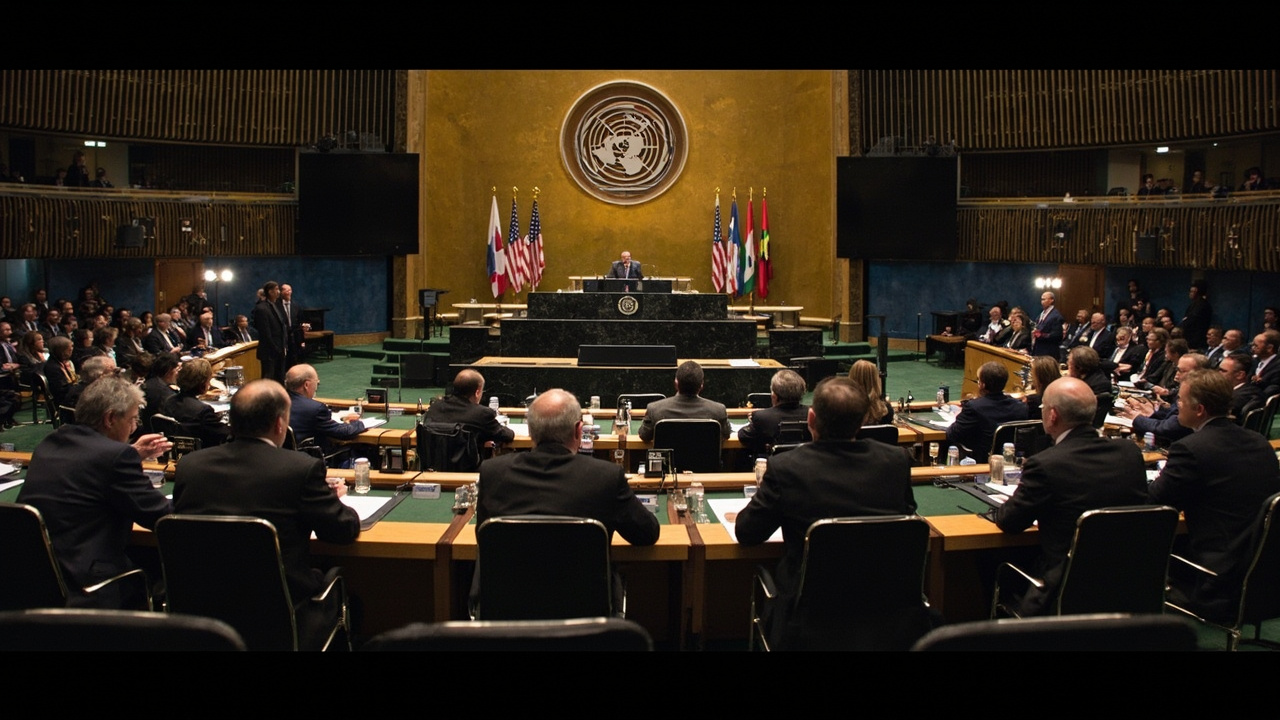
At the United Nations, the crisis has produced an unusual alignment. Russia and China have vetoed a US-drafted Security Council resolution that would have condemned Iran’s harassment of commercial shipping and authorised member states to use all necessary measures to protect vessels in international waters. The veto was expected — both Moscow and Beijing have strategic interests in preserving Iran’s capacity to challenge US dominance in the Gulf — but the language of their opposition was notable. Russia’s ambassador, Vasily Nebenzya, described the US resolution as a pretext for military aggression dressed in the language of maritime security, while China’s representative called for a return to the JCPOA framework and the lifting of unilateral sanctions that have created the conditions for this crisis.
European powers have been more divided. France and the United Kingdom have backed the US escort operation, with France committing the frigate FS Languedoc to the transit corridor. Germany, however, has publicly distanced itself from the military deployment, with Foreign Minister Annalena Baerbock stating that naval escorts are not a substitute for diplomatic engagement and calling for an emergency meeting of the JCPOA signatories — a proposal that Iran has welcomed and the United States has rejected.
The JCPOA is dead. The question is what replaces it — and whether that replacement can be negotiated before the first shots are fired in the Strait. — European diplomat, Vienna, May 3, 2026
The Energy Market Impact
The market response to the crisis has been immediate and severe. Brent crude futures spiked to 118 dollars per barrel on May 5 — the highest level since the autumn of 2025 — before settling at 112 dollars on expectations that the US escort operation would reduce the immediate risk of supply disruption. But the volatility itself is damaging: energy traders report that Asian refiners are already seeking alternative suppliers, with increased purchases from West African and Latin American sources that bypass the Strait entirely. The longer-term risk is a structural shift in global oil trade patterns that would reduce the Strait’s strategic importance — and, paradoxically, reduce the leverage of both the United States and Iran in future confrontations.
Saudi Arabia and the United Arab Emirates have taken carefully neutral positions, publicly supporting freedom of navigation while privately urging both Washington and Tehran to de-escalate. The Gulf monarchies’ economic interests are straightforward: they need stable oil markets and reliable shipping routes, and they have no desire to see the Strait become a permanent zone of military confrontation. Oman, which has historically served as a back-channel between Iran and the West, has reportedly conveyed an Iranian proposal for a mutual non-interference agreement that would allow commercial shipping to pass unescorted in exchange for a US commitment not to use the Strait for military positioning against Iranian territory.
What Comes Next
The next two weeks will be critical. The US escort operation is scheduled to run through the end of May, but CENTCOM officials have privately indicated that the deployment could be extended indefinitely if Iranian harassment continues. Iran’s leadership faces its own time pressure: the domestic economic situation is deteriorating rapidly, with inflation above 40 percent and youth unemployment at historic highs. A prolonged confrontation with the United States would further strain an economy already crippled by sanctions, while a climbdown — particularly one that appears to concede to US pressure — could trigger domestic backlash from hardline constituencies.
The most likely scenario, according to diplomats tracking the back-channel talks, is a managed de-escalation in which Iran reduces — but does not eliminate — its harassment of commercial shipping, while the United States gradually scales back its escort presence. Such an outcome would leave both sides claiming victory: Washington would have demonstrated its capacity to protect global shipping, while Tehran would have preserved its ability to pressure the international community without triggering a full-scale military response. But the underlying tension — between an Iran that sees the Strait as a strategic asset and a United States that sees it as an international waterway — will remain unresolved. And the next crisis, when it comes, may not be so easily managed.
Elena Rodriguez is an International Affairs Correspondent for Media Hook, covering global diplomacy, conflict, and the emerging world order.