Deadly Boko Haram Assault Exposes Chad’s Fragile Security as Lake Chad Crisis Deepens
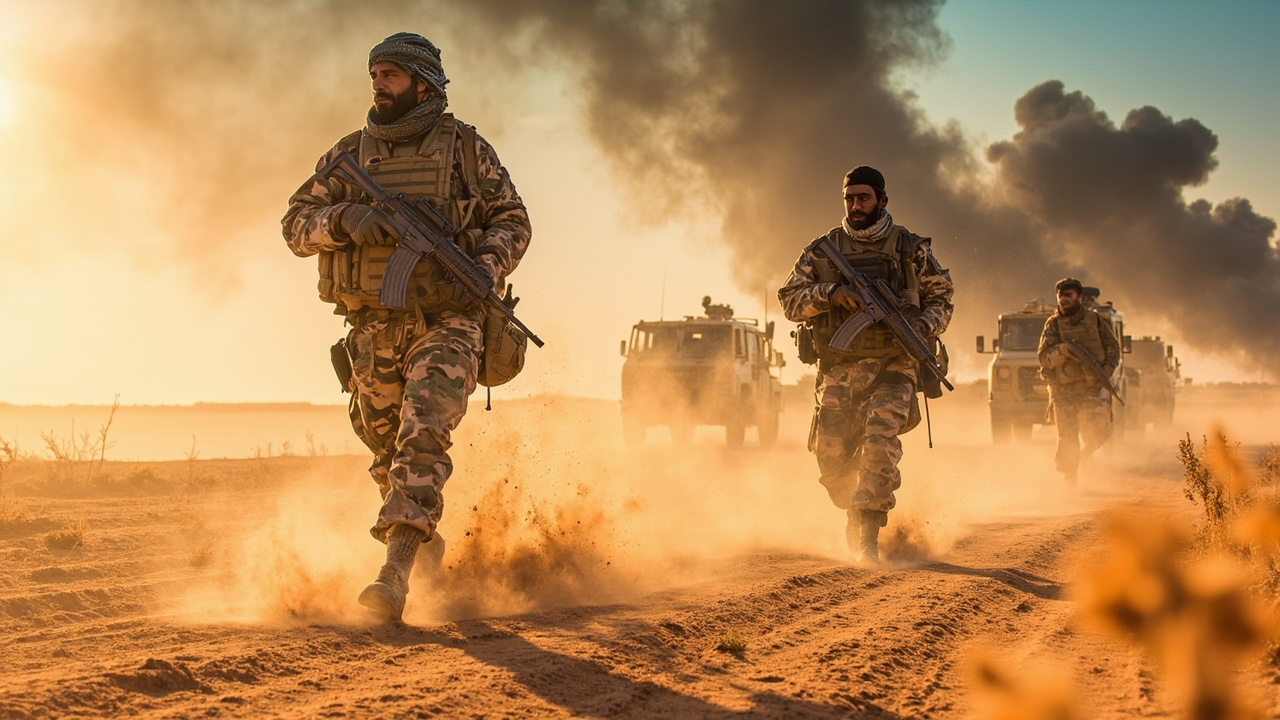
N’DJAMENA, Chad — At least 23 Chadian soldiers were killed and 26 wounded in a devastating Boko Haram attack on a military outpost on the island of Barka Tolorom in Chad’s Lake Chad region, the country’s armed forces confirmed on Tuesday. The assault, one of the deadliest single attacks on Chad’s military in recent years, has laid bare the persistent threat posed by the Nigeria-based insurgent group despite repeated government claims of victory.
- Boko Haram killed 23 Chadian soldiers and wounded 26 in an overnight attack on the island of Barka Tolorom
- President Déby vowed to continue fighting “until this threat is completely eradicated”
- The attack follows a 2024 offensive that the army claimed had eliminated Boko Haram sanctuaries in Chad
- Lake Chad’s islands and marshlands continue to serve as havens for both Boko Haram and its ISWAP rival faction
- The crisis underscores how the Iran war’s global security disruptions are emboldening insurgent groups across Africa’s Sahel
The Attack and Immediate Aftermath
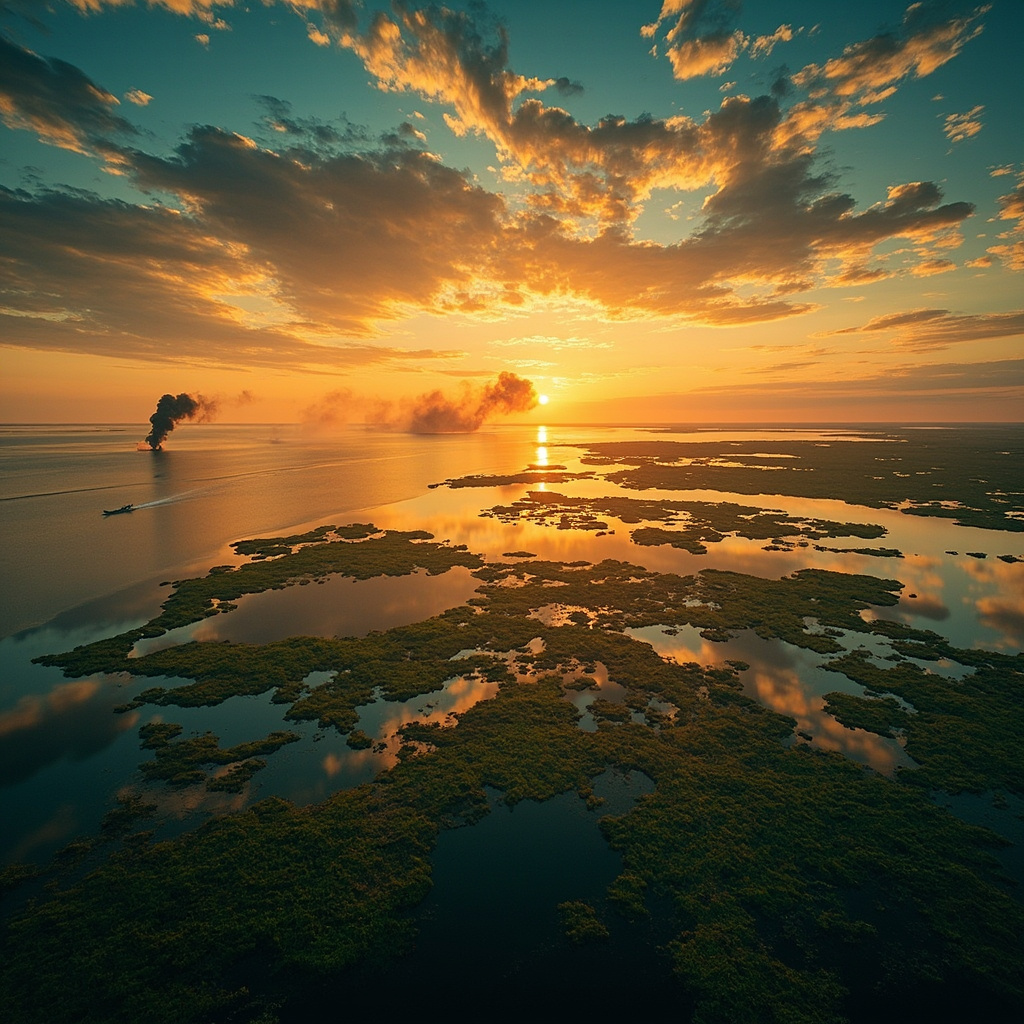
The assault occurred overnight on Monday, when Boko Haram fighters overwhelmed the military base on Barka Tolorom, a remote island in the vast Lake Chad basin. The area — situated at the junction of Cameroon, Chad, Niger, and Nigeria — has long been a tinderbox of insurgent activity, its maze of islands and marshes providing ideal terrain for ambushes and retreats.
Chad’s military said in a statement that “a significant number” of attackers were also killed during the firefight and that the group was ultimately repelled. President Mahamat Idriss Déby Itno took to Facebook to condemn the assault, calling Boko Haram a “nebulous terrorist group” and declaring: “We will continue the fight with renewed determination until this threat is completely eradicated.”
Déby offered his condolences to the families of the fallen but faces mounting questions about why, just months after he personally led a counteroffensive and the army declared Boko Haram had “no more sanctuary on Chadian territory,” the group was able to mount such a deadly coordinated strike on a military installation.
A Pattern of Escalation
This attack is not an isolated incident. Chadian soldiers have come under increasing fire from Boko Haram in the Lake Chad region throughout 2025 and into 2026. In October 2024, an even deadlier attack killed approximately 40 soldiers — prompting Déby to launch a high-profile counteroffensive that he promised to “personally” lead on the ground for two weeks.
That operation concluded in early 2025 with triumphant declarations from the army that Boko Haram had been routed from Chadian territory. Yet recent months have witnessed a surge in attacks by the group’s Jama’atu Ahlis Sunna Lidda’awati wal-Jihad (JAS) faction, including kidnappings, raids on advanced army positions, and strikes targeting islands and shorelines along Niger’s portion of the lake.
The resurgence mirrors a broader deterioration of security across the Sahel. In neighboring Mali, jihadist group Jama’at Nusrat al-Islam wal-Muslimin recently seized a military base outside Tessalit after Malian troops and Russia’s Africa Corps abandoned it. In Burkina Faso and Niger, military juntas that seized power promising to restore security have instead watched insurgent violence intensify.
The Lake Chad Geopolitical Quagmire
Lake Chad itself is a geopolitical and environmental flashpoint that compounds the security crisis. Once one of Africa’s largest freshwater bodies, the lake has shrunk by roughly 90% since the 1960s due to climate change and over-irrigation, devastating the livelihoods of more than 30 million people who depend on it for fishing, farming, and grazing.
The resulting economic desperation has created fertile recruitment ground for Boko Haram and its rival splinter group, the Islamic State’s West Africa Province (ISWAP). Both factions exploit the lake’s maze of islands for cover, moving between the territories of four nations that have historically struggled to coordinate their military responses.
The Multinational Joint Task Force (MNJTF), established by the Lake Chad Basin Commission to coordinate regional counter-insurgency efforts, has been hampered by underfunding, inconsistent troop contributions, and political friction between member states. Chad, which has historically contributed the largest and most capable contingent, now faces the additional strain of domestic political uncertainty following Déby’s transition from military ruler to elected president.
Global Context: The Iran War’s Ripple Effects
The Boko Haram resurgence cannot be viewed in isolation from the global security upheaval triggered by the 2026 Iran war. The conflict has diverted international attention and counter-terrorism resources away from Africa’s Sahel region, creating a vacuum that insurgent groups have been quick to exploit.
France’s military withdrawal from the region — already well underway before the Iran conflict — accelerated as Paris redeployed assets to the Middle East. The United States, similarly stretched thin, has reduced its intelligence-sharing and logistical support for African counter-terrorism operations. Russia’s Africa Corps, which replaced Wagner Group mercenaries in several Sahel states, has proven less effective than its predecessor, as the Mali base abandonment at Tessalit demonstrated.
Australia’s announcement this week of a $7.2 billion fuel security plan underscores how the Iran war’s disruption of global energy markets is cascading into food insecurity and economic instability across Africa. Chad, despite its oil wealth, remains one of the world’s poorest nations — and rising fuel costs hit its military logistics and civilian population alike.
What Comes Next for Chad
Déby now faces a critical decision: launch another large-scale counteroffensive or acknowledge that a purely military solution to the Lake Chad insurgency is insufficient. The president, who inherited power from his father — who was killed on the battlefield in 2021 — has staked his political legitimacy on being a wartime leader capable of restoring security.
International partners, meanwhile, are watching closely. The European Union has increased humanitarian aid to the Lake Chad region but remains reluctant to re-engage militarily after the failures of previous interventions. The African Union has called for an emergency summit on Sahel security, but concrete action has been slow to materialize.
For the communities around Lake Chad — fishermen, farmers, and herders who have endured over a decade of violence, displacement, and environmental collapse — the latest attack is a grim reminder that the world’s attention may have moved on, but the threat has not.
▸ Key Questions About the Lake Chad Crisis
Why is Lake Chad so important strategically?
Lake Chad sits at the crossroads of four nations — Chad, Nigeria, Niger, and Cameroon — and supports over 30 million people. Its strategic location makes it both a vital economic resource and a contested corridor for armed groups operating across porous borders.
How many people has Boko Haram killed in the Lake Chad region?
Since 2009, Boko Haram and its offshoots have killed an estimated 350,000 people across the Lake Chad basin and displaced millions more, making it one of Africa’s deadliest and most protracted conflicts.
What is the difference between Boko Haram and ISWAP?
Boko Haram, formally known as JAS, pledged allegiance to al-Qaeda. ISWAP split from Boko Haram in 2016 and aligned with the Islamic State. The two factions compete for territory, recruits, and resources around Lake Chad, sometimes fighting each other as well as government forces.