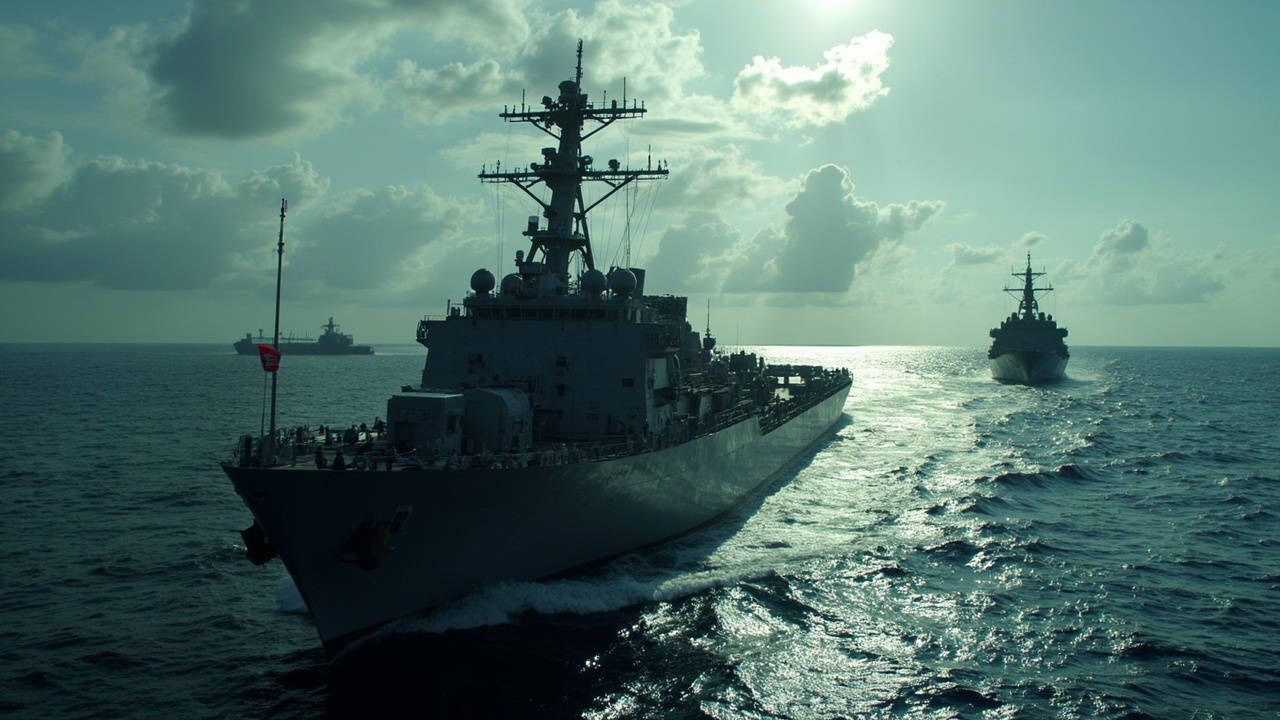
On June 1, 2026, as the Arctic Council concluded its emergency session in Tromso, Norway, Secretary-General Antonio Guterres described what had just happened as “a geopolitical earthquake measured not on the Richter scale but on the scale of sovereign risk.” What triggered the emergency session was a single event three days earlier: Russia had announced the permanent establishment of a new military-strategic zone it calls the “Northern Sea Corridor Administration,” covering approximately 840,000 square kilometres of previously open international waters in the Arctic Ocean — an area larger than France and Germany combined. The announcement was accompanied by naval deployments, satellite jamming incidents affecting commercial aviation over the Barents Sea, and a pointed reminder from Moscow that any vessel transiting the zone without NSCA authorisation would be considered a “threat to Russian national security.”
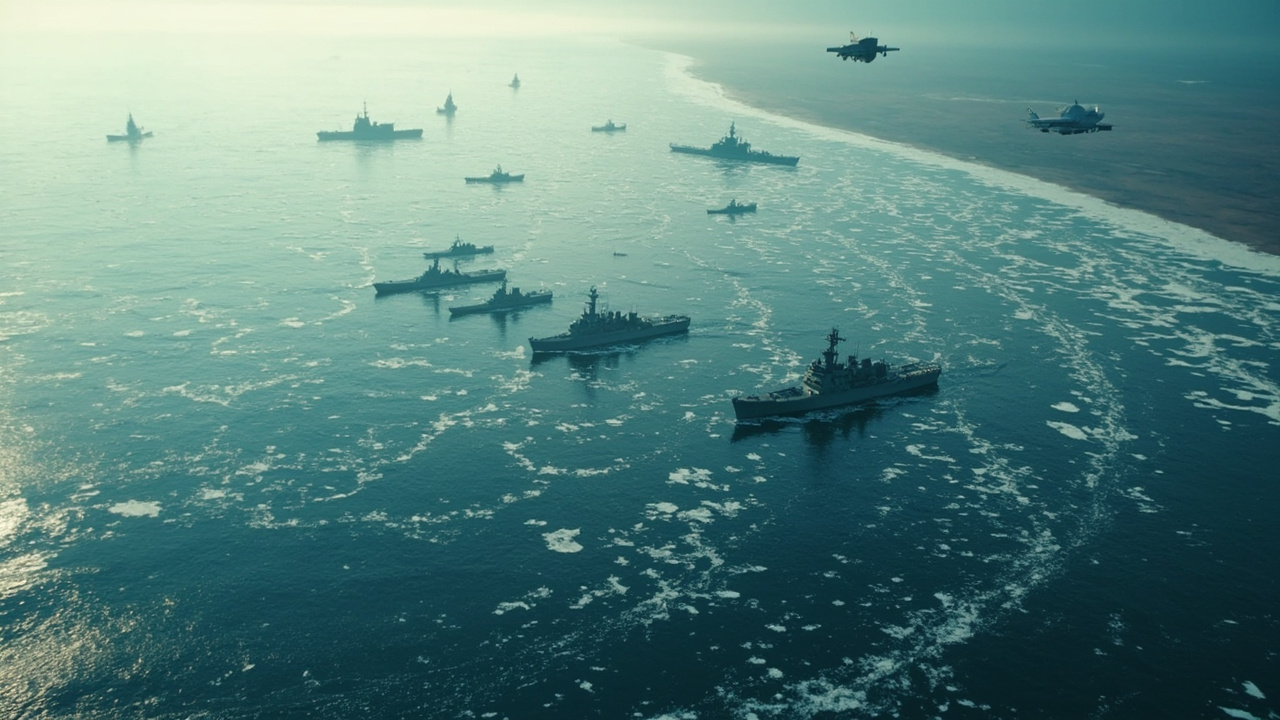
The move caught Western governments off-guard, in part because it was more aggressive than even the most hawkish Russia watchers had anticipated. It was also, in the view of several Arctic policy analysts, a direct response to NATO’s Arctic Exercises Trident — the largest alliance military exercise above the 66th parallel in NATO’s history, which concluded in late May 2026 and brought 32,000 troops, four carrier strike groups, and 180 aircraft within 200 nautical miles of the Russian Kola Peninsula. The message from Moscow was clear: NATO’s presence in the Arctic would be matched, and the rules of engagement in the High North had fundamentally changed.
The Strategic Prize: Why the Arctic Matters More Than Ever
The scramble for the Arctic is not new — it has been underway for two decades as retreating sea ice has progressively opened previously inaccessible shipping lanes, hydrocarbon deposits, and fisheries. What is new in 2026 is the pace of that scramble and the degree to which it has ceased to be a question of resource competition and become a question of military deterrence. The Northern Sea Route, which hugs the Russian coast and can cut Asia-Europe shipping transit times by up to 40 percent compared to the Suez Canal route, is now commercially viable year-round for the first time. Estimates from the Arctic Institute and the Danish Shipping Association suggest that by 2030, the NSR could carry 80 million tonnes of cargo annually — a figure that would fundamentally reshape global logistics and make whoever controls the transit corridors strategically indispensable to global trade.
“The Arctic is the only place on earth where NATO and Russia share an actual physical boundary — a line where aircraft and submarines operate within metres of each other every day. What happened in June 2026 is not the start of a crisis. It is the moment when the Cold War in the Arctic stopped being metaphorical.” — Rear Admiral (Ret.) Hans Henrik Kjerrumgaard, Danish Naval Institute
Canada and Denmark-Greenland have the most direct stake in the new Russian zone. The NSCA overlaps with Canada’s claimed extended continental shelf in the Lincoln Sea and runs directly adjacent to Greenland’s exclusive economic zone. Ottawa has summoned the Russian ambassador and declared the NSCA “null and void under international law,” while Copenhagen has submitted an emergency resolution to the UN Security Council. Both moves are largely symbolic: the Security Council is paralysed on Arctic issues by the Russia veto, and the dispute over continental shelf boundaries is decades old and likely years from resolution through the UN Convention on the Law of the Sea process.
NATO’s Response and the Nuclear Dimension
NATO’s formal response, delivered by Secretary-General Mark Rutte from Brussels on June 3, was measured in tone but significant in substance. The alliance announced it would accelerate the deployment of a permanent Allied Maritime Command presence in the Norwegian Sea, expand aerial surveillance patrols over the High North to 24/7 coverage, and initiate formal defence planning for what the alliance’s June 2026 Strategic Assessment described as “potential contested access scenarios” in the Arctic theatre. The language was deliberately ambiguous — it could mean anything from increased coast guard cooperation to pre-positioning of strike capabilities.
The nuclear dimension is impossible to ignore. Russia’s 2024 update to its maritime doctrine explicitly designated the Arctic as a “strategic nuclear priority zone,” and Russian strategic bombers have been operating with increasing frequency in the airspace above the NSR zone throughout 2026. The United States, which has not commented specifically on the NSCA announcement, has maintained that its Ohio-class ballistic missile submarines operating in the Arctic are unaffected — but defence analysts note that any contested zone that includes the deep-water passages near Franz Josef Land potentially impinges on routes used by US submarine-launched ballistic missile systems.
“Russia’s move is not primarily about resource extraction or shipping fees — it is about denying NATO the ability to project power into a region that Russia considers its strategic backyard. The NSCA is a declaration of intent: the Arctic is contested, and Russia intends to contest it.” — Dr. Sarah Johannsen, Arctic Security Studies Centre, Copenhagen
What Comes Next
The immediate question is whether the NSCA declaration is an opening gambit in a longer negotiating process — Moscow establishing an extreme position from which to extract concessions on sanctions relief or other issues — or a genuine attempt to unilaterally redraw the strategic map of the High North. Most analysts who spoke to Think Tank World before our press deadline believe it is some of both: a real assertion of control backed by real military deployments, combined with a negotiating tactic designed to force the NATO alliance and individual Arctic states to the table on Russia’s terms.
Finland and Sweden, both NATO members since 2023 and 2024 respectively, find themselves in an awkward position. Both have strong historical relationships with Russia and significant Arctic territories — Finland shares a 1,340-kilometre border with Russia and has the EU’s longest land boundary with the Arctic Circle. Helsinki and Stockholm are under pressure from their NATO allies to take a hard line on the NSCA, while their own domestic politics contain significant Russia-sceptical and neutrality-sympathetic factions. Both governments have so far confined themselves to statements of concern and expressions of solidarity with Canada and Denmark.
What is clear is that the Arctic governance framework that has held since the Ilulissat Declaration of 2008 — which committed the five Arctic Ocean coastal states to resolve disputes through UNCLOS and existing international law — is under its most serious strain since it was signed. The NSCA is the most direct challenge to that framework yet attempted. How the international community responds will define the rules of the road — literally — for the most strategically significant geography on earth.
Elena Rodriguez is an International Affairs Correspondent for Media Hook, covering global diplomacy, conflict, and the emerging world order.