The United States military launched precision strikes against Iranian military facilities on Thursday evening, targeting the sites responsible for missile, drone, and small boat attacks against American warships transiting the Strait of Hormuz. President Donald Trump warned that Tehran faces far more devastating consequences if it fails to accept a deal to end the war, declaring that the ceasefire collapse would be unmistakable — visible as “one big glow coming out of Iran.”
The Strikes: CENTCOM Targets Iranian Attack Infrastructure
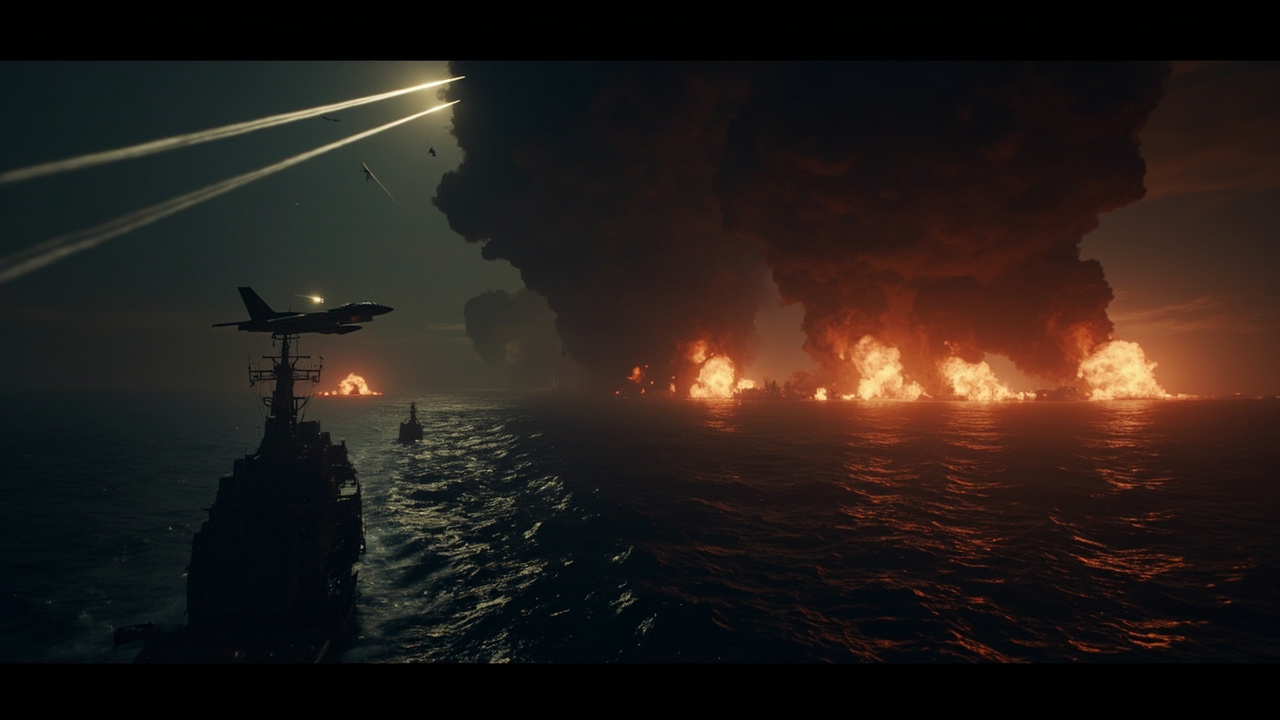
United States Central Command confirmed that American forces struck Iranian military installations that had been used to launch what it described as “unprovoked” attacks against three US Navy destroyers transiting the Strait of Hormuz. The operation came after a series of escalating exchanges in the strategic waterway, where Iranian forces have employed missiles, drones, and swarms of small boats against commercial and military vessels.
“US forces conducted precision strikes against Iranian military facilities responsible for launching the unprovoked missile, drone, and small boat attacks against US Navy destroyers transiting the Strait of Hormuz,” CENTCOM said in a statement. The command emphasized that the United States does “not seek escalation” and that the operation was a measured defensive response.
No US assets were struck during the exchange, according to CENTCOM. The three destroyers successfully transited the strait without damage, marking what the administration described as an effective demonstration of American naval capability under fire.
Iran’s armed forces spokesperson countered that US airstrikes had hit civilian areas along the coasts of Qeshm Island, Bandar Khamir, and Sirik. Tehran claimed to have taken “reciprocal action” by attacking US military vessels east of the strait and south of the port of Chabahar. The dueling narratives — Washington describing precision military strikes, Tehran alleging civilian casualties — underscored the information war that has accompanied the military confrontation.
‘One Big Glow’: Trump’s Warnings and the Fragile Ceasefire
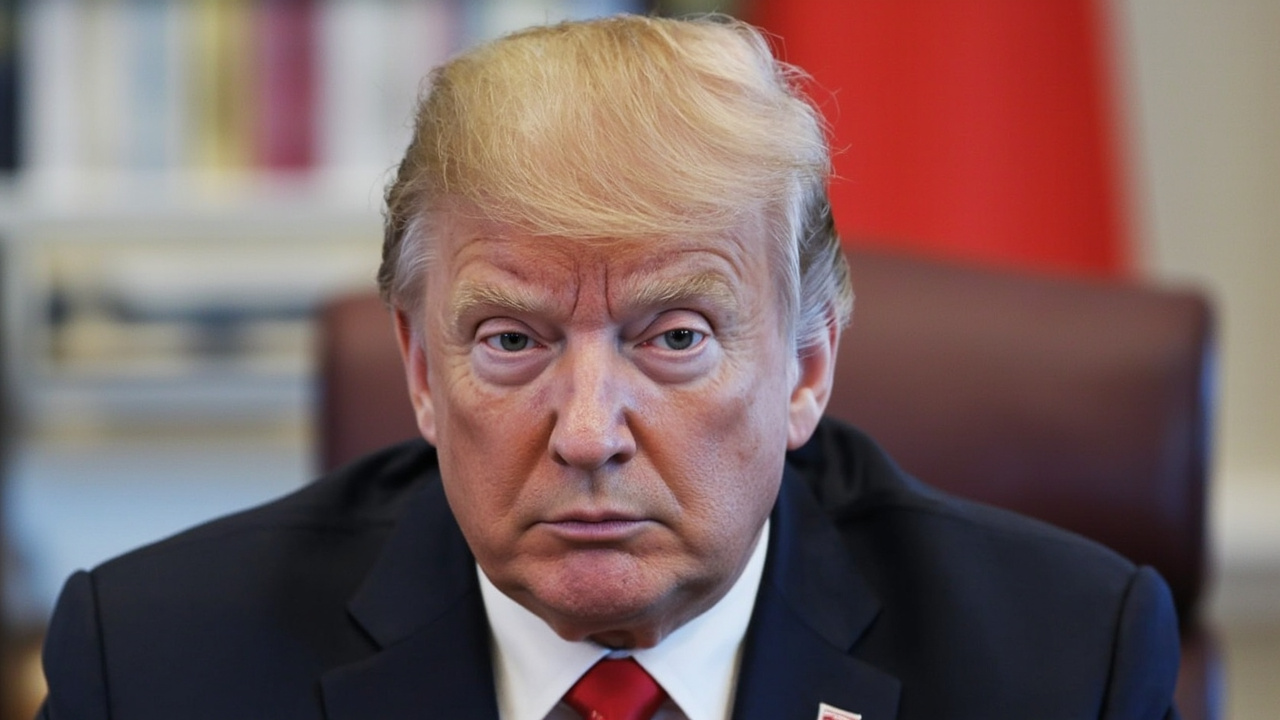
President Trump, speaking to reporters during an impromptu stop near the Lincoln Memorial Reflecting Pool, insisted that the ceasefire with Iran remains in effect despite the fresh military clashes. But his language carried an unmistakable threat of escalation should Tehran fail to negotiate seriously.
“You won’t have to know if there’s no ceasefire,” Trump said. “You’ll just have to look at one big glow coming out of Iran.” The remark echoed his previous rhetoric about devastating military force and sent a clear signal that the administration views the current threshold of conflict as far below what it is prepared to unleash.
The president downplayed Thursday’s strikes as “just a love tap” in a phone interview with ABC News, while simultaneously warning that American forces “will knock them out a lot harder, and a lot more violently” if Iran does not finalize a deal soon. In a characteristically vivid Truth Social post, Trump described Iranian drones being “incinerated while in the air” and dropping “ever so beautifully down to the Ocean, very much like a butterfly dropping to its grave.”
“If they had the chance to use a Nuclear Weapon, they would do it, without question — But they’ll never have that opportunity,” Trump wrote, framing the confrontation in existential terms while asserting American military dominance.
The Diplomatic Maze: Pakistan Mediation and the ‘One-Page Offer’
The military confrontation unfolded against a backdrop of uncertain diplomacy. Trump revealed that the US proposal to end the war was far more extensive than the “one-page offer” that had been described in media reports. “It’s an offer that basically said they will not have nuclear weapons, they are going to hand us the nuclear dust and many other things that we want,” Trump explained.
But the president expressed skepticism about Iran’s reliability as a negotiating partner. “They have agreed. When they agree it doesn’t mean much because the next day they forgot they agreed,” he said, adding that “we’re dealing with different sets of leaders” — a reference to the complex power structure in Tehran where the elected government, the Supreme Leader’s office, and the Islamic Revolutionary Guard Corps often pursue competing agendas.
Iran has not yet finalized its response to the US proposal, according to Iranian media, which reported that Tehran is still reviewing “messages” from the Americans relayed through Pakistani intermediaries. The Pakistani mediation track, which has been the primary channel for US-Iran communication since the war began, appeared to remain active despite the fresh hostilities.
Iranian First Vice President Mohammad Reza Aref struck a defiant note, declaring that Iranians would “soon” celebrate a “great victory” in the war. “The sanctions and pressures that have been imposed on the Iranian nation over recent years will be lifted with the great victory of the Iranian nation,” Aref said in remarks carried by state-run Press TV.
The Strait of Hormuz: A Waterway Under Siege
The Strait of Hormuz, the narrow chokepoint through which approximately 20 percent of the world’s oil passes, has become the central theater of the US-Iran war. Thursday’s exchange was the latest in a series of escalating confrontations that have seen Iranian forces use small boats, drones, and anti-ship missiles to challenge American and commercial shipping.
Tehran has laid out new rules for ships seeking to cross the strait, according to a document seen by CNN, effectively attempting to assert control over the waterway despite the US naval blockade. The Iranian rules represent a direct challenge to freedom of navigation and have drawn condemnation from shipping companies and maritime nations.
The economic stakes are enormous. JPMorgan Chase analysts have estimated that oil inventories in OECD countries will begin running out between May 9 and May 30 if the disruption continues. Spirit Airlines has already ceased operations following a failed government bailout deal and oil price surges, and the global fuel crisis sparked by the war continues to deepen.
What Comes Next: Escalation or Breakthrough?
The trajectory of the conflict remains deeply uncertain. Trump’s rhetoric suggests a willingness to escalate dramatically if negotiations fail, while Iran’s leadership continues to frame the war as a struggle it can win. The ceasefire, though officially in effect, has been violated by both sides multiple times, and each exchange of fire risks triggering a broader conflagration.
The coming days are likely to be decisive. With OECD oil inventories projected to run dry within weeks, the economic pressure on both sides is intensifying. The US proposal, now revealed to be more comprehensive than previously understood, represents a potential off-ramp — but only if both sides can bridge the gap between maximalist positions and find a formula for de-escalation.
For now, the world watches the Strait of Hormuz, where three American destroyers made their transit under fire, where Iranian drones fell “like butterflies” into the sea, and where the difference between ceasefire and all-out war may be measured in the glow of a single explosion.
— Reporting by Rachel Torres, Media Hook News