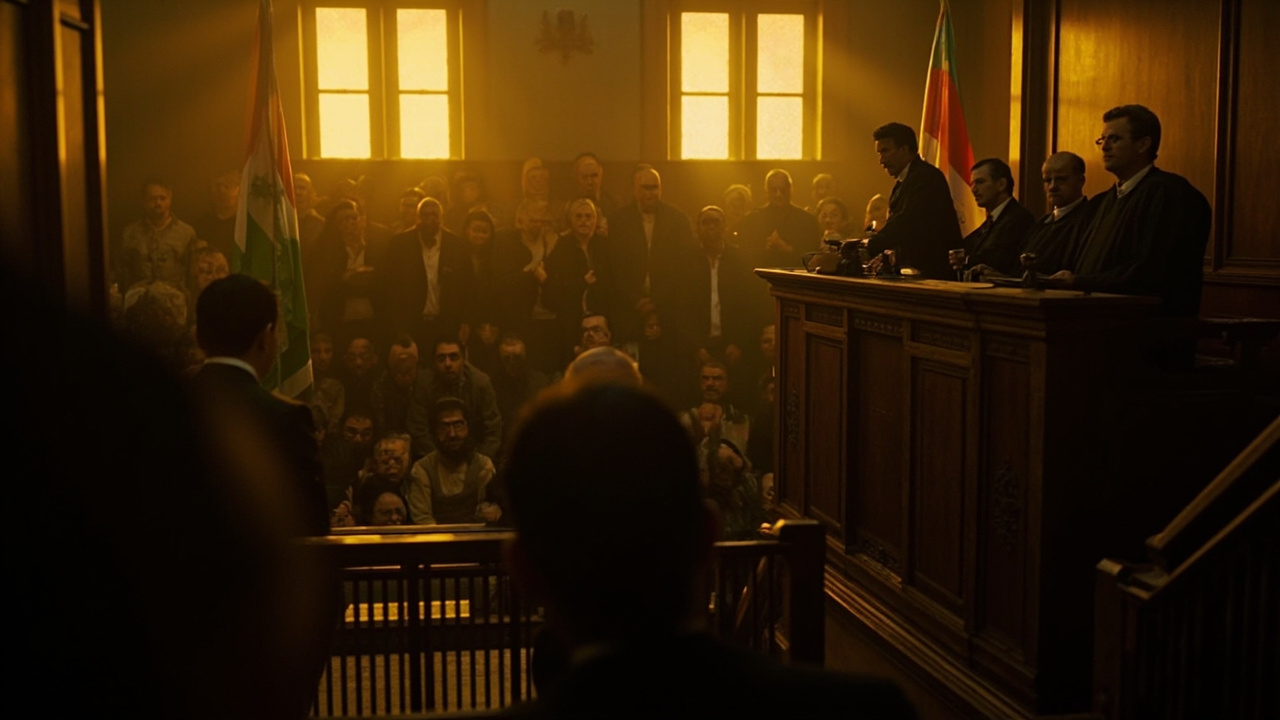
In the spring of 2026, the American political arena finds itself at a peculiar crossroads. The administration’s first 100 days have wrapped, congressional gridlock has reasserted itself with familiar predictability, and across the country, voters are left grappling with a political class that seems increasingly disconnected from their lived realities. From coast to coast, the distance between Washington and Main Street has never felt wider — and the political fatigue this engenders has become one of the defining features of the current moment.
This is not merely a complaint about polarization or partisanship, though those conditions remain pervasive. It is something more structural: a growing sense that the political system, as currently constituted, is not designed to solve the problems ordinary Americans actually care about. Healthcare costs continue to climb. Housing affordability has reached crisis levels in major metros. Wages for most workers have stagnated relative to productivity for decades. And yet, the political energy in Washington remains consumed by cultural warfare, procedural combat, and the perpetual cultivation of partisan grievance.
The 100-Day Report Card: What the Numbers Actually Show
When the new administration took office, it arrived with a set of promises centered on economic relief, infrastructure investment, and a recalibration of America’s role in global alliances. The opening months were marked by a flurry of executive orders — some consequential, others more theatrical than substantive. The legislative agenda, however, has moved at a glacial pace, constrained by the narrow majorities in both chambers and the persistent threat of intra-party defections.
“The gap between campaign rhetoric and governing reality has never been wider. Voters elected change; they got continuity with a different label.”
— Former Senate Budget Committee Staffer, speaking on background
On the economic front, the Federal Reserve’s latest projections paint a picture of cautious optimism masking underlying fragility. GDP growth has ticked upward, but the gains remain concentrated at the top. Job creation numbers have been decent, but wage growth has lagged inflation in the sectors where most Americans actually work — manufacturing, retail, and service industries. The administration’s signature economic proposal — a targeted tax credit for middle-income households — has stalled in committee, caught between progressive demands for larger direct payments and conservative objections to the deficit implications.
Infrastructure: The One Area of Bipartisan Lip Service
If there is one area where bipartisan agreement exists in theory, it is infrastructure — and yet, agreement in theory has proven far easier than agreement in practice. The proposed infrastructure package, which at various points has ranged from $800 billion to $2.3 trillion, has been chopped, re-sized, and re-labeled so many times that its final contours remain stubbornly elusive. The bridges that collapse, the water systems that fail, the broadband deserts that persist — all wait while legislators negotiate the offset spending cuts that will never satisfy both sides.
The Immigration Impasse: Where Political Theater Wins
No issue better illustrates the dysfunction of contemporary American politics than immigration. The border situation has generated an abundance of sound and fury, legislative proposals that go nowhere, and executive actions that courts subsequently block. Meanwhile, the actual human dimensions of the issue — the Dreamers in legal limbo, the agricultural workers on expired visas, the families separated by enforcement priorities — remain unresolved. The political calculation, on both sides, is that the issue is more useful as a campaign rallying cry than as a problem amenable to legislative solution. This is a tragedy dressed up as strategy.
Foreign Policy: The Return of American Entanglement
Abroad, the administration’s early foreign policy has been defined by a tension between campaign promises of retrenchment and the stubborn realities of global interdependence. The drawdowns in overseas deployments have been smaller than promised. New security commitments in the Indo-Pacific have been announced with considerable fanfare. And in Eastern Europe, the ongoing conflict has forced a reckoning with just how consequential America’s role in global stability remains — whether its leaders want that responsibility or not.
“Every administration learns the same lesson: you campaign on ending endless wars, but the world doesn’t cooperate with your timeline.”
— Former NSC Director, Council on Foreign Relations
The diplomatic architecture built over seven decades — alliances, trade frameworks, multilateral institutions — was never designed to be dismantled and rebuilt on a campaign timetable. The administration’s instinct to renegotiate every arrangement from scratch has produced more uncertainty than leverage. Allies are wary of committing to long-term arrangements with an American partner whose priorities may shift again in two or four years.
The Voter Perspective: Exhaustion Without Exit
Public opinion data from the past six months reveals a paradox at the heart of the American electorate: voters are frustrated, sometimes furious, but they have not abandoned the system entirely. Trust in government remains near historic lows, but so does enthusiasm for radical alternatives. The prevailing mood is something closer to exhausted pragmatism — a desire for competence and basic problem-solving, delivered without ideological maximalism or perpetual crisis.
This presents both an opportunity and a challenge for the political class. The opportunity is that voters, despite their cynicism, remain reachable — if politicians can demonstrate even modest competence on issues that matter to daily life. The challenge is that the incentive structure in Washington rewards exactly the opposite: maximalist demands, perpetual fundraising, and the cultivation of grievance over governance. The politicians who have figured out how to break this pattern are rare; the institutional structures that make it hard to break remain entrenched.
What Comes Next: The Summer of Discontent
As the calendar moves toward summer, the political landscape shows few signs of the turbulence recalibrating into stability. The administration’s polling numbers have softened as the gap between promise and delivery has widened in public view. Congressional moderates are under pressure from their respective bases. And the opposition, despite its structural advantages in the upcoming cycle, has yet to coalesce around a coherent alternative vision.
The most likely near-term scenario is continued drift — a government that manages crises adequately but rarely rises to address the structural challenges beneath them. The most consequential unknowns remain exogenous: a market correction, an international flashpoint, a public health event. These are the variables that disrupt comfortable political calculations and create the conditions for genuine change. In the absence of such disruptions, the most probable outcome is more of the same: a political system that consumes enormous amounts of energy and attention while delivering results that feel increasingly disconnected from the problems it purports to solve.
For political observers, the task is to track not just the daily noise of scandal and counter-scandal, but the structural conditions that determine whether American democracy can still perform its essential functions. The first 100 days of 2026 have offered no compelling evidence that those conditions are improving. That is not a partisan conclusion — it is an analytical one, grounded in the evidence of institutional performance and the lived experience of citizens who deserve a government capable of doing the basic work they elect it to do.
Marcus Chen is a Political Correspondent for Media Hook, covering elections, policy debates, and the shifting landscape of American governance.