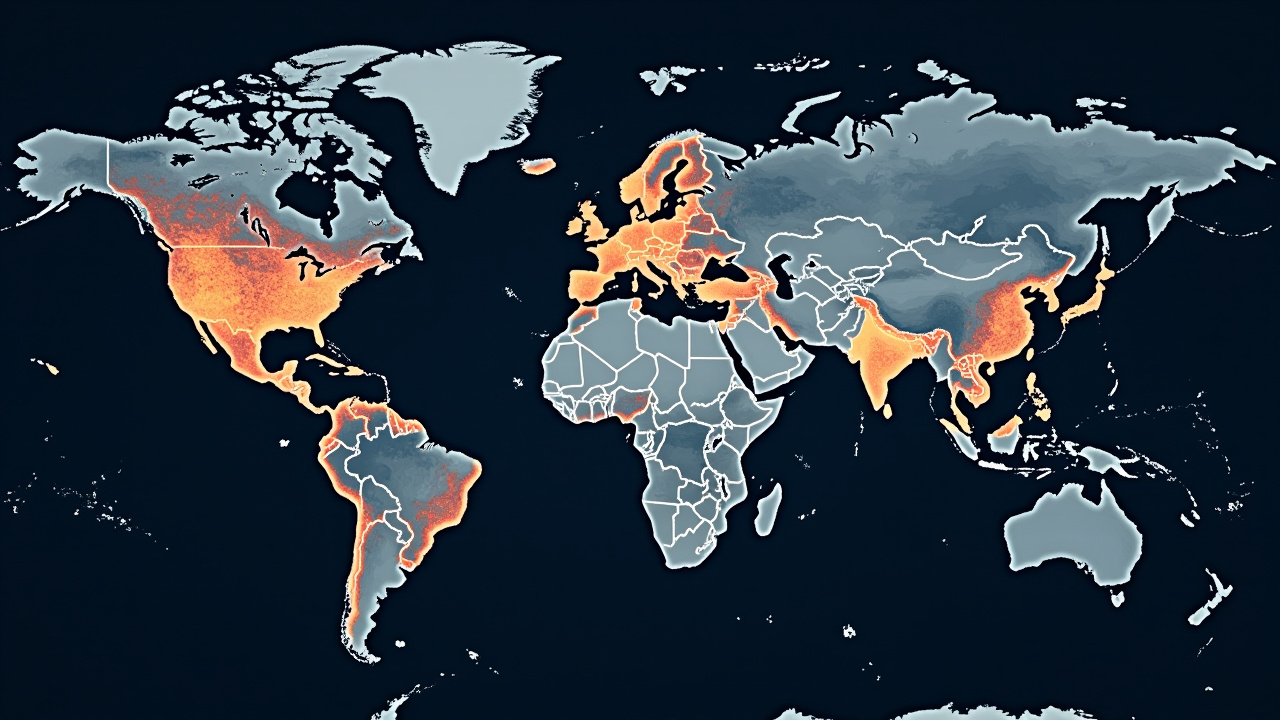
In the spring of 2026 the global semiconductor industry reached a crisis point that few predicted and everyone is now scrambling to address. A shortage of advanced chips has cascaded through every sector of the modern economy from automotive plants idling assembly lines to data centers rationing GPU allocations to AI research teams waiting months for the hardware they need to stay competitive. The shortage is not a temporary glitch. It is the symptom of a structural misalignment between global demand for advanced computing and the concentrated supply of fabrication capacity required to produce it.
The numbers are unambiguous. TSMC produces approximately 90 percent of the world is most advanced logic chips. Taiwan produces over 50 percent of global semiconductor output by revenue. A single fabrication plant in Tainan represents the sole supplier for Apple is A-series processors, Nvidia is H100 GPUs, and the modems inside every major smartphone brand. The concentration is a deliberate outcome of three decades of industrial optimization for efficiency over resilience and it is now a geopolitical time bomb.
The Architecture of a Crisis
The semiconductor shortage traces its roots to three overlapping failures that converged in 2025 and peaked in early 2026. The first is demand acceleration: the COVID-19 pandemic accelerated digital transformation across every industry by five to seven years, creating sudden spike demand for chips in PCs, data centers, autos, and IoT devices that supply chains were not designed to absorb. The second is supply concentration: over 80 percent of advanced logic chip production capacity resides in Taiwan within a 180 kilometer radius of a geopolitical flashpoint. The third is investment lag: new fabrication plants take four to six years to build and commission, meaning that investment decisions made in 2021 are only now beginning to come online.
South Korea, a global leader in DRAM and NAND flash production, has committed 19.1 trillion won to semiconductor RandD through 2030 with Samsung and SK Hynix jointly building new logic fabs in Pyeongtaek. TSMC is constructing three new fabrication facilities simultaneously, a 300 billion dollar commitment that dwarfs any semiconductor investment in history. Intel has committed 100 billion dollars across eight countries through its Intel Foundry division. The map of global chip manufacturing is being redrawn in real time and the countries that win these investments will set the terms of technological competition for the next three decades.
Semiconductor supply chains are the circulatory system of the modern economy. A disruption in advanced chips cascades through everything from car factories to fighter jet assembly lines. The concentration of production in a single region makes this an economic and national security problem simultaneously.
— Chris Lek, Director of Semiconductor Industry Association, March 2026
The Taiwan Variable
No factor weighs more heavily on the global chip supply equation than Taiwan. TSMC alone fabricates approximately 90 percent of the world is most advanced logic chips, including the silicon that powers the AI accelerators Nvidia designs, the processors Apple designs, and the modems Qualcomm designs. A disruption to TSMC operations whether from natural disaster, conflict, or political coercion would represent the single largest supply chain shock in recorded economic history.
Taiwan produces over 50 percent of the world is total semiconductor output by revenue and hosts the entire supply chain ecosystem from EDA software vendors to packaging and test facilities. This concentration is a deliberate outcome of decades of industrial policy that prioritized efficiency over resilience. The COVID-19 pandemic and the 2025 US-China trade escalation exposed the fragility of that choice in a way that policymakers can no longer ignore.
When a single company fabricates the chips that underpin the AI capabilities of the United States, Europe, Japan, and South Korea, we have built a strategic vulnerability into the foundation of our technological civilization. The question is not whether we address it. The question is whether we address it before a crisis forces us to.
— Dr. Erik Brynjolfsson, Stanford Digital Economy Lab, April 2026
The Investment Race and Its Geopolitical Echoes
The United States CHIPS and Science Act committed 52.7 billion dollars to domestic semiconductor manufacturing and research, the largest federal industrial intervention since the space race. The EU Chips Act targets 43 billion euros in public and private investment to double Europe share of global chip production to 20 percent by 2030. Japan has allocated 2.3 trillion yen to support TSMC, Samsung, and Micron in building domestic fabrication capacity. South Korea has committed 19.1 trillion won.
These investments are simultaneously economic and strategic. Each government is not just trying to grow its semiconductor industry. It is trying to reduce its dependency on a single geographic region for the silicon that powers its military systems, its AI capabilities, and its economic competitiveness. The result is a global subsidy race that is reshaping where chips are made, who makes them, and who controls the supply chains that underpin modern civilization.
AI and the Chip Hunger
The artificial intelligence boom has added a new dimension of urgency to the semiconductor shortage. Training large language models requires thousands of advanced GPUs running in parallel for weeks or months at a time. The compute demand for frontier AI models has been doubling every eight months, outpacing the ability of fabrication capacity to expand. Nvidia H100 GPU clusters that were priced at 25 thousand dollars in early 2023 now carry price tags of 45 to 60 thousand dollars on secondary markets with six to nine month lead times.
This dynamic is creating a new form of AI inequality. Organizations and countries with access to advanced chip supplies can train frontier models, run inference at scale, and develop proprietary AI applications. Those without access fall behind in real time and find themselves perpetually catching up rather than leading. The semiconductor shortage is not just an economic inconvenience. It is becoming a determinant of national AI competitiveness.
The Bottom Line
The semiconductor shortage of 2026 is the opening move in a decades-long competition over the foundational infrastructure of the modern economy. The countries that build fabrication capacity, control design intellectual property, and secure the materials supply chain will hold the keys to AI leadership, military technological superiority, and economic competitiveness. That competition is already underway and it will not slow down regardless of what happens with the Taiwan Strait.
The challenge for the United States and its allies is that semiconductor manufacturing is extraordinarily capital-intensive, requires specialized labor pools that take decades to build, and is dominated by companies that have spent 30 years optimizing for efficiency rather than resilience. Fixing that in five years requires not just money but institutional innovation: new workforce development models, faster permitting, aggressive technology transfer policies, and a willingness to accept higher costs in exchange for supply chain security.
The era of cheap chips and concentrated production is ending. The era of strategic semiconductor competition is just beginning.
David Foster is a Senior Analyst for Media Hook, specializing in geopolitical analysis, economic trends, and the forces reshaping the global order.