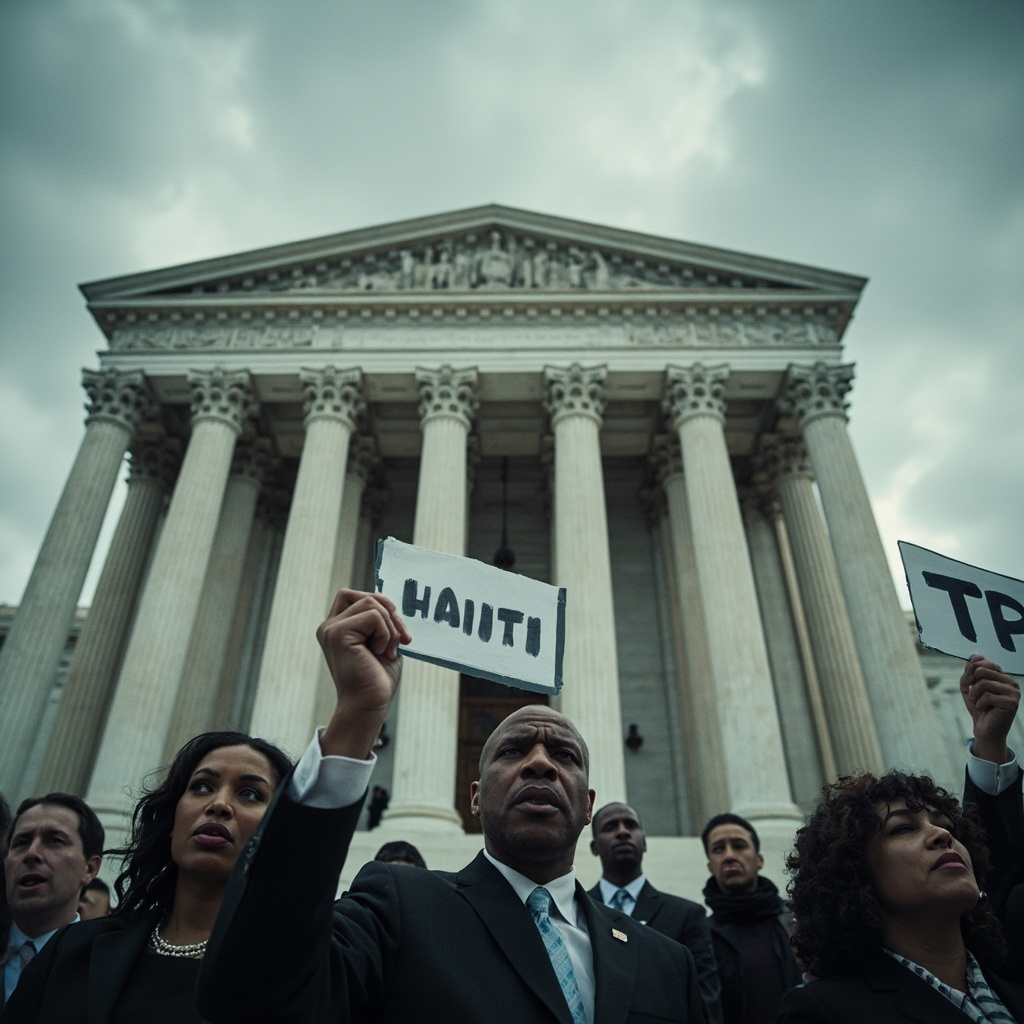
A 6-3 Ruling on Humanitarian Protections
The Supreme Court issued a landmark ruling Thursday allowing the Trump administration to end Temporary Protected Status for roughly 350,000 Haitian and 6,100 Syrian immigrants, delivering one of the most consequential immigration decisions of the term and ending years of legal protections for some of the most vulnerable displaced populations in the United States.
In a 6-3 decision authored by Justice Samuel Alito, the Court conservative majority overturned lower court rulings from New York and Washington, D.C., that had temporarily blocked the administration actions. Alito wrote that federal courts have no authority to review TPS termination decisions, a sweeping declaration that could affect challenges to similar revocations for any of the 17 countries currently designated under the program.
“The law governing TPS plainly bars such judicial review,” Alito wrote in the majority opinion, a position that effectively shutters ongoing legal challenges and leaves affected immigrants with no further court remedy at the federal level.
What the Ruling Means for Affected Communities
TPS allows migrants from countries ravaged by war, natural disaster, or other catastrophes to live and work legally in the United States until conditions improve enough for safe return. Haiti first received TPS after a catastrophic earthquake in 2010, and Syria was designated in 2012 as its civil war accelerated. The program has kept hundreds of thousands of people in legal limbo for more than a decade, unable to fully plan their futures or fully integrate into American society.
The administration, led by former Department of Homeland Security Secretary Kristi Noem at the time the decisions were made, argued that TPS was never intended to function as permanent residency and that the program had been misused. Noem revoked both designations on national interest grounds before being fired by President Trump in March. The State Department currently warns American citizens against travel to Haiti, citing widespread gang violence, kidnapping, and crime, and to Syria, where terrorism and civil conflict remain endemic.
Haitian and Syrian TPS holders filed separate class-action lawsuits challenging the terminations. The plaintiffs argued that administration officials failed to follow mandatory protocols requiring formal assessment of country conditions before revoking a designation. They also alleged the decisions were racially biased, in violation of the Fifth Amendment equal protection guarantee. Alito rejected both arguments summarily, writing that the challengers were unlikely to succeed on the merits.
A Landmark Expansion of Executive Power
The TPS ruling is the latest in a series of Supreme Court decisions this term that have broadly expanded presidential authority over immigration and asylum policy. Last year, the Court allowed the administration to deport immigrants to countries where they have no ties and to prioritize deportations based partly on an individual race or language. Thursday second immigration ruling upheld the government authority to implement metering at the southern border, a policy that caps the number of asylum seekers allowed to present themselves each day.
The decisions underscore a Court that has shown consistent deference to the executive branch on matters of immigration, national security, and foreign policy, areas where the justices have historically granted presidents wide latitude. They also represent a significant expansion of what legal advocates call a pattern of stripping away humanitarian safeguards that have protected vulnerable populations for decades.
Advocacy groups decried the ruling. “This is a devastating blow to hundreds of thousands of people who have built their lives, opened businesses, raised families, and contributed to their communities for years or even decades in this country,” said one immigration attorney speaking on behalf of a coalition of legal services organizations representing TPS holders. “These are not abstract statistics. They are our neighbors, our colleagues, and our friends.”
The administration has indicated it will move swiftly to implement the terminations, though the exact timeline remains unclear. TPS holders will receive notices, and those who fail to obtain other legal status will face removal proceedings. For the Haitian community in particular, which has already weathered years of political turmoil and humanitarian crisis, the ruling marks the end of a fragile but stable chapter in the United States.