South Korea Unveils $576 Billion AI Chip Push to Outpace China and Cement Semiconductor Dominance
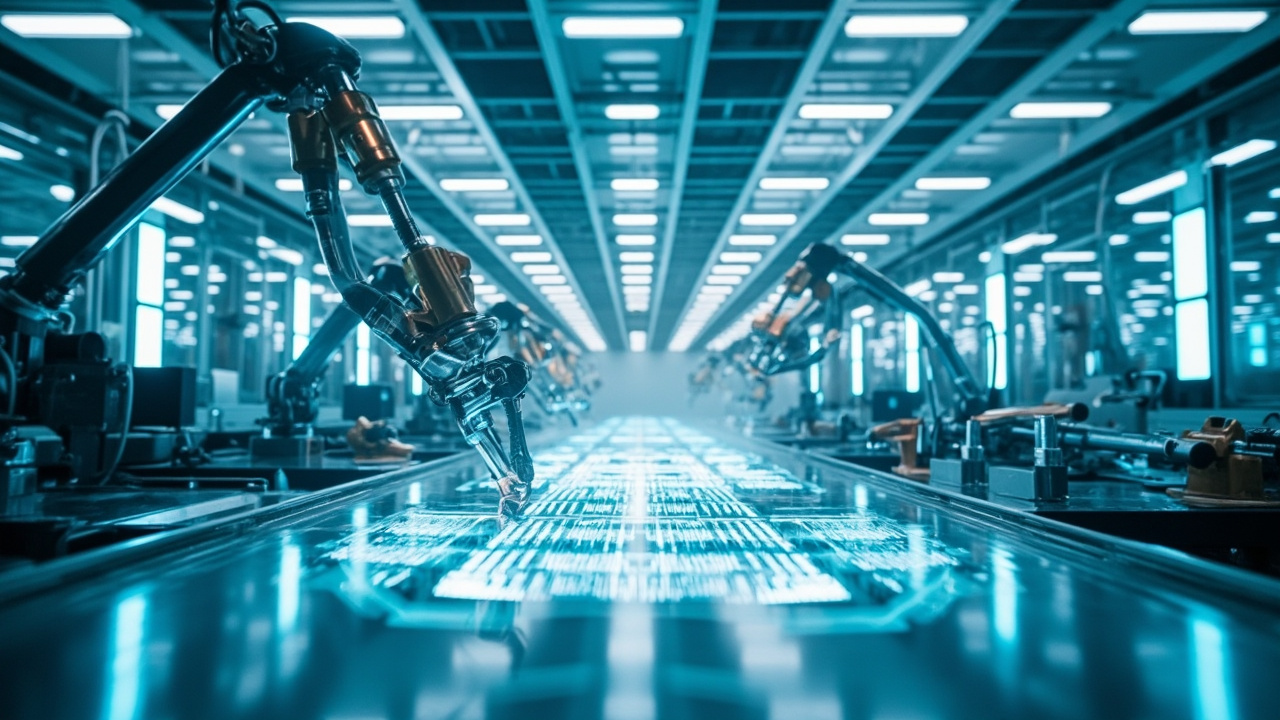
SEOUL — South Korea launched its most ambitious industrial bet in decades on Monday, as President Lee Jae Myung pledged more than $576 billion over several years to build the world’s most advanced AI chip manufacturing ecosystem, aiming to lock in semiconductor dominance before rival nations close the gap. The commitment — backed by Samsung and SK Hynix, which together supply the memory chips powering virtually every major AI data center globally — exceeds the annual gross domestic product of most sovereign nations and signals a level of state-driven industrial ambition not seen in Seoul since the postwar chaebol buildout that transformed the Korean economy into a manufacturing powerhouse.
The Largest Industrial Pledge in Korean History
Lee was joined by Samsung Electronics Chairman Lee Jae-yong and SK Group Chairman Chey Tae-won for the televised announcement in Seoul. The plan centers on a joint investment of 800 trillion won ($517.87 billion) from Samsung and SK Hynix — the world’s two largest memory chipmakers — plus their domestic supply chains. Each company will build two new semiconductor fabrication plants in South Korea’s southwest region, targeting the Pyeongtaek and Gwangju corridors. South Jeolla province and Gwangju city have each pledged 5 to 20 trillion won in infrastructure and power support. The government also earmarked 81 trillion won for an advanced chip packaging cluster in the Chungcheong region near Seoul, targeting the growing market for heterogeneous integration — stacking different chip types together to boost AI performance — which industry experts describe as the next major battleground in AI hardware.
“We must secure the core elements of AI faster than any other country,” Lee told reporters. “Semiconductors, physical AI, and AI data centres are the triple axis for our great leap forward.” The investment dwarfs anything South Korea has previously committed to a single industrial sector. SK Hynix and Samsung between them supply the high-bandwidth memory chips that power virtually every major AI data center globally, and both have been under pressure to demonstrate they can scale production fast enough to meet surging demand from cloud providers and technology firms.
Why the Urgency Now
The timing reflects mounting geopolitical pressure on South Korea’s chip sector. China’s state-backed semiconductor industry has accelerated following years of U.S. export controls, with Beijing pouring hundreds of billions into domestic chipmaking capacity. Taiwan’s TSMC has announced its own record capital expenditure expansion. Japan and the United States have enacted chip subsidy legislation designed to attract semiconductor investment away from East Asia. South Korean officials privately acknowledge that without a decisive government response, the country’s chip sector — which accounts for roughly a fifth of all Korean exports — could be outpaced within five years.
SK Hynix currently supplies Nvidia with the advanced high-bandwidth memory chips essential for AI training clusters, giving it a dominant but potentially vulnerable market position. Samsung has been racing to close the technology gap with its domestic rival in both memory and contract chipmaking simultaneously. The new government backing is designed to accelerate both efforts. Shares of Samsung Electronics fell 4.8 percent on Monday following the announcement, while SK Hynix declined 1.6 percent — a market reaction analysts attributed to concerns about dilution and capital intensity rather than skepticism about the industrial logic behind the plan.
What Comes Next
The southwest cluster is expected to break ground by early 2027, with the first production lines targeted for output by 2029. Whether the investment figures hold as announced will depend on global memory chip pricing, AI infrastructure spending trends, and whether the permitting fast-track survives parliamentary scrutiny. The National Assembly is expected to vote on enabling legislation by the fourth quarter of this year. If South Korea executes even a substantial portion of the plan as described, it would represent the most concentrated burst of semiconductor investment any single country has attempted outside of China’s state-directed program. The real test will come when construction contracts are awarded and output timelines are confirmed against competing projects in Taiwan, the United States, and Japan. Investors will be watching for concrete fab capacity announcements from Samsung and SK Hynix in the second half of this year as the first signal of whether the headline figure translates into real construction activity rather than political announcement. Markets will also be watching for any spillover effect on memory chip pricing, which has been volatile as AI infrastructure spending reshapes demand patterns across the global supply chain.