Europe Heatwave: Death Toll Surpasses 1,300 as Balkans Wildfires Spread
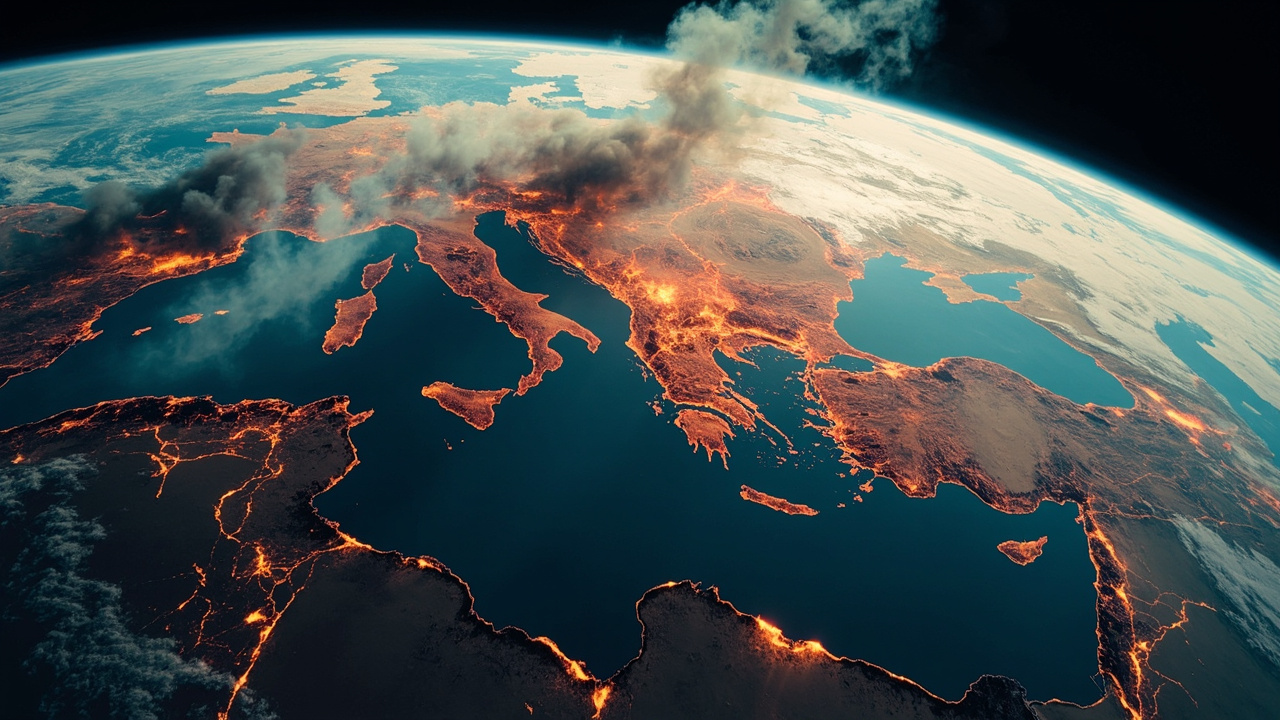
The death toll from an unrelenting Europe-wide heatwave climbed past 1,300 on Monday as temperatures exceeded 40 degrees Celsius across the Balkans and emergency crews battled spreading wildfires from Greece to Romania. The extreme heat, which meteorologists classified as a once-in-a-generation event, first struck Western Europe in late June before drifting east and intensifying over the past 72 hours, overwhelming hospitals, straining power grids and forcing mass evacuations in several countries.
Death Toll Surpasses 1,300 as Heat Claims Scale Widens
Health authorities in Greece, Italy, Croatia and Bosnia-Herzegovina reported the bulk of heat-related fatalities, with Greece confirming at least 340 deaths as of Monday morning. The country’s national health service said emergency rooms in Athens, Thessaloniki and Crete had reached capacity, with doctors forced to treat patients in corridors and parking lots. Italian officials recorded 289 deaths attributed to hyperthermia, while Croatia and Bosnia together reported more than 160 additional fatalities. The figures represent a sharp acceleration from the roughly 400 deaths reported across the region as recently as Thursday, underscoring how quickly conditions deteriorated as the heat dome settled over southeastern Europe.
The World Health Organization described the situation as a public health emergency of regional concern and called on affected governments to activate maximum cooling centre capacity. Dr. Hans Henri Kluge, the WHO’s regional director for Europe, said the death toll would likely continue to rise as the heatwave showed no immediate signs of breaking. “This event is exceeding the adaptive capacity of health systems across multiple countries simultaneously,” Kluge told reporters in Geneva. “The mortality we are seeing today reflects exposure conditions that existed 48 to 72 hours ago. We should brace for further increases.”
Ukraine Grid Under Severe Strain as Cooling Demand Surges
The heatwave arrived as Ukraine was already managing severe electricity shortages caused by relentless Russian strikes on power infrastructure. Grid operator Ukrenerho imposed emergency power cuts across Kyiv, Kharkiv, Odesa and six other major cities on Sunday night as demand for air conditioning and cooling surged to levels not seen since the summer of 2023. The state broadcaster Suspilne reported that average household consumption rose by more than 35 percent compared with the same period last year, pushing several generating units beyond their designed operating temperatures.
Ukraine’s Minister of Energy, Герман Галущенко, said in a statement that the government was coordinating emergency imports of electricity from Poland and Slovakia and was in talks with Moldova about additional supplies. “The combination of summer heat, pre-existing damage to our generation fleet and heightened demand has created a situation that requires extraordinary measures,” Галущенко said, noting that residential cooling was being prioritised over industrial users. Russia confirmed it had targeted electrical infrastructure in overnight drone strikes on Sunday, damaging three substations in the Dnipro and Kryvyi Rih areas — a development that further complicated Ukraine’s efforts to maintain grid stability.
Wildfires Spread Across Balkans; Greece Requests EU Mutual Aid
In Greece, more than 40 separate wildfires burned across the mainland and islands on Monday, forcing the evacuation of at least a dozen coastal resorts and endangering archaeological sites near Olympia and Epidaurus. The Greek fire service said it had mobilised more than 1,800 firefighters, supported by aircraft borrowed from France, Spain and Italy under the EU Civil Protection Mechanism. Primeмістр Κυριάκος Μητσοτάκης formally requested activation of the EU mutual aid programme in a letter to Commission President Ursula von der Leyen, writing that “the scale and simultaneous nature of these fires has exhausted all national response capacity.”
Romania declared a national emergency on Sunday after wildfires consumed an estimated 30,000 hectares of forest in the Danube Delta region, threatening protected wetlands and displacing wildlife. Bulgarian authorities reported 22 active fire fronts across the country’s southern provinces, and the defence ministry approved the deployment of army reservists to support firefighting operations. Smoke from the fires reached as far as northern Italy and Austria, degrading air quality in cities including Milan and Vienna and prompting health advisories for vulnerable populations.
The Copernicus Atmosphere Monitoring Service estimated that fine particulate pollution across the central and eastern Mediterranean exceeded safe levels by a factor of six on Monday, with the worst conditions recorded in Athens, Tirana and Skopje. Physicians in several cities reported a surge in respiratory and cardiovascular emergency admissions, compounding the pressure already faced by emergency rooms overwhelmed by heat-related illness.
Diplomatic Pressure Mounts as Climate Costs Escalate
The cumulative strain of extreme heat, infrastructure damage and wildfire response was reshaping diplomatic calculations across the region. Turkish President Recep Tayyip Erdoğan hosted an emergency video conference with the leaders of Greece, Bulgaria and Serbia on Sunday, proposing a joint request for accelerated EU climate adaptation funding. The European Commission said it was reviewing whether existing Emergency Emergency Response Coordination Centre procedures were adequate for a crisis spanning multiple countries simultaneously.
Climate scientists warned that the heatwave was consistent with long-term trends driven by rising global temperatures and called for urgent investment in cooling infrastructure across the region. “What we are witnessing is not an anomaly — it is a preview of conditions that will become the norm by the 2040s under current emission trajectories,” said Dr. Friederike Otto, a senior lecturer in climate science at Imperial College London. “The human and economic costs we are seeing today will appear modest compared with what follows if adaptation investments are not accelerated dramatically.”
Regional leaders convened an emergency virtual summit on Monday afternoon to coordinate cross-border firefighting resources and request international assistance. European Commission President von der Leyen said the bloc would deploy additional firefighting aircraft from the rescEU reserve and was working to unlock emergency EU funds for the most affected member states. The summit was expected to conclude with a joint declaration on climate resilience spending, though diplomats cautioned that differences over who would bear the costs of adaptation remained unresolved.