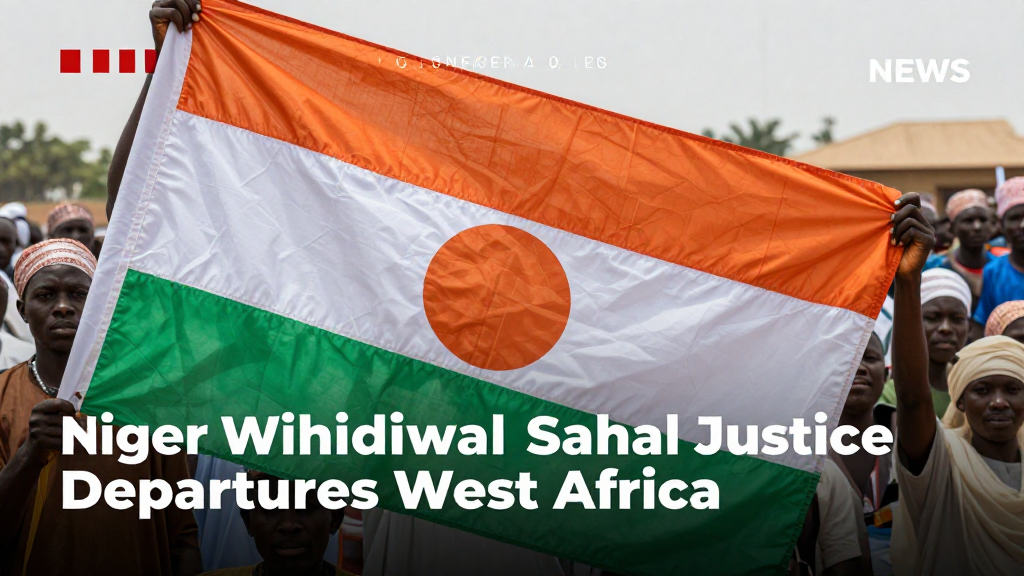
Niger ICC Withdrawal and Sahel Justice Departures Reshape West Africa
Niger has formally notified the International Criminal Court of its decision to withdraw from the tribunal, a move that will take effect in one year, according to a notice filed with the ICC registrar on June 27. The decision follows a September 2025 announcement by Niger, Mali, and Burkina Faso rejecting the ICC’s authority and describing it as an instrument of “neo-colonialist repression.” All three military-led Sahel nations have since said they intend to establish their own mechanisms for peace and justice, effectively ending their participation in the international judicial system.
Niger Formalises ICC Exit Amid Sahel Withdrawal Wave
The ICC confirmed receipt of Niger’s formal notification, saying the country remains bound by its obligations to the court until the withdrawal process is completed under Article 127 of the Rome Statute. Niger’s departure seals a remarkable collapse of ICC jurisdiction across the Sahel. Mali withdrew in January 2026 and Burkina Faso followed in April, leaving the ICC with no leverage over any of the three states that once looked to it as a guarantor of accountability for war crimes and crimes against humanity.
The three nations, which control territory spanning a vast expanse of the Sahel, have increasingly turned to Russia for security cooperation while publicly denouncing what they call the West’s weaponisation of international justice. “The ICC has become a tool of imperial overreach against Black African nations,” Niger’s interim information minister Sekou Amadou said in a statement broadcast on state television. “We will answer to our own people and our own history.”
Nigeria-South Africa Tensions Flare Over Xenophobic Violence
Diplomatic relations between Africa’s two largest economies, Nigeria and South Africa, deteriorated sharply on June 28 as xenophobic reprisals spread beyond initial targets. Nigerian-owned businesses in Johannesburg, Durban, and Cape Town were attacked for a third consecutive night, prompting the Nigerian High Commission to issue an emergency evacuation alert for its nationals. At least eleven people have been killed and more than 400 arrested across both countries since the violence erupted.
The original trigger was a protest in Pretoria on June 9, when South African frustration over the treatment of South African migrants in Nigeria boiled over into attacks on Nigerian diplomatic premises. Nigerian authorities arrested and deported dozens of South Africans in the weeks that followed, according to Nigerian immigration officials. South Africa’s President called the violence “a betrayal of African solidarity” but resisted calls to deploy the army, saying law enforcement would “restore order without delay.” Nigeria recalled its high commissioner for consultations, and South Africa reciprocated by expelling three Nigerian diplomats, according to diplomatic sources in Abuja.
“The targeting of Nigerian businesses on South African soil is not spontaneous — it is organised, it is premeditated, and our people are paying the price for political failures on both sides,” said Chika Okonkwo, a Lagos-based analyst with the South Sahara Group. The African Union has issued a statement calling for an immediate cessation of violence and warning that attacks on nationals of one member state by another could trigger formal sanctions proceedings under the AU’s peace and security protocols.
South Sudan Oil Gambit Threatens Fragile Transitional Government
South Sudan’s transitional government was thrown into fresh uncertainty on June 29 when the state oil company announced an immediate suspension of production at the Upper Nile fields, citing a payment dispute with Sudan over transit fees. The shutdown removes approximately 45,000 barrels per day from global markets and cuts off the single largest source of government revenue, triggering a currency collapse in Juba where the South Sudanese pound fell to a record low against the dollar on Tuesday.
The dispute centres on fees Sudan charges to transit South Sudan crude through its pipelines to the Port of Bashair on the Red Sea. South Sudan says Sudan is demanding payment in hard currency that the cash-strapped government cannot afford, while Sudan says it is owed arrears dating back to the 2012 independence agreement. “Sudan is holding our oil hostage to extract concessions it could never win at the negotiating table,” South Sudan’s Petroleum Minister Puok Belek said in a radio address. The African Union dispatched a mediation team to Juba and Khartoum on Tuesday in an effort to broker a temporary payment arrangement before the political fallout spreads further.
The production halt comes at a particularly delicate moment for South Sudan, where President Salva Kiir and Vice President Riek Machar are under intense international pressure to hold elections by the February 2027 deadline set in the 2018 peace accord. Without oil revenue, the government cannot pay civil servant salaries or fund the security forces supposed to guarantee election security, officials in Juba said. “Every week of this shutdown erodes the credibility of an already fragile peace process,” said Dr. Jakkie Cilliers, a senior fellow at the Institute for Security Studies in Pretoria. “The international community must step in before this becomes a full-scale state failure.”
Regional leaders are calling for an emergency African Union summit to address what observers describe as a convergence of governance crises stretching from the Sahel to the Horn of Africa. The triple shock of institutional withdrawals, cross-border violence, and resource shutdowns has exposed the limits of existing continental mechanisms, leaving Africa’s diplomatic architecture at its most strained point in a decade.
Home - Breaking - Niger ICC Withdrawal and Sahel Justice Departures Reshape West Africa
Niger ICC Withdrawal and Sahel Justice Departures Reshape West Africa
Niger has formally notified the International Criminal Court of its decision to withdraw from the tribunal, a move that will take effect in one year, according to a notice filed with the ICC registrar on June 27. The decision follows a September 2025 announcement by Niger, Mali, and Burkina Faso rejecting the ICC’s authority and describing it as an instrument of “neo-colonialist repression.” All three military-led Sahel nations have since said they intend to establish their own mechanisms for peace and justice, effectively ending their participation in the international judicial system.
Niger Formalises ICC Exit Amid Sahel Withdrawal Wave
The ICC confirmed receipt of Niger’s formal notification, saying the country remains bound by its obligations to the court until the withdrawal process is completed under Article 127 of the Rome Statute. Niger’s departure seals a remarkable collapse of ICC jurisdiction across the Sahel. Mali withdrew in January 2026 and Burkina Faso followed in April, leaving the ICC with no leverage over any of the three states that once looked to it as a guarantor of accountability for war crimes and crimes against humanity.
The three nations, which control territory spanning a vast expanse of the Sahel, have increasingly turned to Russia for security cooperation while publicly denouncing what they call the West’s weaponisation of international justice. “The ICC has become a tool of imperial overreach against Black African nations,” Niger’s interim information minister Sékou Amadou said in a statement broadcast on state television. “We will answer to our own people and our own history.”
Nigeria-South Africa Tensions Flare Over Xenophobic Violence
Diplomatic relations between Africa’s two largest economies, Nigeria and South Africa, deteriorated sharply on June 28 as xenophobic reprisals spread beyond initial targets. Nigerian-owned businesses in Johannesburg, Durban, and Cape Town were attacked for a third consecutive night, prompting the Nigerian High Commission to issue an emergency evacuation alert for its nationals. At least eleven people have been killed and more than 400 arrested across both countries since the violence erupted.
The original trigger was a protest in Pretoria on June 9, when South African frustration over the treatment of South African migrants in Nigeria boiled over into attacks on Nigerian diplomatic premises. Nigerian authorities arrested and deported dozens of South Africans in the weeks that followed, according to Nigerian immigration officials. South Africa’s President called the violence “a betrayal of African solidarity” but resisted calls to deploy the army, saying law enforcement would “restore order without delay.” Nigeria recalled its high commissioner for consultations, and South Africa reciprocated by expelling three Nigerian diplomats, according to diplomatic sources in Abuja.
“The targeting of Nigerian businesses on South African soil is not spontaneous — it is organised, it is premeditated, and our people are paying the price for political failures on both sides,” said Chika Okonkwo, a Lagos-based analyst with the South Sahara Group. The African Union has issued a statement calling for an immediate cessation of violence and warning that attacks on nationals of one member state by another could trigger formal sanctions proceedings under the AU’s peace and security protocols.
South Sudan Oil Gambit Threatens Fragile Transitional Government
South Sudan’s transitional government was thrown into fresh uncertainty on June 29 when the state oil company announced an immediate suspension of production at the Upper Nile fields, citing a payment dispute with Sudan over transit fees. The shutdown removes approximately 45,000 barrels per day from global markets and cuts off the single largest source of government revenue, triggering a currency collapse in Juba where the South Sudanese pound fell to a record low against the dollar on Tuesday.
The dispute centres on fees Sudan charges to transit South Sudan crude through its pipelines to the Port of Bashair on the Red Sea. South Sudan says Sudan is demanding payment in hard currency that the cash-strapped government cannot afford, while Sudan says it is owed arrears dating back to the 2012 independence agreement. “Sudan is holding our oil hostage to extract concessions it could never win at the negotiating table,” South Sudan’s Petroleum Minister Puok Belek said in a radio address. The African Union dispatched a mediation team to Juba and Khartoum on Tuesday in an effort to broker a temporary payment arrangement before the political fallout spreads further.
The production halt comes at a particularly delicate moment for South Sudan, where President Salva Kiir and Vice President Riek Machar are under intense international pressure to hold elections by the February 2027 deadline set in the 2018 peace accord. Without oil revenue, the government cannot pay civil servant salaries or fund the security forces supposed to guarantee election security, officials in Juba said. “Every week of this shutdown erodes the credibility of an already fragile peace process,” said Dr. Jakkie Cilliers, a senior fellow at the Institute for Security Studies in Pretoria. “The international community must step in before this becomes a full-scale state failure.”
Home - Breaking - Niger ICC Withdrawal and Sahel Justice Departures Reshape West Africa
Niger ICC Withdrawal and Sahel Justice Departures Reshape West Africa
Niger has formally notified the International Criminal Court of its decision to withdraw from the tribunal, a move that will take effect in one year, according to a notice filed with the ICC registrar on June 27. The decision follows a September 2025 announcement by Niger, Mali, and Burkina Faso rejecting the ICC’s authority and describing it as an instrument of “neo-colonialist repression.” All three military-led Sahel nations have since said they intend to establish their own mechanisms for peace and justice, effectively ending their participation in the international judicial system.
Niger Formalises ICC Exit Amid Sahel Withdrawal Wave
The ICC confirmed receipt of Niger’s formal notification, saying the country remains bound by its obligations to the court until the withdrawal process is completed under Article 127 of the Rome Statute. Niger’s departure seals a remarkable collapse of ICC jurisdiction across the Sahel. Mali withdrew in January 2026 and Burkina Faso followed in April, leaving the ICC with no leverage over any of the three states that once looked to it as a guarantor of accountability for war crimes and crimes against humanity.
The three nations, which control territory spanning a vast expanse of the Sahel, have increasingly turned to Russia for security cooperation while publicly denouncing what they call the West’s weaponisation of international justice. “The ICC has become a tool of imperial overreach against Black African nations,” Niger’s interim information minister Sékou Amadou said in a statement broadcast on state television. “We will answer to our own people and our own history.”
Nigeria-South Africa Tensions Flare Over Xenophobic Violence
Diplomatic relations between Africa’s two largest economies, Nigeria and South Africa, deteriorated sharply on June 28 as xenophobic reprisals spread beyond initial targets. Nigerian-owned businesses in Johannesburg, Durban, and Cape Town were attacked for a third consecutive night, prompting the Nigerian High Commission to issue an emergency evacuation alert for its nationals. At least eleven people have been killed and more than 400 arrested across both countries since the violence erupted.
The original trigger was a protest in Pretoria on June 9, when South African frustration over the treatment of South African migrants in Nigeria boiled over into attacks on Nigerian diplomatic premises. Nigerian authorities arrested and deported dozens of South Africans in the weeks that followed, according to Nigerian immigration officials. South Africa’s President called the violence “a betrayal of African solidarity” but resisted calls to deploy the army, saying law enforcement would “restore order without delay.” Nigeria recalled its high commissioner for consultations, and South Africa reciprocated by expelling three Nigerian diplomats, according to diplomatic sources in Abuja.
“The targeting of Nigerian businesses on South African soil is not spontaneous — it is organised, it is premeditated, and our people are paying the price for political failures on both sides,” said Chika Okonkwo, a Lagos-based analyst with the South Sahara Group. The African Union has issued a statement calling for an immediate cessation of violence and warning that attacks on nationals of one member state by another could trigger formal sanctions proceedings under the AU’s peace and security protocols.
South Sudan Oil Gambit Threatens Fragile Transitional Government
South Sudan’s transitional government was thrown into fresh uncertainty on June 29 when the state oil company announced an immediate suspension of production at the Upper Nile fields, citing a payment dispute with Sudan over transit fees. The shutdown removes approximately 45,000 barrels per day from global markets and cuts off the single largest source of government revenue, triggering a currency collapse in Juba where the South Sudanese pound fell to a record low against the dollar on Tuesday.
The dispute centres on fees Sudan charges to transit South Sudan crude through its pipelines to the Port of Bashair on the Red Sea. South Sudan says Sudan is demanding payment in hard currency that the cash-strapped government cannot afford, while Sudan says it is owed arrears dating back to the 2012 independence agreement. “Sudan is holding our oil hostage to extract concessions it could never win at the negotiating table,” South Sudan’s Petroleum Minister Puok Belek said in a radio address. The African Union dispatched a mediation team to Juba and Khartoum on Tuesday in an effort to broker a temporary payment arrangement before the political fallout spreads further.
The production halt comes at a particularly delicate moment for South Sudan, where President Salva Kiir and Vice President Riek Machar are under intense international pressure to hold elections by the February 2027 deadline set in the 2018 peace accord. Without oil revenue, the government cannot pay civil servant salaries or fund the security forces supposed to guarantee election security, officials in Juba said. “Every week of this shutdown erodes the credibility of an already fragile peace process,” said Dr. Jakkie Cilliers, a senior fellow at the Institute for Security Studies in Pretoria. “The international community must step in before this becomes a full-scale state failure.”
Home - Breaking - Niger ICC Withdrawal and Sahel Justice Departures Reshape West Africa
Niger ICC Withdrawal and Sahel Justice Departures Reshape West Africa
Niger has formally notified the International Criminal Court of its decision to withdraw from the tribunal, a move that will take effect in one year, according to a notice filed with the ICC registrar on June 27. The decision follows a September 2025 announcement by Niger, Mali, and Burkina Faso rejecting the ICC’s authority and describing it as an instrument of “neo-colonialist repression.” All three military-led Sahel nations have since said they intend to establish their own mechanisms for peace and justice, effectively ending their participation in the international judicial system.
Niger Formalises ICC Exit Amid Sahel Withdrawal Wave
The ICC confirmed receipt of Niger’s formal notification, saying the country remains bound by its obligations to the court until the withdrawal process is completed under Article 127 of the Rome Statute. Niger’s departure seals a remarkable collapse of ICC jurisdiction across the Sahel. Mali withdrew in January 2026 and Burkina Faso followed in April, leaving the ICC with no leverage over any of the three states that once looked to it as a guarantor of accountability for war crimes and crimes against humanity.
Despite the withdrawal request, the ICC said Niger remains bound by its obligations to the court until the process is completed. The three nations, which control territory spanning a vast expanse of the Sahel, have increasingly turned to Russia for security cooperation while publicly denouncing what they call the West’s weaponisation of international justice. “The ICC has become a tool of imperial overreach against Black African nations,” Niger’s interim information minister Sékou Amadou said in a statement broadcast on state television. “We will answer to our own people and our own history.”
Nigeria-South Africa Tensions Flare Over Xenophobic Violence
Diplomatic relations between Africa’s two largest economies, Nigeria and South Africa, deteriorated sharply on June 28 as xenophobic reprisals spread beyond initial targets. Nigerian-owned businesses in Johannesburg, Durban, and Cape Town were attacked for a third consecutive night, prompting the Nigerian High Commission to issue an emergency evacuation alert for its nationals. At least eleven people have been killed and more than 400 arrested across both countries since the violence erupted.
The original trigger was a protest in Pretoria on June 9, when South African frustration over the treatment of South African migrants in Nigeria boiled over into attacks on Nigerian diplomatic premises. Nigerian authorities arrested and deported dozens of South Africans in the weeks that followed, according to Nigerian immigration officials. South Africa’s President called the violence “a betrayal of African solidarity” but resisted calls to deploy the army, saying law enforcement would “restore order without delay.” Nigeria recalled its high commissioner for consultations, and South Africa reciprocated by expelling three Nigerian diplomats, according to diplomatic sources in Abuja.
“The targeting of Nigerian businesses on South African soil is not spontaneous — it is organised, it is premeditated, and our people are paying the price for political failures on both sides,” said Chika Okonkwo, a Lagos-based analyst with the South Sahara Group. The African Union has issued a statement calling for an immediate cessation of violence and warning that attacks on nationals of one member state by another could trigger formal sanctions proceedings under the AU’s peace and security protocols.
South Sudan Oil Gambit Threatens Fragile Transitional Government
South Sudan’s transitional government was thrown into fresh uncertainty on June 29 when the state oil company announced an immediate suspension of production at the Upper Nile fields, citing a payment dispute with Sudan over transit fees. The shutdown, which removes approximately 45,000 barrels per day from global markets, cuts off the single largest source of government revenue and has triggered a currency collapse in Juba, where the South Sudanese pound fell to a record low against the dollar on Tuesday.
The dispute centres on fees Sudan charges to transit South Sudan crude through its pipelines to the Port of Bashair on the Red Sea. South Sudan says Sudan is demanding payment in hard currency that the cash-strapped government cannot afford, while Sudan says it is owed arrears dating back to the 2012 independence agreement. “Sudan is holding our oil hostage to extract concessions it could never win at the negotiating table,” South Sudan’s Petroleum Minister Puok Belek said in a radio address. The African Union dispatched a mediation team to Juba and Khartoum on Tuesday in an effort to broker a temporary payment arrangement before the political fallout spreads further.
The production halt comes at a particularly delicate moment for South Sudan, where President Salva Kiir and Vice President Riek Machar are under intense international pressure to hold elections by the February 2027 deadline set in the 2018 peace accord. Without oil revenue, the government cannot pay civil servant salaries or fund the security forces supposed to guarantee election security, officials in Juba said. “Every week of this shutdown erodes the credibility of an already fragile peace process,” said Dr. Jakkie Cilliers, a senior fellow at the Institute for Security Studies in Pretoria. “The international community must step in before this becomes a full-scale state failure.”


