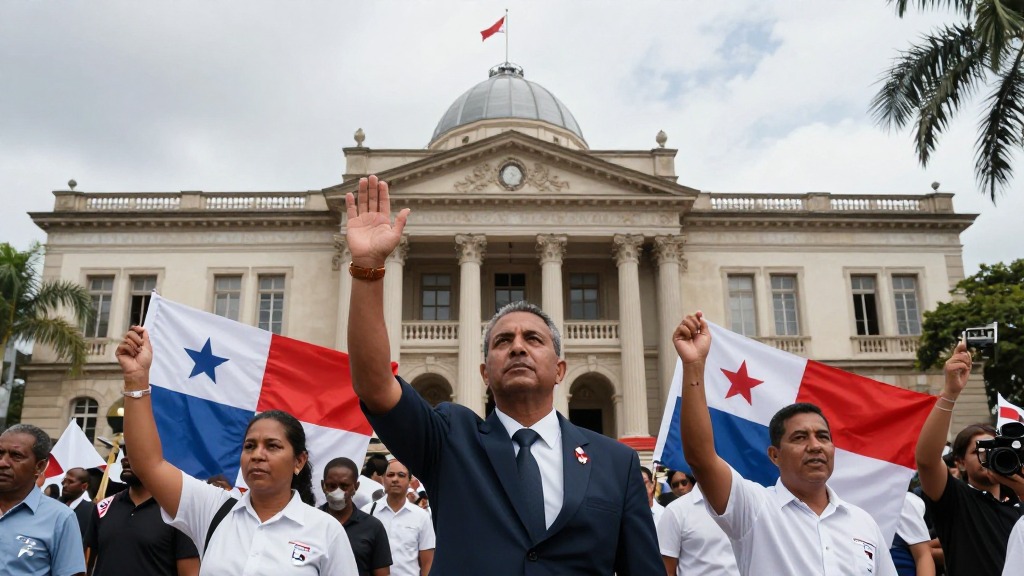
Panama City, June 30 — Panama’s Supreme Court has upheld the controversial constitutional reform that grants President José Raúl Mulino unchecked control over the country’s public finances, a ruling that has sparked mass protests and growing international concern over the state of democracy in Central America.
Supreme Court Ruling Confirms Broad Financial Powers
The court’s 7-2 decision, handed down late Monday, effectively grants the executive branch authority to redirect public funds without legislative approval for the next three years. Government officials say the measure is essential to addressing Panama’s fiscal crisis, but critics warn it concentrates power in ways that mirror authoritarian tendencies seen across the region.
“This ruling tears a hole in our constitution,” said opposition legislator Zulay Rodríguez. “What we are seeing is the dismantling of democratic checks and balances under the guise of fiscal urgency.”
Protests Spread Across Panama City
Tens of thousands of Panamanians took to the streets for the third consecutive night Monday, blocking major avenues in Panama City and the Atlantic highway. Demonstrators clashed with riot police in the Casco Viejo district, where authorities deployed tear gas and flash grenades after protesters threw rocks and set burning barricades.
The protests have drawn broad coalition support — from student unions and indigenous groups to business associations and opposition political parties — all united by opposition to what they call an executive power grab. Panama’s bar association announced it would seek international legal review through the Inter-American Commission on Human Rights.
International Community Watches Closely
The Organization of American States issued a statement expressing “serious concern” over the concentration of executive power and called for dialogue between the government and opposition. The U.S. State Department said it was monitoring the situation closely, though it stopped short of issuing sanctions.
Panama, which regained control of the canal in 1999 and has long been seen as a regional democratic success story, now finds itself at a crossroads. The fiscal crisis driving Mulino’s reforms is real — the country is grappling with a debt burden that has pushed sovereign yields to distressed levels. But the method of resolution, critics say, threatens to undermine the very institutions that have kept Panama stable for decades.
The next legislative session begins July 15, where opposition leaders have vowed to challenge the court’s ruling through impeachment proceedings against sympathetic justices. Whether those efforts succeed or the protests deepen will determine whether Panama avoids the kind of institutional collapse that has reshaped politics in neighboring Nicaragua and Honduras.