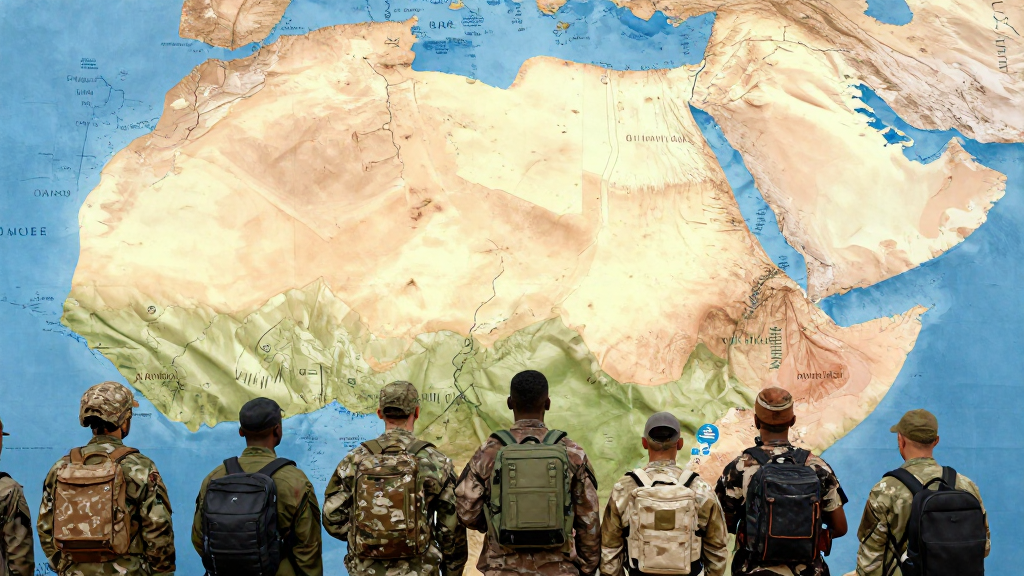
The Horn of Africa is entering one of its most fragile diplomatic phases in years as Somalia and Ethiopia remain locked in a deepening dispute over a port agreement with the breakaway republic of Somaliland. The standoff, which began when Ethiopia signed a deal to establish a naval base on Somaliland’s coastline in early 2026, has strained bilateral relations, rekindled old territorial grievances and drawn in regional powers with competing strategic interests. Turkey’s attempt at mediation produced a temporary ceasefire in diplomatic rhetoric, but analysts warn that without a durable settlement the fault line could destabilise the entire eastern African seaboard.
Diplomatic Tensions Escalate in the Horn of Africa
The crisis traces back to January 2026, when Ethiopian Prime Minister Abiy Ahmed signed a memorandum of understanding with Somaliland’s leadership, securing rights to a 20-kilometre stretch of coastline for a naval base in exchange for what was widely reported to be Ethiopian recognition of Somaliland’s independence. Somalia, which has never relinquished its legal claim over Somaliland despite three decades of de facto autonomy, immediately condemned the move as an act of aggression and expelled the Ethiopian ambassador. Ethiopia, the world’s most populous landlocked nation, has long argued that reliable sea access is a strategic necessity, and officials insist their interest is purely commercial rather than militarily aggressive. Somaliland’s newly elected president Abdirahman Mohamed Abdullahi took office without referencing the port agreement in his inauguration address, raising fresh uncertainty about whether the deal would survive the leadership transition.
Regional analysts say the stakes extend far beyond the two countries. Egypt, itself locked in a separate dispute with Ethiopia over the Grand Ethiopian Renaissance Dam, has deepened its security partnership with Somalia, signing a defence cooperation accord that includes military training and equipment supply. “What we are witnessing is not simply a bilateral quarrel,” said Dr. Ahmed Samatar, a Horn of Africa specialist at the University of Pretoria. “It is a competition over the rules governing access to the Red Sea and the Gulf of Aden, and that competition involves at least four major powers and several non-state actors with their own agendas.”
Regional and International Reactions
Turkey stepped in as a mediator in late 2026, hosting both leaders in Ankara and producing a joint declaration that called for technical talks to begin in February and for Ethiopia to gain sea access “under Somalia’s sovereignty.” Turkish President Recep Tayyip Erdogan, who has cultivated strong economic ties with Ethiopia and security partnerships with Somalia, described the outcome as “the first step towards a new beginning.” At a press conference flanked by Abiy and Somali President Hassan Sheikh Mohamud, Erdogan said: “I congratulate both my brothers for reaching this historic reconciliation with devotion and thank them for their constructive attitude.” President Mohamud stated his government was “ready to work with the Ethiopian leadership and the Ethiopian people,” while Abiy insisted Ethiopia’s quest for sea access “did not threaten Somalia” and that both sides had “addressed the misunderstandings that have occurred over the past year.”
The African Union has issued no formal statement on the dispute, though diplomatic sources say the organisation’s Peace and Security Council is considering an emergency session. The United States has urged both sides to exercise restraint, while the European Union warned that continued instability would jeopardise Red Sea shipping lanes that carry roughly 15 percent of global maritime trade. The League of Arab States called for dialogue but has proposed no concrete mediation framework, leaving Turkey as the primary external interlocutor.
What Comes Next
The February 2026 technical talks agreed in Ankara have yet to produce a formal framework, and both sides have hardened their public positions in the weeks since the ceremony. Somalia continues to demand full cancellation of the Somaliland base agreement as a precondition for normalisation, while Ethiopia has refused to cede what it describes as its sovereign right to pursue commercial sea access through any willing partner. Somaliland occupies an ambiguous position: its government wants the deal with Ethiopia to proceed but lacks the leverage to force acceptance from Mogadishu, and its new president faces domestic pressure to deliver economic benefits without provoking wider conflict that could undermine the territory’s hard-won stability.
Border communities report increased security checkpoints and traders being turned back at crossings, while Somali ports that once handled Ethiopian transit cargo have seen sharp declines in revenue. “The window for a managed solution is narrowing,” said Dr. Samatar. “If the technical talks collapse without an agreement, the forces already in motion on the ground will take over, and they will not be kind to anyone.” The Horn of Africa has survived previous cycles of tension before, but the current configuration of rivalries is among the most complex the region has faced in decades.