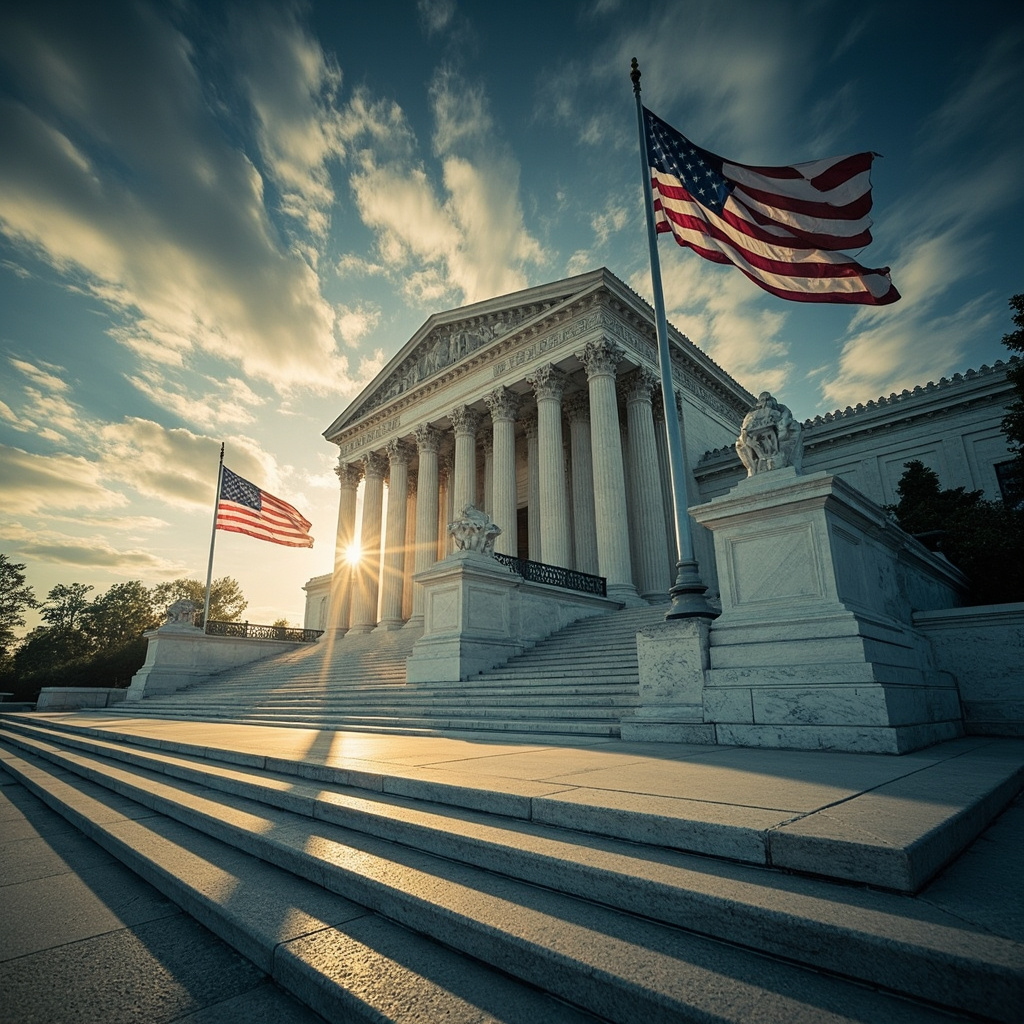
The United States Supreme Court on Monday issued a series of major rulings related to President Donald Trump, including three that went against him and one that went in his favour. The decisions, handed down before the Court’s traditional summer recess begins in July, ranged from the president’s authority over independent government regulators to voting rights and a sexual assault judgement. The mixed verdict underscored an institution navigating the line between checked presidential power and expansive executive authority.
Executive Power Expanded: The FTC Ruling
In a 6-3 vote along ideological lines, the Supreme Court increased Trump’s executive power to fire members of independent government agencies without having to give a reason. The majority upheld the Republican president’s dismissal of Democratic Federal Trade Commission member Rebecca Slaughter, overturning a landmark 1935 precedent that had shielded leaders of regulatory agencies from presidential removal at will. Lower courts had previously ruled that Trump’s removal of Slaughter violated rules Congress enacted to protect independent regulators. The Supreme Court’s reversal changes that calculus entirely.
“Trump’s control over the executive branch and ability to fire civil servants at will is much enhanced,” Constitutional Lawyer Bruce Fein told Al Jazeera. The decision is expected to affect dozens of agencies including the FTC, Securities and Exchange Commission, and the Federal Reserve Board, fundamentally reshaping the balance of power between the White House and independent regulators. Justice Ketanji Brown Jackson, writing in dissent, warned that the ruling “does not preserve but dismantles” the structural protections built into the administrative state over nine decades.
Federal Reserve Independence Preserved — For Now
The Court delivered a partial win for Trump in the Lisa Cook case, ruling that the Federal Reserve governor can keep her job for the time being while upholding the broader legal framework that gives the president authority to remove certain independent agency heads. The decision sidestepped a direct confrontation over whether the Fed itself qualifies as an entity covered by the Humphrey’s Executor precedent, leaving that larger constitutional question for another day. Trump had sought to dismiss Cook, arguing the president possessed inherent Article II power to remove any executive-branch official without cause.
The mixed outcome reflects a Court unwilling to fully insulate the Federal Reserve from presidential control while simultaneously reluctant to jeopardise financial market stability by removing Cook mid-term. Federal Reserve officials had privately warned that a ruling against Cook could trigger market instability and undermine central bank credibility globally. The ruling preserves the status quo at the Fed while establishing that Trump possesses the legal authority to replace future governors and board members at will.
Other Rulings: Mail-In Ballots and E. Jean Carroll
Beyond the executive power decisions, the Court ruled that states may remove noncitizens from voter rolls using available government databases, a ruling that civil rights groups said could disenfranchise legitimate voters. Separately, the justices declined to hear Trump’s appeal in the E. Jean Carroll defamation case, allowing an $83.3 million civil judgement against him to stand intact. That decision is a rare legal and financial setback for the former and current president.
Constitutional scholars say the week’s rulings collectively signal a Court willing to dramatically expand the scope of presidential authority. “The Court is redrawing the constitutional boundaries of executive power,” said Trevor Potter, a former Federal Election Commission chairman and Republican campaign lawyer who advises several major corporations. “The FTC decision alone affects every independent agency created since the New Deal.” Potter noted that the ruling effectively renders the post-Humphrey’s Executor regulatory landscape navigable at the pleasure of a determined White House.
Monday’s decisions mark the Court’s final significant business before its summer recess, with the justices having resolved three of the most consequential cases of the term. Legal challenges to several of the rulings are already being prepared by advocacy groups, setting up a fresh round of Supreme Court battles when the Court reconvenes in October. For Trump, the mixed verdict offers both vindication on the core question of removal power and a reminder that an emboldened Court does not always deliver unanimous victories.