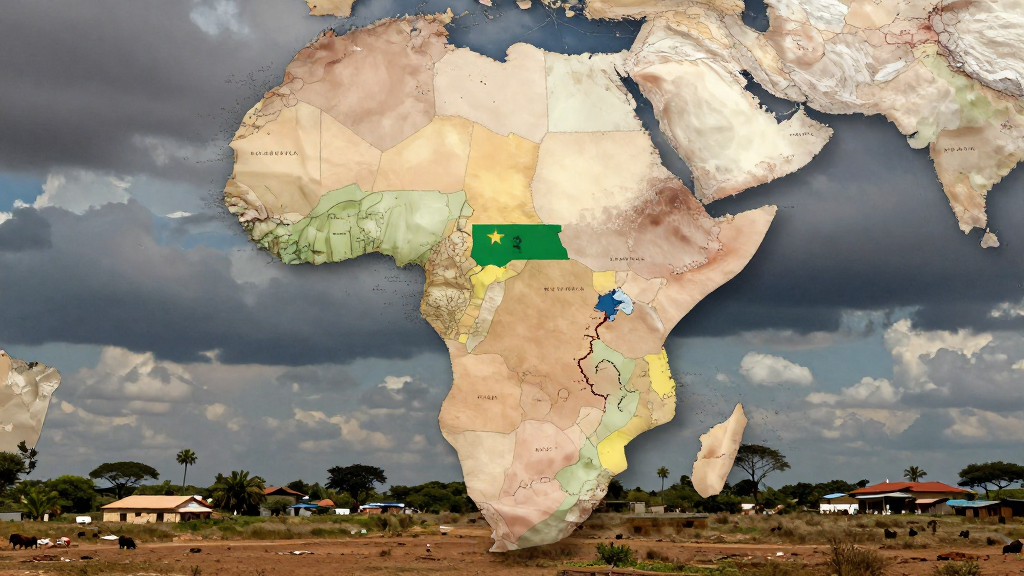
DAKAR — The African continent is lurching between crises on multiple fronts as diplomatic relations fracture, armed conflicts escalate, and regional blocs scramble to contain a convergence of emergencies spanning five distinct sub-regions.
Burkina Faso Severs Ties with France
The Burkina Faso junta announced on June 29 that it has formally severed diplomatic ties with France, ending one of the most consequential relationships in West African geopolitics. Communications Minister Gilbert Ouedraogo stated that the decision was taken “in the supreme interest of the nation” and that French diplomatic personnel have seventy-two hours to leave the country. France confirmed the expulsion of its ambassador and called the move “unilateral and regrettable.” The break follows months of mounting tension over France’s perceived failure to contain jihadist insurgencies that have killed thousands across the Sahel. Burkina Faso has already deepened security ties with Russia, a trajectory shared by neighbouring Mali and Niger.
DRC Takes Rwanda to the International Court of Justice
More than 1,500 kilometres to the east, the Democratic Republic of Congo filed a landmark case at the International Court of Justice on June 26 accusing Rwanda of systematically violating its sovereignty through support for the M23 rebel group. The filing alleges that Rwandan forces have occupied eastern Congo territories since 2021 and are responsible for mass civilian displacements affecting an estimated 1.8 million people. Rwanda denies the allegations and is expected to challenge the court’s jurisdiction. The ICJ has scheduled public hearings on the matter for mid-July, according to court records reviewed by Media Hook.
Human Rights Watch reported on June 24 that M23 fighters executed at least 42 civilians in a series of village raids in North Kivu province during the preceding ten days. “These are not isolated incidents,” the group’s Africa director said. “They reflect a deliberate campaign of terror designed to empty the territory of its civilian population.” The DRC government declared three days of national mourning.
Sudan War Escalates in North Africa
In North Africa, the Sudanese civil war shows no sign of abating. Rights monitors recorded at least 470 deaths in a single week of intensified army airstrikes and drone attacks targeting Rapid Support Forces positions in Darfur and Kordofan provinces. The toll, compiled by the Darfur Rights Advocacy Group and shared with this publication, represents the deadliest week of the conflict since the April 2023 outbreak of hostilities between the Sudanese Armed Forces and the RSF. United Nations agencies have warned that aid delivery routes into Darfur have been severed, leaving an estimated 2.3 million civilians without access to food or medical supplies.
The African Union issued a statement on June 28 calling for an immediate ceasefire and warning that the conflict risks destabilising the entire Sahel region. “The fighting in Sudan is no longer a bilateral matter,” the statement read. “It is a continental emergency that demands immediate collective action.”
Kenya Tribunal Ruling Sparks Deadly Protests in the East
In East Africa, Kenya’s electoral tribunal delivered a pivotal ruling on June 27 upholding the re-election of President William Ruto, a decision that triggered protests in Nairobi and Mombasa in which police deployed tear gas and water cannon. The Kenya National Commission on Human Rights said at least 140 protesters were treated for injuries at field hospitals. Three people were killed in the unrest, according to hospital sources in Nairobi. The opposition National Super Alliance rejected the ruling and pledged further demonstrations.
South Africa’s Anti-Migrant Ultimatum Expires in the South
In Southern Africa, South Africa’s anti-immigrant ultimatum expired on June 30 with the government vowing to enforce a strict crackdown on undocumented migrants. The ultimatum, issued by the Ministry of Home Affairs, gave foreigners until midnight on June 29 to regularise their status or face arrest and deportation. The International Organization for Migration estimates that up to 12,000 people could be affected. South African President Cyril Ramaphosa called for calm but emphasised that “the rule of law must be respected in addressing the challenges of irregular migration.” Neighbouring countries including Malawi, Mozambique, and Zimbabwe have begun repatriating their nationals.
The convergence of a migration emergency in the south, a judicial crisis in the east, a sovereignty dispute in the centre, a security rupture in the west, and a war without end in the north is placing unprecedented strain on African Union mechanisms and sub-regional organisations alike. Analysts say the coming weeks will test whether the continent’s diplomatic architecture can absorb simultaneous shocks or whether the overlapping crises will compound one another into a broader regional collapse.