Supreme Court Rules Trump Cannot Fire Fed Governor Lisa Cook, Citing Central Bank Independence
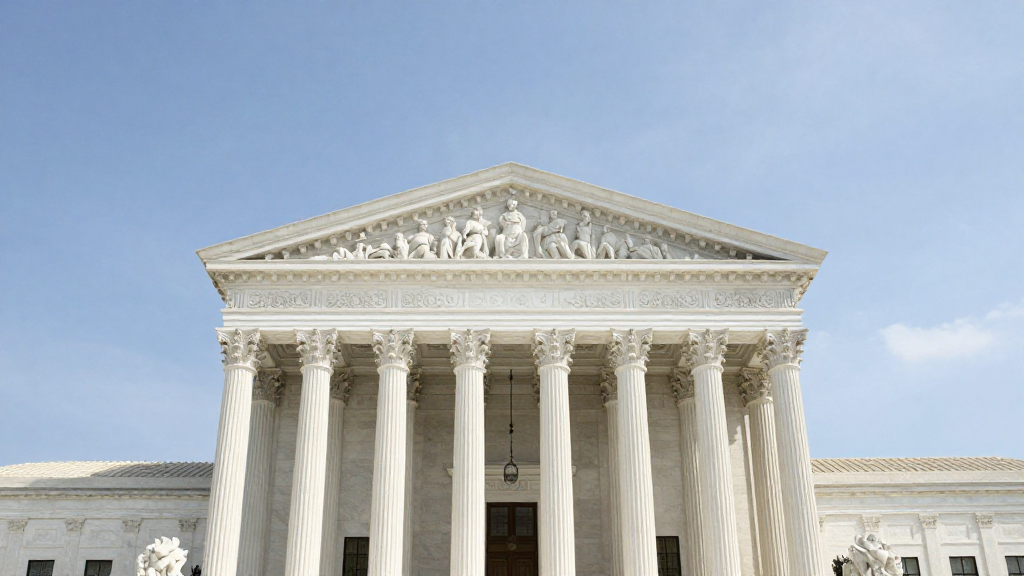
The Supreme Court ruled Monday that President Donald Trump lacked the authority to fire Federal Reserve Governor Lisa Cook, delivering a landmark 5-4 decision that anchors the independence of the nation’s central bank from direct presidential control. The court did not foreclose the possibility of removing Cook in the future, but it rejected Trump’s bid to immediately sideline her while litigation over her dismissal proceeds. The ruling, authored by Chief Justice John Roberts, drew a sharp dissent from the four conservative justices who accused the majority of overstepping its authority.
The case, Trump v. Cook, arrived at the court on an emergency application from the Trump administration after a federal district court blocked the firing in February. The administration argued that the president possessed broad constitutional authority to remove executive branch officials, a position long advanced by conservative legal theorists. Cook, who has served as a Fed governor since 2022, was dismissed in January over allegations of mortgage fraud that she has adamantly denied. The Fed sued to block her removal, arguing that governors enjoy statutory and constitutional protections against summary dismissal.
A Landmark 5-4 Ruling on Central Bank Independence
Roberts, writing for the majority, said the court’s decision rested on the unique design of the Federal Reserve and the structural protections Congress built into the central bank’s governance. “Not only the fact of independence but also the appearance of independence is key to the Federal Reserve’s design,” Roberts wrote. He emphasized that Congress created the Fed to operate free from political interference, and that any erosion of that independence would require congressional action rather than unilateral presidential action. “Any change in that scheme must come from Congress, not the courts,” the opinion stated. “To do so would allow the President to remove a member of the Federal Reserve at any time, for any reason, without any notice before, and without any judicial check after.”
The majority coalition was notable: Roberts and Kavanaugh, two of the court’s most reliable conservatives, joined the three liberal justices, Kagan, Sotomayor, and Jackson, to form the five-justice majority. Justice Jackson wrote a separate concurring opinion. Trump responded immediately on Truth Social, declaring the ruling a win on “strictly procedural grounds” and vowing renewed action against Cook. “We will take appropriate action immediately to make sure that someone who has committed wrongdoing will not be making vital decisions concerning the Welfare of the United States of America,” Trump wrote.
Conservative Dissent: An Unprecedented Incursion on Executive Power
Justice Clarence Thomas, in one of three dissenting opinions, offered the sharpest constitutional critique. “Today’s decision is an unprecedented incursion on the Executive Branch,” Thomas wrote, accusing the majority of crafting policy arguments for an independent central bank that he said ultimately ran against the Constitution. “The question is not whether the Fed should be independent,” Thomas wrote. “The question is who decides that question, and the Constitution answers it clearly.” Justice Samuel Alito, joined by Justice Neil Gorsuch, took a narrower procedural approach, arguing the court should not have issued a sweeping opinion before the underlying litigation had fully developed. “The nascency of this lawsuit and the novelty of the issues that it presents militated against holding oral argument and issuing a comprehensive opinion at this juncture,” Alito wrote.
What Happens Next: Due Process, Future Removal, and Broader Implications
The practical effect of Monday’s ruling is to keep Cook in her post while her lawsuit challenging the firing proceeds. The majority opinion left open a path for a future removal attempt, noting that Cook was not given due process under federal law when dismissed. Any future removal would need to provide an explanation of the evidence, an opportunity to respond, and a deadline for that response. But the court’s broader ruling that the Fed’s structural independence is constitutionally relevant creates a high bar for any future administration seeking to remove a sitting governor without cause.
The ruling carries significant implications beyond Cook. Legal experts said the court’s reasoning could apply to other multi-member independent agencies where governors or commissioners enjoy statutory removal protections, including the FTC, the SEC, and the FCC. It also sets the stage for a broader showdown over the scope of presidential power that could return to the Supreme Court in the coming term.