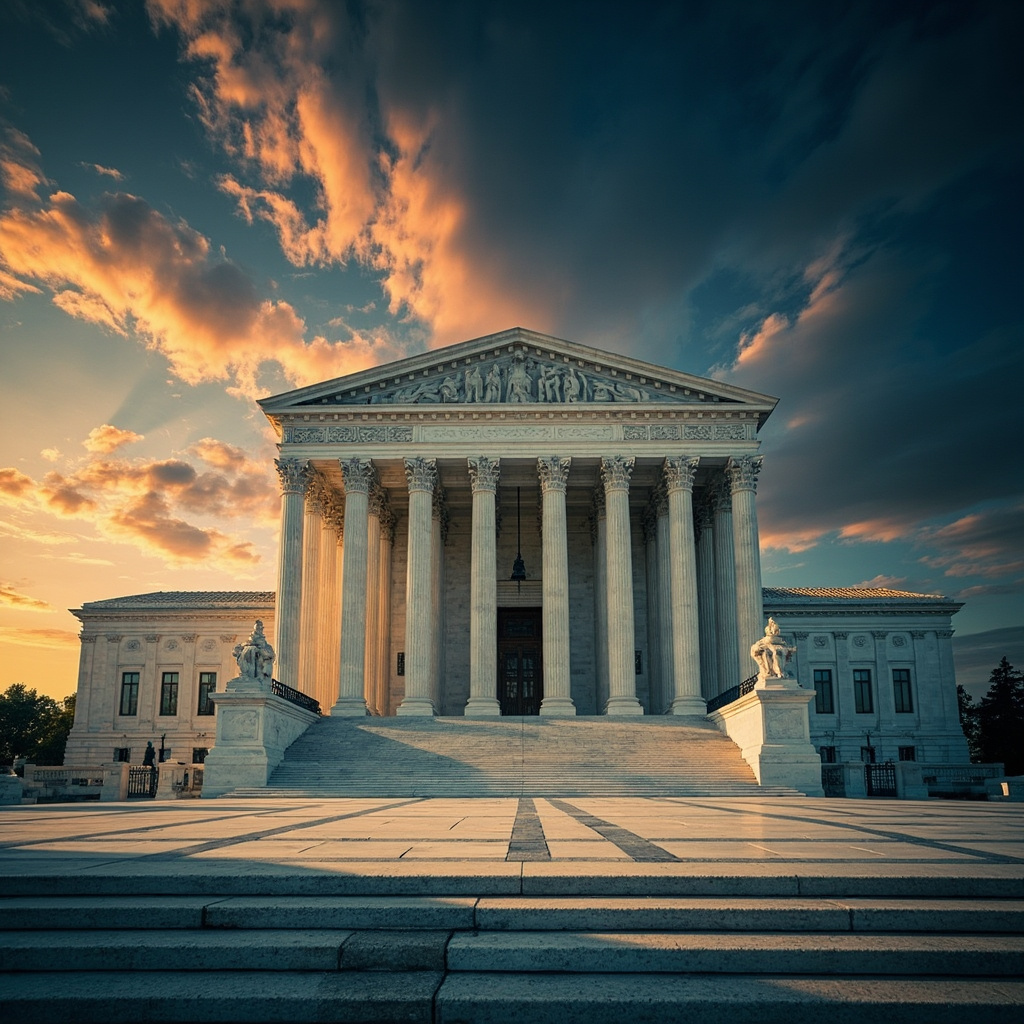
The Supreme Court overturned a 91-year-old precedent on Thursday, ruling 6-3 that President Donald Trump lawfully fired Federal Trade Commissioner Rebecca Kelly Slaughter without cause — a decision that fundamentally reshapes the balance of power between the White House and independent regulatory agencies that have long operated beyond direct presidential control.
The landmark ruling in Trump v. Slaughter explicitly overturns Humphrey’s Executor v. United States, the 1935 decision that had shielded multimember agencies from at-will presidential removal. Writing for the conservative majority, Chief Justice John Roberts declared the precedent “wrong from its start” and freed future presidents to remove commissioners from agencies including the FTC, SEC, and FCC.
Six Justices Back Broad Presidential Firing Authority
Slaughter, a Democrat appointed to the FTC in 2018, was dismissed in March 2025 and told only that her “continued service on the FTC is inconsistent with the Administration’s priorities.” No formal cause was cited. A lower court had blocked the firing, citing Humphrey’s Executor, before the Supreme Court reversed that ruling on Thursday.
“Although it is up to the Senate to decide whether to confirm those with whom the President would prefer to work, neither Congress nor the courts may saddle him with those with whom he cannot work,” Roberts wrote. “Subordinates who exercise the President’s power are subject to removal by him. Then, and only then, can they remain accountable to the President, and the President to the people.”
The three liberal justices dissented sharply. Justice Sonia Sotomayor, reading her dissent from the bench in an unusually public display, called the ruling “grievously wrong.”
“The Court gives the President a power unknown even to the English Crown against which the Founders revolted, elevating him above his once-coequal branches by transforming a duty to take care that the laws be faithfully executed into a license to act in defiance of those very laws,” Sotomayor wrote.
Federal Reserve Shielded — For Now — as Court Signals More Changes Ahead
Thursday’s decision was paired with a 5-4 ruling in Trump v. Cook that temporarily shields Federal Reserve Governor Lisa Cook from removal while her case proceeds through lower courts, preserving a measure of central bank independence. But Roberts left little doubt about where the Court is headed.
“If anything more is left of Humphrey’s, the Court overrules it,” Roberts wrote — a direct signal that the Fed’s protections may not survive the next round of litigation.
The decision marks the culmination of a years-long campaign by conservative legal figures to dismantle the administrative state’s insulation from political oversight. During Trump’s first term, the Court already began dismantling Humphrey’s Executor by permitting the firing of single-director agencies like the Consumer Financial Protection Bureau. Thursday’s ruling extends that logic to multimember bodies exercising substantial executive authority.
Roberts acknowledged that the FTC alone enforces approximately 80 statutes covering nearly every facet of the American economy. “The tasks it undertakes are ‘the very essence of ‘execution’ of the law,'” he wrote, dismissing the quasi-judicial and quasi-legislative framing that had underpinned the 1935 precedent.
Legal experts warned the decision could trigger instability across the regulatory landscape. “Agencies that have operated for decades on the assumption of independent decision-making now face a fundamentally altered legal landscape,” said Trevor Potter, a former FEC chairman and Republican campaign attorney. “Commissioners who assumed multi-year statutory protections may find those assumptions no longer hold.”
The White House celebrated the ruling as a restoration of democratic accountability. “For too long, unelected bureaucrats have operated with impunity, insulated from the voters their agencies are supposed to serve,” a statement read. “Today’s decision corrects that imbalance.”
Both rulings are expected to generate significant litigation in the months ahead.