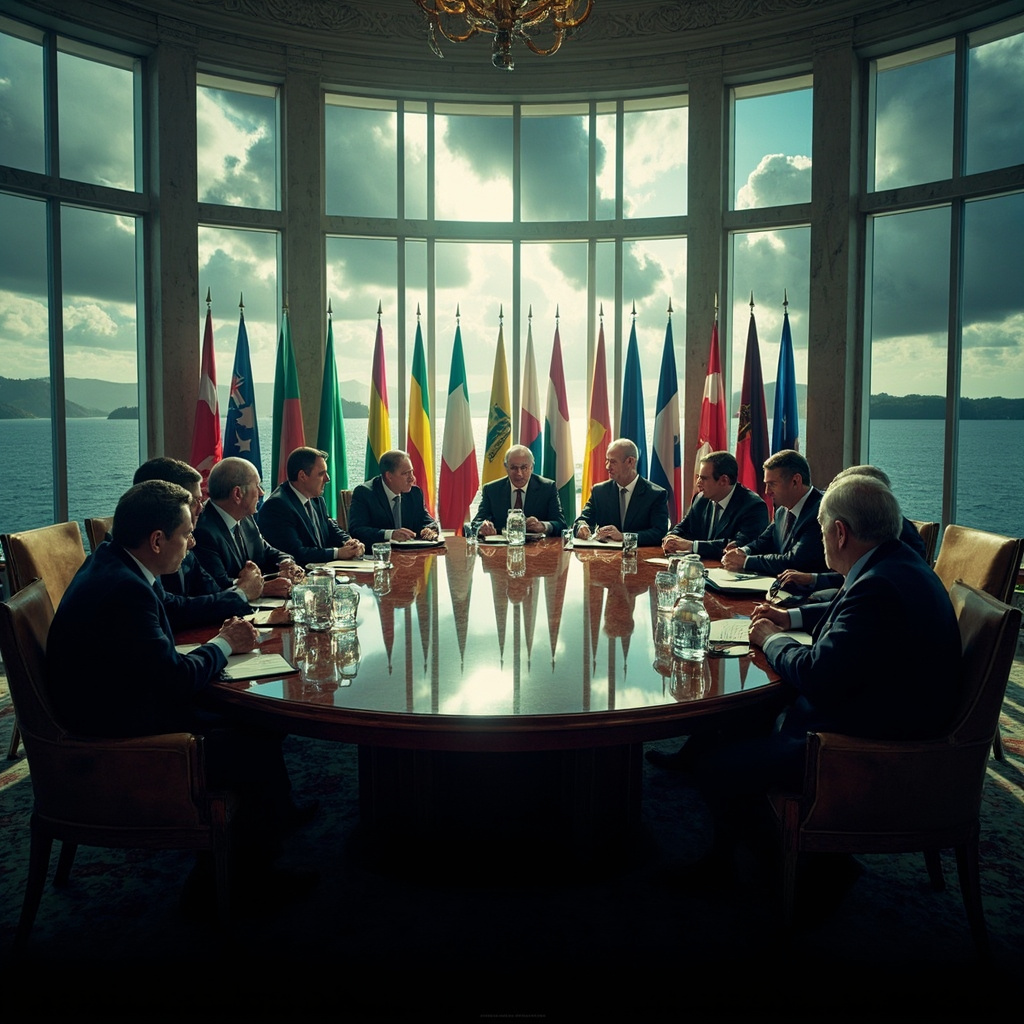
G7 leaders meeting in Evian-les-Bains, France, agreed Wednesday to impose sweeping new sanctions on Russia and to reaffirm their support for Ukraine at the close of their summit, just days before a major NATO gathering opens in Ankara, Turkey.
G7 Unites Behind New Russia Sanctions Package
According to a French diplomat familiar with the talks, G7 leaders including President Donald Trump agreed to target Russia energy revenues with sanctions covering crude oil, refined petroleum products, and natural gas exports. The move represents the most coordinated western sanctions effort targeting the Russian energy sector since early 2022. Leaders also endorsed a joint declaration reaffirming “unwavering support for Ukraine in defending its freedom, sovereignty, and territorial integrity.” The declaration made no mention of ceasefire negotiations, reflecting continued disagreement among allies over the path to ending the conflict.
The summit atmosphere was calmer than anticipated following last month announcement of a preliminary US-Iran deal, but Trump remarks underscored persistent divisions. “The war in Ukraine has nothing to do with the United States,” Trump told reporters at the G7 venue, drawing swift pushback from European leaders who argued Russian aggression in Europe directly threatens transatlantic security. British Prime Minister Keir Starmer and French President Emmanuel Macron used bilateral meetings to reaffirm their commitment to long-term support for Kyiv.
NATO Summit Looms as Alliance Tensions Simmer
With the G7 still fresh, attention turns to Ankara where NATO Secretary General Mark Rutte and Turkish Defence Minister Yasar Guler confirmed preparations for the July 7-8 summit are in final stages. Guler sought to ease concerns about alliance cohesion, saying the United States has made clear it has no intention of withdrawing from NATO. “We are adjusting to a shifting security landscape, but the commitment of the United States to this alliance is not in question,” Guler said in written responses to reporters. The summit will address burden-sharing, defence spending targets, and a push to reopen the Strait of Hormuz as a transit corridor for oil and gas shipments.
Ukrainian President Volodymyr Zelenskyy attended the G7 working session in person. He later posted footage of Ukrainian strikes on the Dubna space communications centre in the Moscow region, approximately 500 kilometres from the Ukrainian border. Ukrainian military intelligence says the facility coordinates Russian reconnaissance operations. In his nightly address, Zelenskyy also mocked Russia stated goal of capturing the eastern Donbas region, saying Moscow had set 15 separate deadlines for taking Donetsk and failed to meet every one. “Russia political leadership remains obsessed with Donbas,” he said. “They have entertained this delusion that they would fully capture Donbas 15 times already.”
Sanctions, Hormuz, and the Road Ahead
The convergence of the G7 and NATO summits in a single week reflects the urgency western capitals attach to sustaining pressure on Russia while shoring up alliance unity. G7 leaders discussion explicitly included exploring alternatives to the Strait of Hormuz as a transit corridor. French Foreign Ministry spokesman Pascal Confavreux told reporters that talks covered infrastructure options outside the Strait to reduce reliance on a waterway Tehran has periodically threatened to close. A senior US State Department official said Washington was working with Gulf partners on contingency plans but declined to specify timelines or funding commitments.
European analysts said the sanctions package, if fully implemented, could cut Russian energy revenues by an estimated 15 to 20 percent over six months, though enforcement in third countries remains a challenge. “The intent is there, the political will is there, but the compliance architecture has gaps,” said a London-based sanctions researcher who tracks Russian energy flows. Military commanders in Ukraine said the G7 declaration provided a psychological boost but that battlefield realities would depend on the speed of weapons deliveries promised under the new support framework.