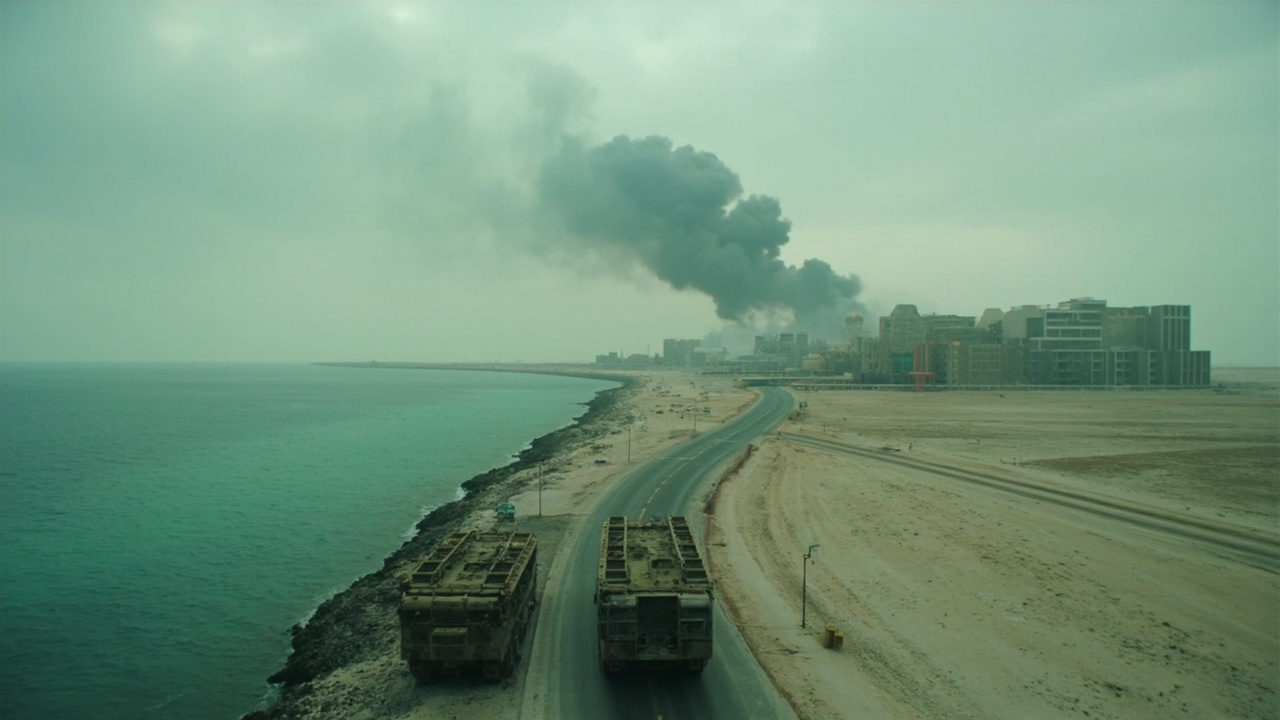
Russia said on Sunday it will not return hundreds of its nuclear engineers to Iran’s Bushehr power plant until it receives a “100 percent guarantee” of their safety, as the United States and Iran traded fresh strikes for a second consecutive night and Tehran claimed full operational control of the Strait of Hormuz — the world’s most critical oil transit chokepoint.
The announcement from Rosatom chief executive Aleksei Likhachev, reported by Russia’s Interfax news agency on June 28, marked the most explicit public statement yet from Moscow on the risks the Iran conflict poses to the civilian nuclear infrastructure of a country that has no indigenous nuclear fuel cycle. Rosatom had evacuated roughly 400 of its specialists from Bushehr, in southwestern Iran, after the outbreak of the US-Israel war with Iran. Twenty Russian nationals remain on site, working with Iranian counterparts, but a broader return is on hold indefinitely.
“Until we understand that our people’s safety is 100 percent guaranteed we, of course, will not be returning them,” Likhachev told Interfax. He added that all transportation of personnel was being conducted by motor transport because commercial flights had ceased. “This applies not only to the plant itself but to logistical operations, because all transportation is taking place by motor transport, at least while planes are not flying.”
Russia’s Nuclear Exposure in an Active War Zone
The Bushehr plant has been near the front lines of the conflict. Iranian military positions around the facility were struck multiple times during the opening days of US and Israeli operations against Tehran’s nuclear and military infrastructure. The UN’s International Atomic Energy Agency publicly warned that any military activity near operating nuclear facilities posed an acute safety risk, and called for the protected status of civilian nuclear sites to be respected under international law. Russia has so far not endorsed that call publicly.
The standoff creates a diplomatic complication for the Kremlin. Russia has historically used its civilian nuclear partnerships across the Middle East as instruments of regional influence, and its personnel presence at Bushehr gave Moscow a degree of leverage over Iran’s nuclear program. Their continued absence — and the open-ended nature of Likhachev’s caution — signals that Moscow views the conflict as likely to persist well beyond the current round of strikes.
Iran Claims Control of the Strait of Hormuz
Separately on Sunday, Iranian Foreign Minister Abbas Araqchi claimed during a press conference in Baghdad that Iran had taken sole operational control of the Strait of Hormuz and warned regional states against cooperating with the United States or Israel on alternative shipping arrangements. “Any attempt to adopt new or separate arrangements for the Strait of Hormuz will be considered an act of hostility,” Araqchi said. The claim could not be independently verified, and US military officials have made no public comment on Iranian assertions of navigational control over the waterway.
The strait handles roughly 20 percent of the world’s oil shipments daily. Any sustained disruption would send immediate shockwaves through global energy markets. Lloyd’s of London has reportedly escalated war-risk designations for vessels transiting the strait, a move that could force shipowners to pay prohibitive premiums or reroute cargo around the Cape of Good Hope.
Kuwait and Bahrain Condemn Iranian Strikes as Cross-Border Violence Spreads
The conflict continued to expand geographically on June 28. Bahrain and Kuwait both formally condemned Iranian ballistic missile and drone attacks on their territory, in retaliation for US strikes launched in response to Tehran’s attacks on commercial shipping in the Persian Gulf. Bahrain’s Interior Ministry said an apartment building in Muharraq was struck by an Iranian drone. No casualties were reported. Kuwait’s Foreign Ministry said its embassy in Tehran had been shuttered and diplomats evacuated.
In Lebanon, where a US-brokered framework security agreement between Beirut and Israel was signed on June 27, renewed Israeli strikes were reported in southern Lebanon on June 28. Lebanon’s state-run National News Agency reported multiple strikes. Israeli military chief Eyal Zamir approved plans for continued operations in a self-declared security zone extending 10 kilometers into Lebanese territory. Hezbollah leader Hassan Nasrallah rejected the agreement, calling it a surrender of Lebanese sovereignty.
What Happens Next
US and Iranian military officials have made no public indication of willingness to return to any diplomatic channel. The central open question is whether Iran’s claim of Hormuz control marks a new, more dangerous phase in which naval traffic is deliberately targeted, or whether it is a political statement. A decision by Lloyd’s and commercial insurers on whether to cover Hormuz transits will be among the most consequential signals in the coming days.