Katz: Trump Decision Prevented Israel’s Full Hezbollah Elimination
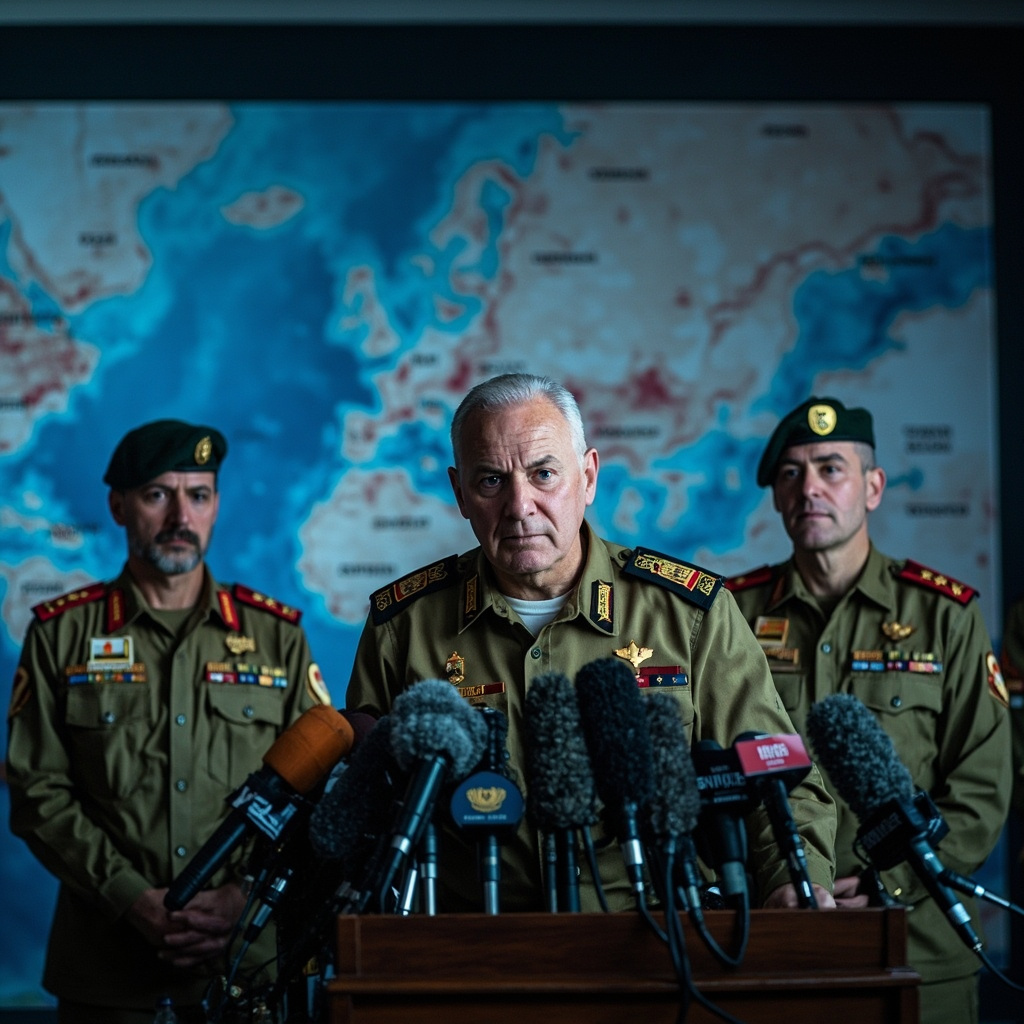
Israeli Defense Minister Israel Katz said Tuesday that President Donald Trump’s decision to link the Iran and Lebanon tracks of negotiations prevented the full elimination of Hezbollah, a rare public acknowledgment from a senior Israeli official that US diplomatic pressure directly shaped the conduct of the Lebanon campaign and forced Jerusalem to halt an offensive at what commanders described as the final stage of operations.
Katz told a news conference in Tel Aviv that the Trump administration’s insistence on a parallel negotiation — rather than a sequential approach that would have cleared the Iran file first before addressing Lebanon — forced Israel to scale back its military operations at a critical juncture, allowing Hezbollah to survive as an organized force with its command structure and weapons arsenal largely intact.
Trump Pressure Forced Operational Changes
According to Katz, the White House conveyed through back-channel communications that any Israeli operation targeting Hezbollah could not proceed without simultaneous movement on the Iran nuclear file. The message, delivered through the US National Security Council and confirmed by two Israeli officials who spoke on condition of anonymity, effectively froze Israel’s planned ground offensive when forces were already positioned in southern Lebanon.
“We were four days from completing the mission when the Americans told us to hold,” Katz said. “The linkage meant we could not finish what we started without risking the entire diplomatic architecture the President was building.”
The comments mark one of the most explicit acknowledgments from an Israeli official that domestic political considerations in Washington influenced battlefield decisions in Lebanon. Hezbollah had suffered significant losses during the conflict, including the elimination of several senior commanders, but the group retained enough combat capacity to maintain control of territory south of the Litani River and to continue small-scale provocations that have tested the ceasefire’s limits.
A senior IDF officer who participated in the planning said the decision to pause came as a shock to ground commanders. “We had rounds of ammunition counted, fuel for ten more days of continuous operations, and satellite coverage we had not seen in years. Then we got the call and everything stopped,” the officer said.
IDF to Remain Until Hezbollah Disarms
Under the ceasefire framework brokered by the United States, Israeli forces may remain in southern Lebanon until Hezbollah is fully disarmed. Katz said the IDF is prepared for a long-term presence, with battalions rotating on six-month cycles and engineering units constructing fortified positions along the border.
“The mission is not complete until every weapon is accounted for and every tunnel is sealed,” Katz said. “We will not make the same mistake we made in 2006, when we pulled out and allowed the group to rearm at our doorstep.”
Hezbollah has refused to surrender its weapons, arguing that only the Lebanese state has the authority to monopolize force on its territory. The group’s leader, Sheikh Naim Qassem, said in a televised address that Hezbollah would never give up its arms voluntarily and that the group considers the current arrangement a temporary accommodation, not a final settlement.
Lebanese Army units have deployed to several border towns under the ceasefire terms, though their ability to assert state authority over Hezbollah’s strongholds remains limited. US envoy Amos Hochstein has visited Beirut twice in the past month to press Lebanese officials to consolidate state control, with limited success.
Diplomatic Fallout and What Comes Next
The Katz interview immediately drew reactions from Capitol Hill, where Republican lawmakers praised Trump’s diplomatic choreography while Democratic critics said the linkage had handed Iran an undeserved reprieve at a moment of maximum pressure. Senator Jeanne Shaheen of New Hampshire said the arrangement made strategic sense given broader regional calculations and the need to keep Saudi Arabia and the UAE aligned with Washington’s Iran policy. Senator Lindsay Graham called it the kind of deal only President Trump could pull off, one that threaded the needle between Israeli security needs and American strategic interests.
The administration has rejected suggestions it intervened to protect Hezbollah, insisting instead that the goal was to prevent a broader regional war that would have entangled US forces and destabilized Gulf states allied with Washington. National Security Council spokesperson Brian Hughes said the linkage reflected sound diplomacy, not weakness.
The outcome of the Lebanon negotiation will now shape whether the Trump administration can secure a similar accommodation on Iran’s nuclear program — the broader goal that analysts say motivated the linkage decision in the first place. Iran’s acting foreign minister, Ali Bagheri Kani, said in Tehran that the Lebanon outcome demonstrated the value of patient diplomacy and that Iran remained willing to discuss its nuclear file, though only on terms that respected Tehran’s right to peaceful atomic energy.
Regional analysts warn that the ceasefire’s durability remains uncertain. Cross-border incidents have increased in recent weeks, and Israeli airstrikes in response to what the IDF described as ceasefire violations have drawn condemnation from the Lebanese government and calls for US intervention from European mediators involved in the original negotiation.