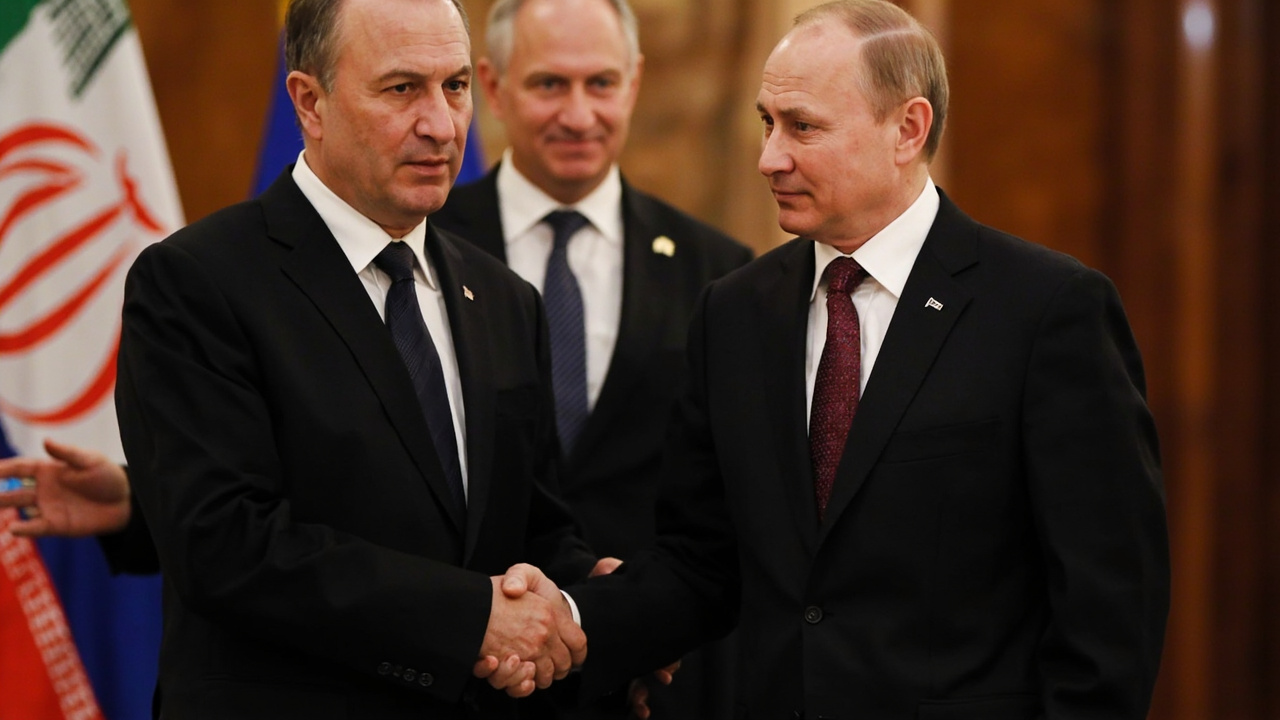
Iran’s Foreign Minister Abbas Araghchi arrived in Moscow on Sunday for a high-stakes meeting with Russian President Vladimir Putin, carrying Tehran’s message directly to the Kremlin as the United States extends rare outreach to Iranian leadership and the diplomatic landscape across the Middle East shifts rapidly. The visit underscores Moscow’s deepening role as a critical backchannel for Tehran amid an increasingly complex geopolitical chessboard.
A Strategic Visit at a Pivotal Moment
Araghchi’s arrival in the Russian capital comes at a moment of extraordinary diplomatic activity in the Middle East and Central Asia. The visit follows weeks of shuttle diplomacy as Iran navigates competing pressures from Washington, Moscow, and Beijing. Russian state media confirmed that Araghchi was received at the Kremlin for what officials described as “comprehensive consultations” covering bilateral relations, regional security, and the evolving dynamics of the Iran nuclear file.
The meeting is particularly significant given the broader context of U.S.-Iran relations. The Trump administration has recently extended a rare olive branch to Tehran, with the State Department confirming that a ceasefire framework remains under discussion despite deep mutual distrust. For Iran, maintaining strong ties with Moscow provides critical leverage in any negotiations with Washington — a dynamic that Putin is keenly aware of and eager to exploit.
The Russia-Iran Axis: Deepening Cooperation
The Araghchi-Putin meeting is the latest in a series of high-level exchanges between Tehran and Moscow that have accelerated since 2022. Russia and Iran have expanded cooperation across multiple domains, including defense, energy, and intelligence sharing. The two countries have found common cause in opposing Western sanctions regimes and in supporting alternative financial architectures that bypass the U.S. dollar.
For Moscow, the relationship with Tehran serves multiple strategic objectives. Iran provides a critical corridor for Russian influence in the Middle East, and the two nations coordinate closely on the situation in Syria, where both maintain military presences. Energy cooperation is another pillar, with Russia and Iran — both major oil and gas producers — seeking to coordinate output decisions through OPEC+ and bilateral agreements that protect their market share against Western pressure.
Tehran, for its part, views Moscow as an indispensable partner in countering what it perceives as American and Israeli aggression. The military cooperation between the two nations has expanded significantly, with Iran supplying drones and ammunition to Russia for use in Ukraine, while Moscow has provided Tehran with advanced air defense systems and satellite technology. This mutual dependency gives both nations significant leverage in their respective negotiations with the West.
Diplomatic Implications for the Region
The timing of Araghchi’s Moscow visit has not gone unnoticed in Washington, Jerusalem, or Gulf capitals. Analysts note that Iran is simultaneously engaging with multiple power centers — the United States, Russia, China, and European nations — in what appears to be a deliberate strategy of diplomatic diversification. By maintaining strong ties with Moscow, Tehran ensures that any future agreement with Washington does not leave it isolated or dependent on a single patron.
The visit also carries implications for the ongoing conflicts in the region. The situation in the Strait of Hormuz remains tense, with Iran having previously threatened to close the critical waterway in response to U.S. military provocations. Russia’s position on Hormuz — where it has called for freedom of navigation while opposing unilateral American military action — aligns closely with Tehran’s interests and provides diplomatic cover for Iran’s assertive posture.
For Israel, the deepening Russia-Iran axis presents a complex challenge. Jerusalem has historically maintained working relations with Moscow on Syria-related deconfliction, but the growing military cooperation between Russia and Iran threatens to undermine that arrangement. Israeli officials have expressed concern that Russian technology transfers to Iran could enhance Tehran’s missile and air defense capabilities, potentially altering the military balance in the region.
What Comes Next
As Araghchi returns to Tehran, the outcomes of his Moscow consultations will likely shape the next phase of Middle Eastern diplomacy. The key question is whether Russia will play a constructive role in facilitating U.S.-Iran negotiations or whether it will seek to maintain the status quo of managed tension that serves its strategic interests. Putin has historically preferred a Middle East that remains dependent on Russian mediation — a dynamic that gives Moscow outsized influence relative to its economic weight.
What is clear is that the diplomatic landscape has become far more complex than the binary U.S.-Iran confrontation of previous years. With Russia, China, and regional powers all asserting their interests, the path to any comprehensive agreement runs through multiple capitals simultaneously. Araghchi’s shuttle diplomacy is a vivid illustration of this new reality — one in which every major power seeks a seat at the table, and no single nation can dictate terms unilaterally.