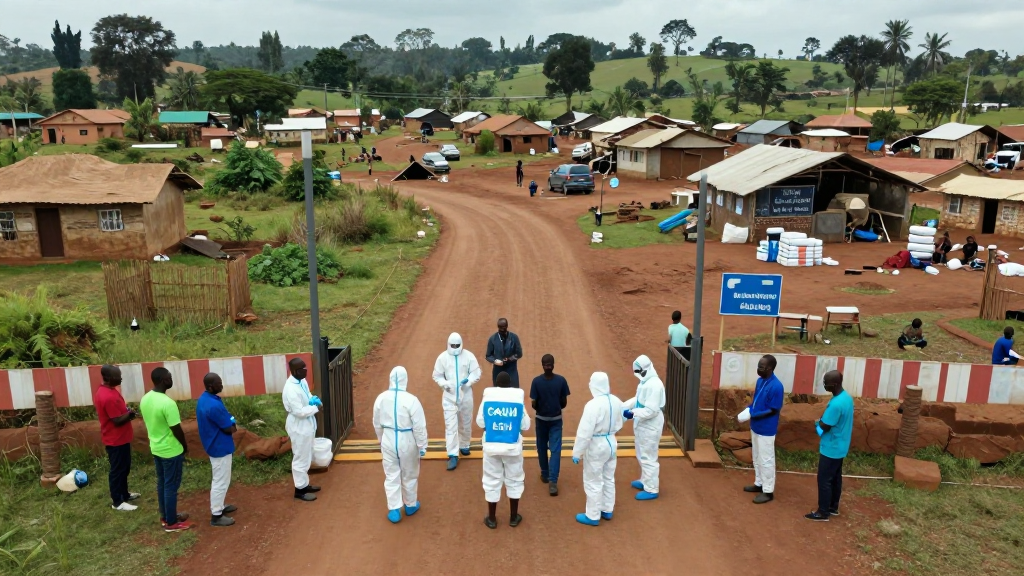
KAMPALA, Uganda — Uganda’s Ministry of Health confirmed its first three cases of Ebola on Wednesday, marking the first spread of the deadly outbreak beyond the Democratic Republic of Congo and intensifying pressure on an already overstretched continent grappling with simultaneous political turmoil, mass displacement and flood catastrophes across five distinct regions.
Ebola Cross-Border Spread Alarms Health Officials
The confirmed cases in Uganda were traced to individuals who crossed into the country from DRC’s eastern Ebola-hit provinces. Uganda’s health ministry acting director-general, Dr. Henry Kyobe, told reporters in Kampala the government had “activated all outbreak response protocols” and was tracing contacts of the confirmed cases. “We are treating this with the highest level of urgency,” Kyobe said.
The outbreak in DRC has now recorded more than 1,300 cases and over 370 deaths since the first infections were reported earlier this year, according to the World Health Organization. WHO director-general Tedros Adhanom Ghebreyesus described the situation as “a regional emergency that demands immediate coordinated action” and called on neighbouring countries to strengthen border surveillance and public health infrastructure.
West Africa: Burkina Faso Cuts France Ties as Floods Kill Dozens
In West Africa, Burkina Faso’s military junta formally severed diplomatic relations with France on Friday, accusing Paris of “ceaseless activism” and “neo-colonial ambitions” against Ouagadougou. Communications minister Pingwende Gilbert Ouédraogo announced the break in a televised statement, alleging France had supported “subversive networks” seeking to destabilise the country. France’s foreign ministry called the move “hostile and unfounded.”
The severance marks the culmination of a steady deterioration in relations since Captain Ibrahim Traoré seized power in a 2022 coup. France expelled Traoré’s troops soon after he took office, and no French ambassador has been posted in Burkina Faso since January 2023. Ouagadougou has increasingly pivoted toward China and Russia for security and diplomatic partnership.
Simultaneously, catastrophic flooding continued to reshape life across the sub-region. In Ivory Coast, the government confirmed at least 59 flood-related deaths since mid-May, with the commercial capital Abidjan bearing the heaviest toll. Entire informal settlements were submerged, and Ghana’s capital Accra reported similar devastation.
East Africa: Kenya Anniversary Protests and Uganda Media Blackout
East Africa witnessed a sharp escalation in political tension as Kenya marked the second anniversary of its Gen Z protest movement with thousands returning to the streets of Nairobi and Mombasa on June 25. Police deployed tear gas and water cannon to disperse crowds near the parliament building, and witnesses reported multiple arrests. Organisers vowed to maintain pressure on the government until broader electoral reforms were enacted.
In Uganda, the government ordered the shutdown of the popular Nation Media Group broadcasting outlets, citing alleged violations of tightened security regulations. Reporters Without Borders said the closure “silences one of the last independent voices in the Ugandan media landscape.”
Southern Africa: South Africa Anti-Migrant Deadline Passes, 900 Arrested
Southern Africa confronted its own humanitarian flashpoint as the June 30 deadline set by South African campaign groups for undocumented migrants to leave the country expired, triggering a fresh wave of xenophobic protests and counter-demonstrations. Police arrested more than 900 people across the country during clashes linked to the anti-migrant demonstrations, according to figures released by South Africa’s police ministry.
Nigeria’s high commissioner to South Africa confirmed that more than 600 Nigerian citizens had been evacuated by the deadline, with businesses, homes and assets abandoned by those fleeing. Nigeria’s government said it would seek formal compensation through diplomatic channels for property losses incurred by legally resident nationals.
North Africa: Sudan RSF Crimes Against Humanity as Libya Fractures
In North Africa, Amnesty International released a devastating report accusing Sudan’s Rapid Support Forces of committing crimes against humanity and ethnic cleansing in North Darfur, alleging murder, torture, rape and sexual slavery targeting the Zaghawa ethnic group. The UN Human Rights Council announced it would hold an urgent special session on the Sudan crisis. More than 14 million people have been displaced from their homes since the civil war erupted between the Sudanese Armed Forces and the RSF in 2023.
Libya continued its descent into fragmented governance as rival administrations deepened their territorial control, leaving humanitarian corridors uncertain and aid distribution severely impaired across the country’s east and west.
The convergence of Ebola’s cross-border leap, France’s diplomatic expulsion from Burkina Faso, Kenya’s sustained protest movement and South Africa’s xenophobic crisis underscores a continent under simultaneous strain on multiple fronts, with regional bodies and international organisations increasingly struggling to respond at the pace events are unfolding.