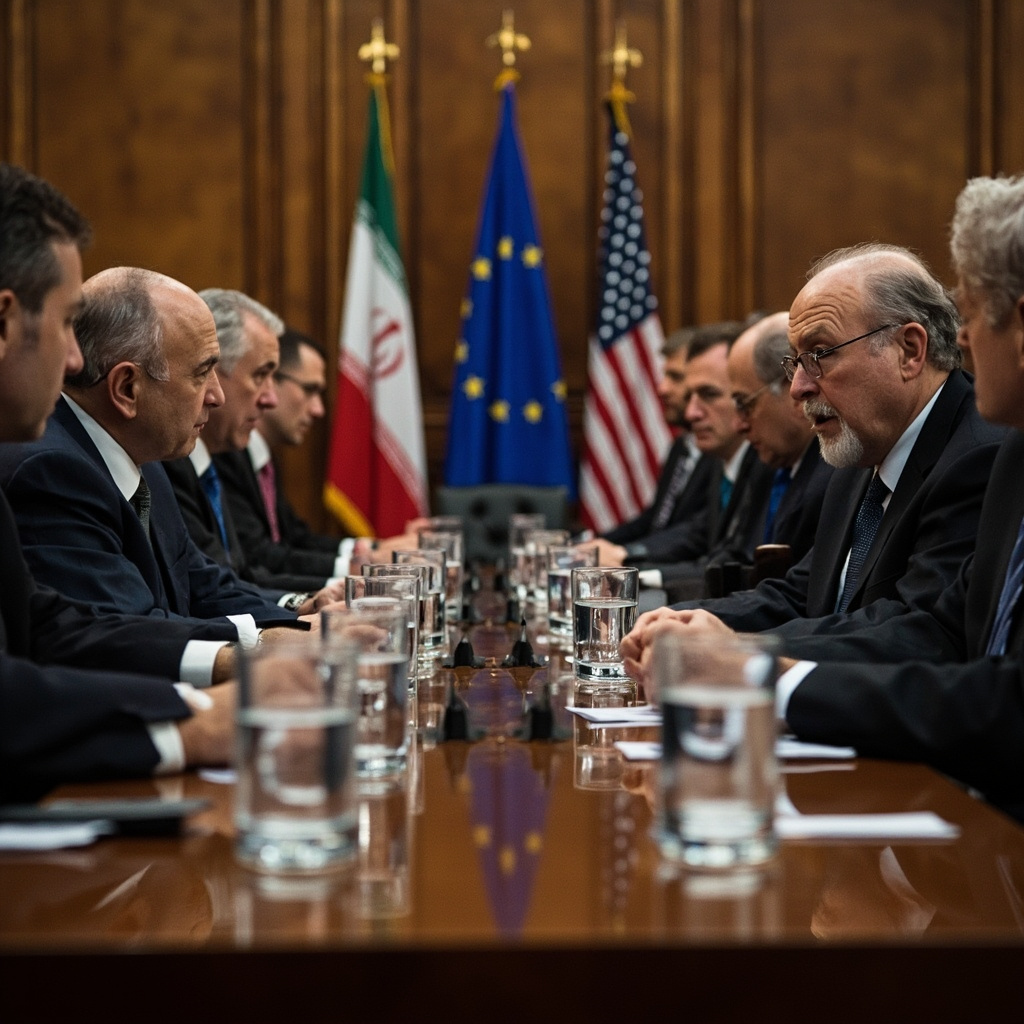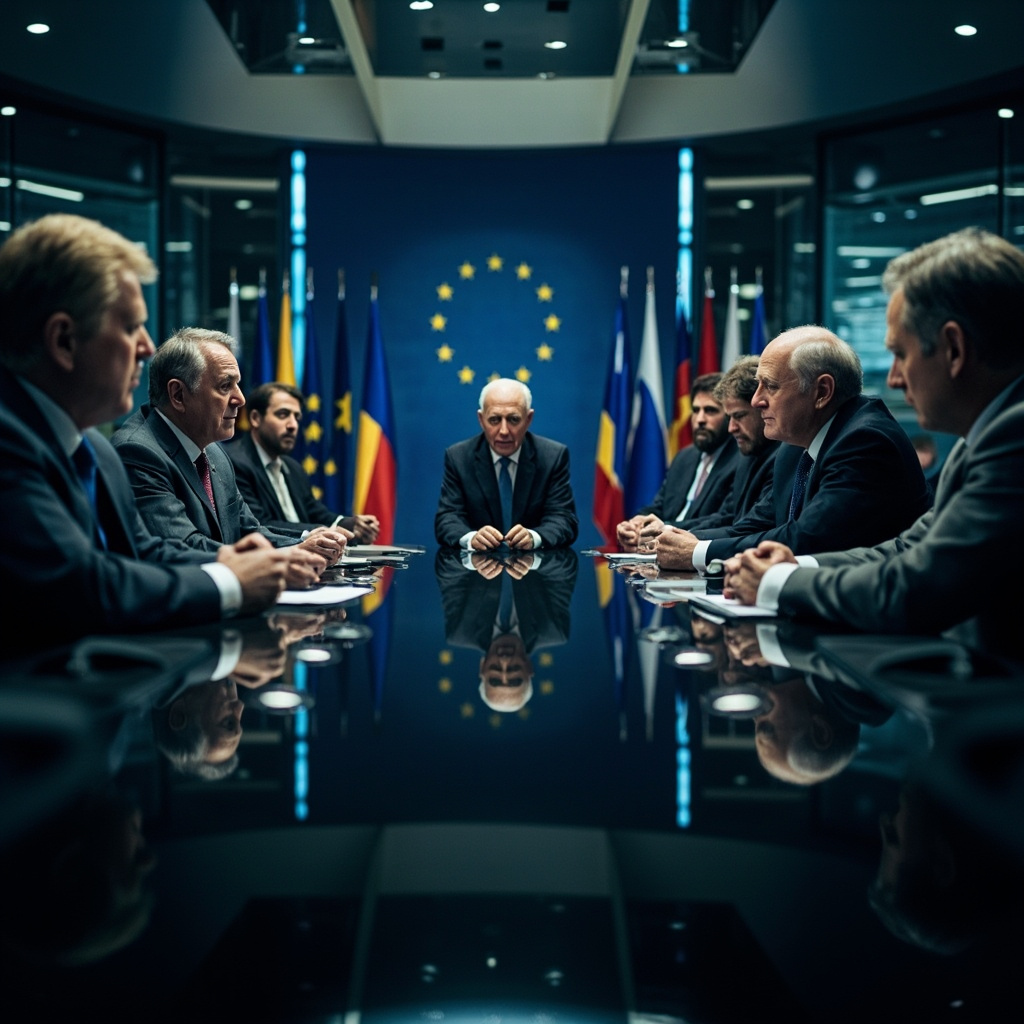
European Union leaders convened an emergency summit in Brussels on Monday, responding to the April 2026 breakdown in U.S.-EU trade negotiations with a coordinated package of retaliatory tariffs and domestic subsidy measures aimed at shielding European industries from American trade penalties. The summit, hosted by European Commission President Ursula von der Leyen, brought together heads of state from all 27 member states as the bloc moved to present a unified front in what has become the most significant transatlantic trade dispute in decades.
A Summit Forged in Crisis
The emergency gathering was called after the United States imposed a 25 percent tariff on European steel and aluminum exports, with President Donald Trump characterizing the move as a response to what he described as “unfair trade practices” that he said had cost American workers hundreds of thousands of jobs over the past two decades. The EU’s response has been swift and structured, drawing on a trade defense playbook that Brussels has refined across multiple cycles of transatlantic friction.
“This is not a trade war we sought. But it is a trade war we will win — on our terms, with our partners, and with the full weight of the single market behind us.”
— European Commission President Ursula von der Leyen, Brussels, May 12, 2026
The Retaliatory Package
The summit concluded with a unified communiqué outlining countermeasures targeting approximately $26 billion in U.S. exports. The package, designed to maximize political pressure on the Trump administration ahead of the November midterms, focuses on sectors where Republican legislators face competitive vulnerability — particularly agricultural states in the Midwest and manufacturing districts in Pennsylvania and Ohio.
The measures include a 25 percent tariff on U.S. soybean exports to the EU, a 20 percent tariff on Kentucky bourbon and other American spirits, and a 15 percent tariff on American-manufactured automobiles. A parallel track targets U.S. technology companies with a proposed digital services tax, though that measure is structured to take effect only if bilateral negotiations fail by July 2026.
“The Americans miscalculated. They assumed European unity was a fiction. They found out it is a force.”
— Senior EU trade official, speaking on condition of anonymity to Reuters
Economic Impact and Projections
The European Central Bank has modeled multiple scenarios for the tariff war’s impact on eurozone growth. Internal projections, seen by Reuters, project a contraction of 0.4 to 0.9 percentage points in EU GDP over a 12-month period if current tariff levels persist. Germany, whose export-oriented economy is most exposed to U.S. trade barriers, is projected to bear the heaviest burden, with its Bundesbank estimating a 0.7 percent hit to German GDP.
| EU Member State | Estimated Export Exposure ($B) | Projected GDP Impact (%) |
|---|---|---|
| Germany | $48.3 | -0.7% |
| France | $31.7 | -0.5% |
| Italy | $22.4 | -0.4% |
| Netherlands | $18.9 | -0.3% |
| Spain | $14.2 | -0.3% |
| Poland | $11.6 | -0.2% |
Political Dynamics and the U.S. Response
The timing of the EU’s countermeasures is deliberate. With U.S. midterm elections eight months away, European trade officials have calculated that tariffs hitting agricultural and manufacturing swing states create political pressure on vulnerable Republican incumbents. The strategy mirrors the EU’s successful playbook from the 2002 steel tariff dispute, when Brussels targeted exports from states represented by then-Senate Majority Leader Tom Daschle, a Democrat from South Dakota, and secured a reversal within 18 months.
The Trump administration responded to the Brussels summit with a statement from the Office of the United States Trade Representative, calling the EU measures “disproportionate and counterproductive” and indicating that the administration was “reviewing additional tools to address European protectionism.” The statement stopped short of announcing new tariffs but warned that “all options remain on the table.”
Within the EU, the summit exposed fault lines that Brussels has worked hard to paper over. Eastern European member states, many of whom maintain significant trade relationships with Russia and have been critical of the bloc’s alignment with Ukraine, expressed reservations about the aggressive posture toward the United States. Polish Prime Minister Donald Tusk, whose country has become one of the most pro-Atlantic voices in the union, led efforts to ensure the communiqué maintained a door open for negotiations.
The Road Ahead
The EU has indicated it stands ready to enter bilateral negotiations with Washington, provided the United States first suspends the steel and aluminum tariffs pending talks. Von der Leyen has proposed a joint technical committee, modeled on the dispute resolution mechanisms in the EU-Canada Comprehensive Economic and Trade Agreement (CETA), to develop a long-term framework for metals trade that both sides can present to their domestic constituencies as a victory.
Whether the Trump administration will accept that framework remains uncertain. Trade analysts note that the president has shown willingness to use tariffs as negotiating tools in dealings with China, Canada, and Mexico, and may view EU steel tariffs as a similar lever rather than a final policy state. But European capitals are preparing for a prolonged dispute. The €800 billion industrial competitiveness fund approved at the December 2025 European Council — designed in part to reduce the bloc’s dependency on American defense and technology imports — gives the EU structural resilience it lacked in previous transatlantic trade rows.
For European manufacturers, the immediate impact is already visible. German automotive producers, whoexported $12.4 billion in vehicles to the United States in 2025, are accelerating contingency plans that include shifting production to factories in Tennessee and South Carolina — investments that would ultimately reduce the tariff exposure but at the cost of European jobs. The head of the German automotive association VDA warned that the industry faced “a structural inflection point” and called on the EU to provide transition support for workers in affected sectors.
The Brussels summit marks the formal opening of what analysts expect to be a protracted negotiation. The EU has shown it can act with speed and unity when its core economic interests are threatened. Whether that unity survives the pressures of a sustained trade conflict — particularly as Eastern European members grow anxious about their relationship with Washington in a world where U.S. attention is increasingly focused on China — remains the central question for transatlantic trade relations in the months ahead.