The Hot Mic That Stole the G7 Headlines
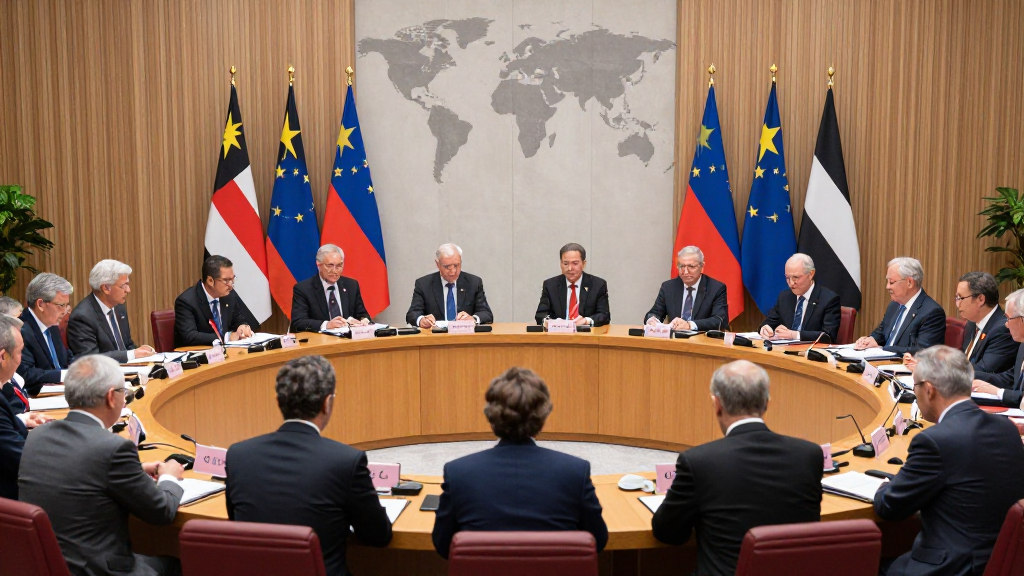
The Group of Seven summit in Quebec City delivered its share of formal communiques and choreographed photo opportunities, but the image that commanded global attention on Wednesday was anything but official. A microphone caught a senior German delegation official describing United States President Donald Trump as a “bellyacher” during a closed-door session, an unguarded moment that instantly went viral across social media platforms and dominated news coverage well into the evening. The footage, replayed on loop by international broadcasters, showed the official gesturing emphatically while seated beside European Commission President Ursula von der Leyen, apparently unaware that his remarks were being transmitted to a live audio feed. The incident underscored the brittle atmosphere inside the summit’s negotiating rooms, where tensions over trade, defense spending, and the structure of the global economic order have been simmering for months without resolution.
EU Prepares 38 Billion Dollars in Retaliatory Measures
Behind the spectacle of the hot mic moment, European officials were finalizing a detailed countermeasures package targeting US exports valued at 38 billion dollars, according to three EU diplomats briefed on the preparations who spoke on condition of anonymity because the talks were confidential. The proposed tariffs cover a broad swath of American goods, including Kentucky bourbon, Florida orange juice, California wine, and a range of industrial products from states represented by congressional Republicans who have been among the most vocal supporters of the Trump administration’s aggressive trade posture. The EU’s targeted approach reflects a deliberate strategy to maximize political pressure on Republican lawmakers whose constituencies would bear the direct cost of the countermeasures, even as the broader US economy absorbs the secondary effects of a prolonged trade confrontation. A spokesperson for the EU Trade Commission confirmed that the package would be formally presented to the World Trade Organization by the end of the week, setting the legal framework for retaliatory action that could take effect within sixty days.
The Dinner That Changed Nothing
Hours after the hot mic incident, President Trump sat down for a working dinner with Canadian Prime Minister Justin Trudeau at Mar-a-Lago, the Trump family estate in Florida that has become an unofficial venue for bilateral diplomacy since Trump’s return to the White House. The dinner lasted approximately two hours, according to a pool report filed by a journalist traveling with the US delegation, and covered topics including Canadian defense spending, the fentanyl trafficking crisis, and the ongoing renegotiation of the US-Canada-Mexico Agreement. Neither side issued a formal readout of the conversation, and the White House declined to comment on specifics, describing the meeting only as “constructive and warm.” Canadian officials were more candid in their assessment: in comments to reporters gathered outside the estate, Trudeau characterized the conversation as “difficult but necessary,” declining to elaborate on which specific points of contention were discussed or whether any new commitments had been made on either side.
What Comes Next for the Transatlantic Alliance
The hot mic episode and the failed dinner diplomacy crystallized a pattern that has defined US-European relations throughout the current US administration: repeated engagement that yields process but not progress, and a persistent gap between the two sides on fundamental questions about trade, security, and the institutions that have governed the Western economic order for eighty years. European officials have grown accustomed to the rhythm of confrontation followed by temporary détente, and there is broad consensus across EU member states that the current US administration is pursuing a transactional approach to alliances that treats longstanding partnerships as leverage to be exploited rather than shared foundations to be reinforced. The immediate test will come in six weeks, when the EU’s countermeasures package is scheduled to enter into force and Washington must decide whether to escalate, negotiate, or accept the new equilibrium of a more fragmented transatlantic market. Analysts at Oxford Economics warned in a note published Wednesday that a full implementation of the proposed tariffs could shave between 0.2 and 0.4 percentage points off European Union gross domestic product growth through 2027, while simultaneously raising consumer prices across the continent by an average of 0.6 percent in the affected product categories. The retaliatory spiral, if it materializes in full, would represent the most significant rupture in transatlantic trade relations since the steel and aluminum tariffs imposed by the Trump administration in 2018, a decision that eventually required years of negotiation to partially resolve through a series of negotiated quotas and exemptions that left both sides claiming partial victory. What is clear from the Quebec City summit is that the underlying tensions driving the trade dispute have not been addressed by diplomacy, and the likelihood of a sustained resolution before the next G7 summit appears increasingly remote.