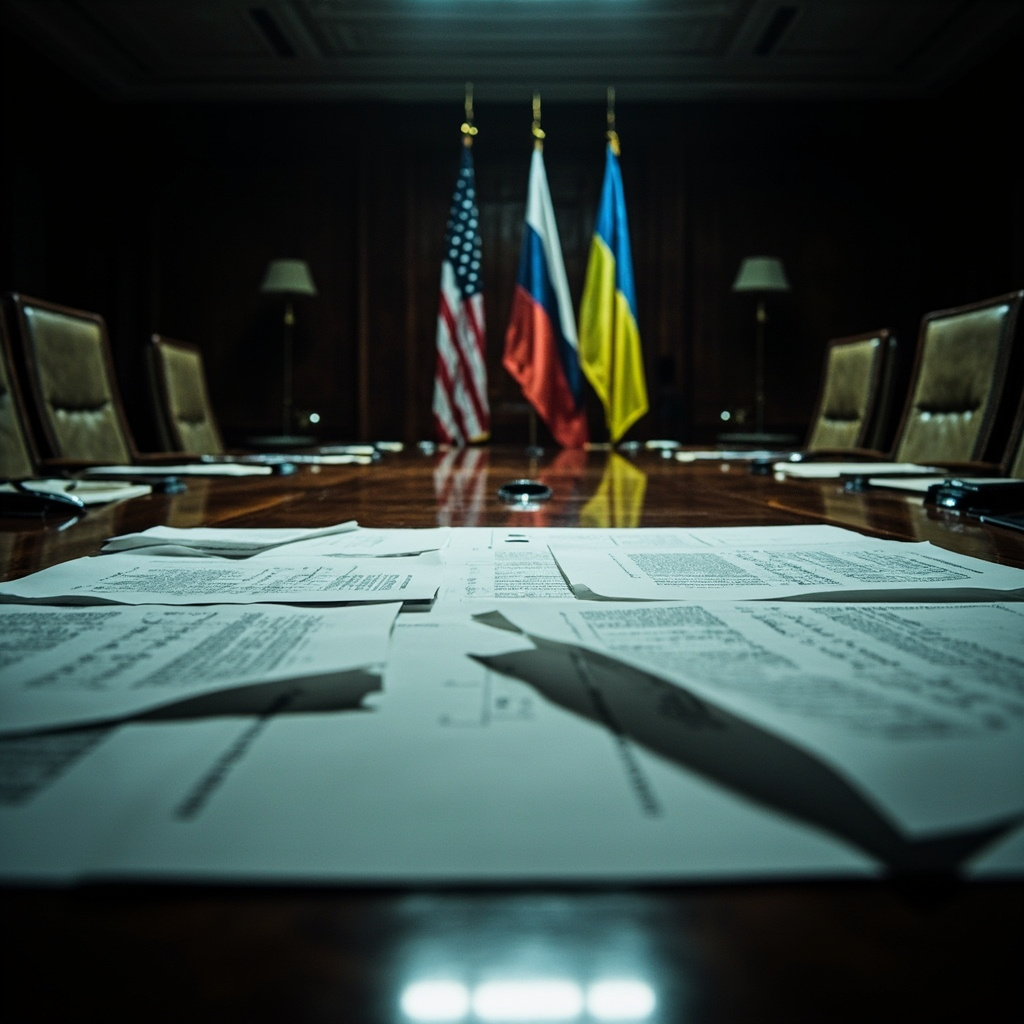
AfD Crosses 37% Threshold, Outperforms All Forecasts in Bavaria State Election
The Alternative for Germany party secured a historic victory in Bavaria’s state election, crossing the 37% threshold and outperforming every major polling forecast in what analysts are calling a watershed moment for European politics. The result sent shockwaves through Germany’s political establishment and accelerated the collapse of Chancellor Olaf Scholz’s federal coalition in Berlin.
The AfD, which entered the campaign polling around 31-33%, finished with 37.2% of the vote — the highest ever tally for a far-right party in any German state election since World War II. The Christian Social Union, Bavaria’s long-dominant center-right party, finished second with 29.8%, its worst result in the state’s modern history.
Markus Söder, the CSU leader and Bavarian Minister-President, conceded defeat in remarks delivered at the party headquarters in Munich. “The voters have delivered their verdict and we accept it,” Söder said. “We will study this result carefully and begin conversations with all democratic parties about what comes next.”
Alice Weidel, the AfD’s federal co-leader, appeared at a celebration in Berlin calling the result “a turning point for Germany.” She was joined by AfD state leader Martin Schenk, who declared that the party would begin talks with all other parliamentary parties — though the CSU and the center-left SPD have both ruled out forming a coalition with the AfD.
The result compounds pressure on Germany’s federal coalition. Scholz’s SPD-led government, which has already lost its parliamentary majority, is now facing calls for a confidence vote after the Free Democratic Party withdrew from the coalition last month. Early federal elections remain possible before the scheduled 2027 ballot.
Coalition Calculus: Why No Party Can Form a Majority Without the AfD
With 37.2% of the vote, the AfD holds approximately 89 seats in the 123-seat Bavarian parliament — more than any other single party. The CSU’s 29.8% translates to roughly 71 seats. A potential CSU-Green coalition, which some analysts had floated in pre-election scenarios, would fall short of a majority at approximately 97 seats. An SPD-Free Democratic coalition — unlikely given the SPD’s weak 12% national standing — would be mathematically impossible at the state level.
The AfD’s margin over the CSU (7.4 percentage points) is the largest gap between first and second place in any Bavarian election since 1954. It reflects a structural shift in the Bavarian electorate that has been building for nearly a decade, driven by frustration over immigration policy, energy costs, and what many voters describe as a disconnect between Munich’s affluent cosmopolitan core and the state’s more rural, conservative interior.
“The CSU’s firewall has collapsed,” said Dr. Heiner Gmel, a political scientist at the University of Munich. “For decades, the CSU could rely on voters moving back to them in the final weeks before an election. That mechanism simply did not work this time.”
Berlin in Crisis: Scholz Coalition Faces Survival Test After Bavaria Rout
The political aftershock in Berlin was immediate. Finance Minister Christian Lindner, whose FDP withdrawal from the federal coalition triggered the current crisis, issued a statement saying the Bavarian result “confirms that the government’s direction was wrong.” The SPD’s parliamentary leader called for “cool heads and responsible governance.”
Chancellor Scholz, speaking from Berlin, acknowledged the voters’ message but stopped short of announcing a timeline for a confidence vote. “We will take the time necessary to make considered decisions,” he said. “Germany’s stability depends on measured responses, not reactive moves.”
The opposition Christian Democratic Union, Germany’s main center-right party at the federal level, faces its own dilemma. CDU leader Friedrich Merz has ruled out any cooperation with the AfD at the federal level, but the Bavaria result puts new pressure on that position from within his own party ranks, where a growing faction argues that the rising tide makes eventual engagement unavoidable.
European Commission President Ursula von der Leyen, a member of the center-right European People’s Party, issued a statement expressing concern about the result while emphasizing that “democratic institutions remain strong in Germany.” The statement drew criticism from AfD officials who called it “condescending.”
AfD’s Path to Victory: What Drove the Unexpected Margin
Several factors contributed to the AfD’s outperformance of polling averages. An informal network of neighborhood canvassing operations, organized primarily through encrypted messaging platforms, appears to have mobilized thousands of low-frequency voters who typically do not respond to telephone polls. Exit polls indicated that 23% of AfD voters had not participated in the previous state election in 2018.
Economic anxiety also played a significant role. Bavaria’s once-booming technology sector has faced headwinds from both the global slowdown in venture capital and the state’s relatively high energy costs compared to other German regions. The AfD’s message of prioritizing German workers over both immigration and green energy subsidies resonated particularly in the state’s northern districts, where manufacturing and small-business employment remain central to the local economy.
Counterintelligence officials also noted that Russian-linked influence operations, documented in a leaked German domestic intelligence briefing from March, had focused digital messaging efforts on Bavaria in the six weeks before the election. The operations emphasized immigration and energy themes consistent with AfD campaign messaging, though direct coordination between the operations and the party has not been confirmed.
What Comes Next: Deadlock, Early Elections, or a New Coalition?
Bavarian law requires that the state parliament convene within two weeks of the election. The newly elected body must then elect a Minister-President by a majority vote — a process that could take multiple rounds if no party can assemble a coalition majority.
The CSU has ruled out forming a coalition with the AfD under any circumstances, and the SPD and the Greens have similarly refused to govern with the far-right party. That leaves a potential three-party coalition of the CSU, the Free Democrats, and the voter-financed Free Voters party — a combination that would command only a slim majority and would require negotiating positions across a wide ideological range.
Some constitutional lawyers have raised the possibility of a so-called “constructive no-confidence” motion — a procedure under which the parliament could dissolve itself and trigger new elections if no viable government can be formed within 30 days. That scenario would send the Bavarian electorate back to the polls as early as late summer 2026.
The AfD, for its part, has indicated it will not vote for any candidate put forward by the CSU or any other party. Party leader Martin Schenk said the AfD would “present our own candidate and await the outcome.” That stance effectively blocks any path to a government that does not include the far-right party — a situation without modern precedent in German federal or state politics.
International markets reacted with measured caution. The euro fell 0.3% against the dollar in early Asian trading, though analysts noted that Germany’s constitutional stability and the technical competence of its federal institutions provide a buffer against the kind of market disruption that followed similar results in France and Italy in recent years.