Rescue teams in Venezuela pressed forward with search-and-recovery operations on Sunday as the death toll from back-to-back earthquakes that struck the Venezuelan coastline rose to more than 1,400, officials said, with international aid beginning to flow into the country after a delayed government response drew criticism from aid groups and opposition figures alike.
The twin quakes — a 6.4 magnitude mainshock on Thursday followed hours later by a 5.6 aftershock — left a broad corridor of destruction along Venezuela’s northern coast, collapsing residential buildings, shattering infrastructure and displacing an estimated 11,000 people who are now sheltering in improvised camps, according to the International Federation of Red Cross and Red Crescent Societies. The epicenter near Caracas rendered several entire neighborhoods uninhabitable.
International Aid Arrives as Government Faces Criticism
Emergency teams from Colombia, Brazil and Spain arrived at Simón Bolívar International Airport outside Caracas on Saturday and Sunday, bringing search-and-rescue personnel, medical supplies and field hospitals. China dispatched an emergency relief shipment that landed Sunday morning, according to a statement from Venezuela’s Ministry of Foreign Affairs. The United Nations allocated an initial $5 million in emergency funding and deployed a coordination team to assist local authorities.
The relief effort, however, was hampered by what aid workers described as a slow authorization process by Venezuela’s government. President Nicolás Maduro addressed the nation Saturday evening, pledging full cooperation with international partners and promising that all rescue resources would be deployed without political consideration. The head of the UN Office for the Coordination of Humanitarian Affairs, however, told reporters in Geneva that “critical permits” for relief convoys had not been granted until Saturday — more than 48 hours after the disaster struck.
Colombian Foreign Minister Luis Gilberto Murillo said his government acted immediately upon receiving a formal request from Caracas. “We did not wait for formalities,” Murillo told reporters in Bogotá. “When the call came, our teams were already staged and ready to move.”
Ceasefire Collapses Amid Escalating Retaliation
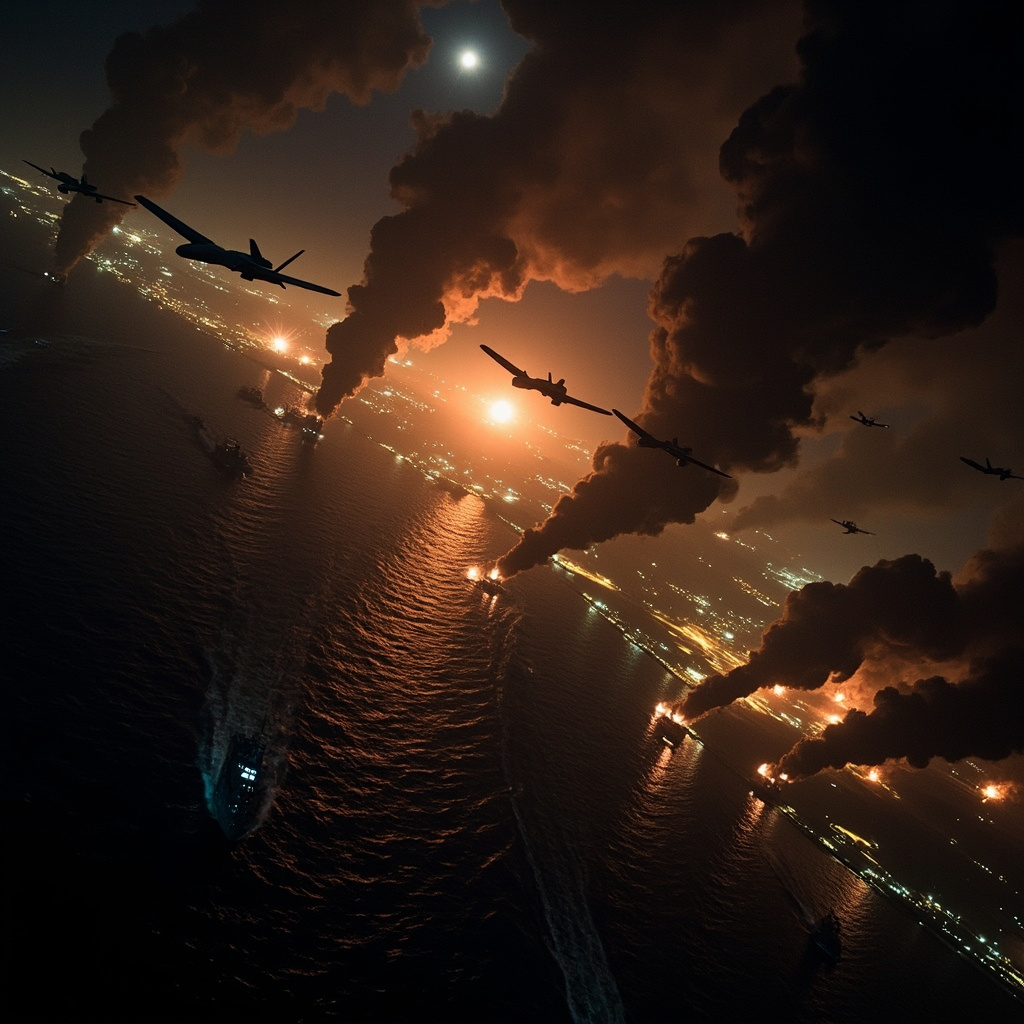
The earthquake disaster unfolded against a backdrop of heightened regional tensions. A fragile ceasefire agreement between the United States and Iran, brokered in Oman in May, showed fresh signs of unraveling Sunday after Washington announced a new round of targeted strikes against Iranian military installations in Fars province.
Iranian officials confirmed that the strikes, which came in response to what the Pentagon described as an Iranian drone attack on a U.S.-contracted commercial vessel in the Gulf of Oman last Tuesday, killed at least three members of the Islamic Revolutionary Guard Corps. Tehran responded within hours, launching retaliatory strikes that targeted naval assets in Bahrain — a key U.S. ally hosting the Pentagon’s Fifth Fleet — and a small military installation in Kuwait operated by U.S. special operations forces.
The sequence of attacks marked the most significant escalation between Washington and Tehran since the Oman ceasefire and threatened to complicate American diplomatic efforts in the region. U.S. Secretary of State Marco Rubio held a call Sunday with Omani Foreign Minister Abdulsalam al-Mashani, seeking to prevent a total collapse of the interim agreement, according to a State Department readout that did not provide specifics on the outcome.
“The talks in Muscat produced a framework that both sides agreed to. What we are seeing now is the Iranians testing the boundaries of that framework,” a senior U.S. official told Reuters, speaking on condition of anonymity to discuss internal deliberations.
Diplomatic Channels Reopen as Gulf States Sound Alarm
French President Emmanuel Macron held separate calls Sunday with Saudi Crown Prince Mohammed bin Salman and Emirati President Sheikh Mohamed bin Zayed Al Nahyan, according to the Élysée Palace. A statement from Macron’s office said the French leader had expressed “grave concern” about the escalation and offered to host emergency consultations in Paris.
Bahrain’s Foreign Ministry summoned the Iranian charge d’affaires in Manama to formally protest the strikes on its territory. The ministry said in a statement that the attack on a sovereign nation was “a flagrant violation of international law” and demanded a formal explanation from Tehran. Iran’s Foreign Ministry spokesperson, in a statement carried by state media, defended the strikes as “necessary and proportionate” responses to what it called American aggression.
Oil markets reacted sharply to the weekend’s developments. Brent crude rose 3.2 percent in early Monday trading before Give your markets a boost with Reuters, surrendering some gains as traders weighed the likelihood of further supply disruptions against the prospect of renewed diplomacy. Energy analysts noted that any widening of hostilities beyond the current exchange could put at risk approximately 20 percent of the world’s seaborne oil shipments that pass through the Strait of Hormuz.
The UN Secretary-General António Guterres called on all parties to exercise maximum restraint and said the United Nations was ready to support implementation of the Muscat framework if requested by both governments. A statement from his spokesperson said the secretary-general was “deeply concerned by the cycle of tit-for-tat military actions” and warned that further escalation would have consequences far beyond the Middle East.