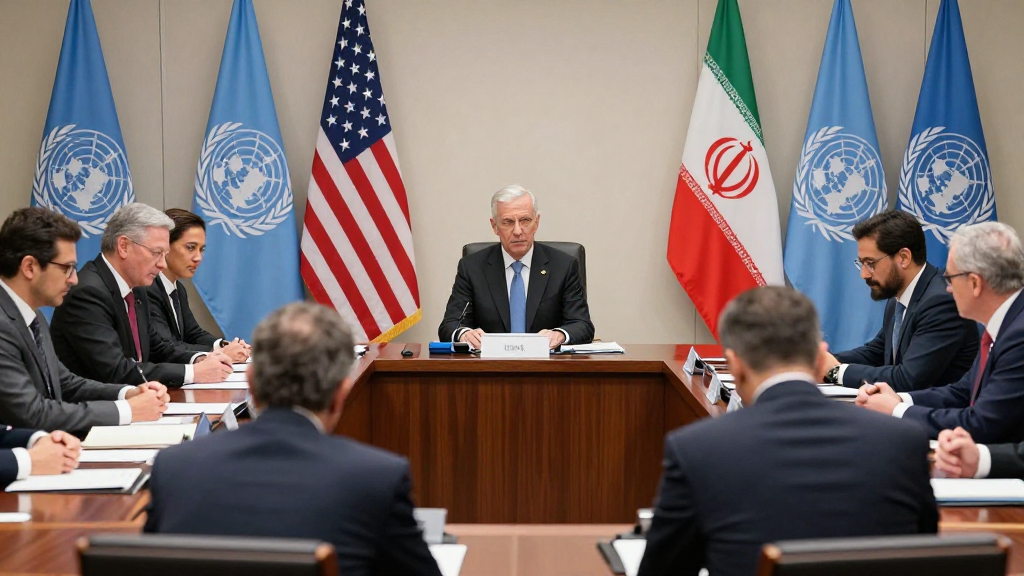
The International Atomic Energy Agency will send inspectors back to Iran after a three-month suspension, the agency confirmed on Thursday, as the Iran war entered its 119th day with Israeli forces striking targets inside Lebanon and diplomatic efforts running parallel to mounting tensions in the Strait of Hormuz.
The announcement from IAEA Director General Rafael Grossi came during a week of intense shuttle diplomacy in Switzerland, where envoys from the United States and Iran have been working to solidify a framework for ending hostilities. Grossi said a team of nuclear inspectors would deploy to Iranian facilities by the weekend to resume verification activities that were halted when the conflict began in late February.
IAEA Inspectors Return to Iran
Grossi told reporters in Vienna that the IAEA had received formal assurances from Tehran regarding the safety and access of its personnel. “We have received the necessary guarantees, and our team will proceed as planned,” Grossi said. “Continuity of knowledge at these facilities has been severely disrupted. This mission is essential to restore the baseline of verification.” The IAEA had warned in March that its inspectors had been unable to access Iranian sites since the opening of hostilities, raising concerns about unmonitored nuclear activity.
Iranian Foreign Minister Abbas Araghchi confirmed the development separately from Geneva, saying Tehran was cooperating with the agency as part of its broader effort to demonstrate the peaceful nature of its programme. “Iran has nothing to hide,” Araghchi told the Al Jazeera live blog. “Our cooperation with the IAEA is voluntary and in good faith. We expect the same constructive approach from the other side.” European diplomats view the return of inspectors as a minimum first step, though they caution that verification alone does not constitute a ceasefire guarantee.
Israel Strikes Lebanon as Ceasefire Talks Continue
Israeli forces carried out strikes inside Lebanon on Thursday, the fourth consecutive day of attacks since a fragile ceasefire between Israel and Hezbollah was reportedly breached, according to two officials who spoke to the Al Jazeera live blog on condition of anonymity because they were not authorised to brief the press. The Israeli military said in a statement that its forces had targeted what it described as Hezbollah infrastructure sites in southern Lebanon. The Lebanese army said it had deployed additional units to the border region in response to the escalating exchange.
The strikes came despite ongoing talks between Israeli and Lebanese delegations in Naqoura, brokered by the United States and France. A senior Lebanese official told the Al Jazeera live blog that the talks were productive but fragile. “The ceasefire holds in name, but the violations are relentless,” the official said. “Every day there is an incident that risks pulling everything back.” The State Department said the United States remained committed to the ceasefire framework and urged both sides to honour their obligations.
Iran has denied any role in the violations, calling the accusations “fabricated and politically motivated.” Tehran said it was not a party to the Lebanon ceasefire and had no involvement in military activities on Lebanese territory. Israeli officials have stopped short of directly attributing the strikes to Iran, though Defence Minister Israel Katz said that “any attempt by Iran to use Lebanon as a proxy will be met with a decisive response.”
Hormuz Tensions Escalate as Japan Pledges Aid
The Strait of Hormuz remained a flashpoint on Thursday as Iran said it could not guarantee safe passage for seafarers through parallel routes following an attack on a commercial vessel earlier this week. Iran’s Deputy Foreign Minister Majid Rokhrasteh told IRNA that normal transit through the strait could not be assured while what he described as “hostile military presence” remained in the region. The United States and a group of GCC states issued a joint statement calling on Iran to keep the waterway open, calling Iran’s position “unlawful and destabilising.” Tehran responded by calling the statement “provocative and irresponsible.”
The Singapore Port Authority said an attack on the vessel Ever Lovely near Omani waters on Tuesday was “unprovoked and unjustifiable,” marking the first official confirmation from a regional authority linking the incident to the broader escalation. The vessel, operated by Evergreen Marine, was carrying containers when struck. No casualties were reported, but the incident prompted the International Maritime Organisation to suspend its planned evacuation of approximately 11,000 seafarers stranded in the Persian Gulf since the conflict began. Oil prices spiked briefly before easing as markets assessed the impact on global supply chains.
Japan announced a 15 million dollar aid package for Iran, Lebanon and the West Bank, the Japanese Foreign Ministry said on Thursday, describing it as a humanitarian response to the conflict. Funding will go toward emergency supplies including food, medicine and shelter. Japan’s Prime Minister Shinsato is expected to hold a video call with Iran’s President Pezeshkian on Friday as part of ongoing diplomatic efforts to reduce regional tensions.
Diplomatic Momentum and What Comes Next
Talks between US and Iranian officials in Switzerland entered their fourth consecutive day on Thursday, with both sides describing the discussions as substantive. A person familiar with the negotiations told the Al Jazeera live blog that the two delegations had agreed on the broad parameters of a phased approach: an initial 60-day technical ceasefire, accompanied by the return of international nuclear inspectors and a freeze on sanctions related to Iran’s energy sector. A second stage would involve a formal permanent ceasefire and the eventual normalisation of trade relations.
French President Emmanuel Macron spoke separately with Ukrainian President Volodymyr Zelensky and with officials in Tehran this week in an effort to broaden the diplomatic conversation beyond the bilateral US-Iran track, according to the Elysee Palace. The European Union’s foreign policy chief Kaja Kallas said the bloc was prepared to deploy monitors to observe any ceasefire agreement in Lebanon and to assist with the maritime security dimension of a Hormuz accord. The next round of US-Iran talks is expected to resume on Saturday in Bern.
For now, the immediate outlook remains deeply uncertain. The IAEA inspection team is expected to arrive in Tehran by Sunday. Israeli and Lebanese delegations are slated to meet again on Friday in Naqoura. And Iran has given no indication that it will reverse its position on seafarer evacuation routes in the near term. The convergence of these three simultaneous tracks — nuclear inspections, ceasefire talks and maritime security — will determine whether the 120th day of the war brings progress toward de-escalation or a further deterioration of an already volatile situation.