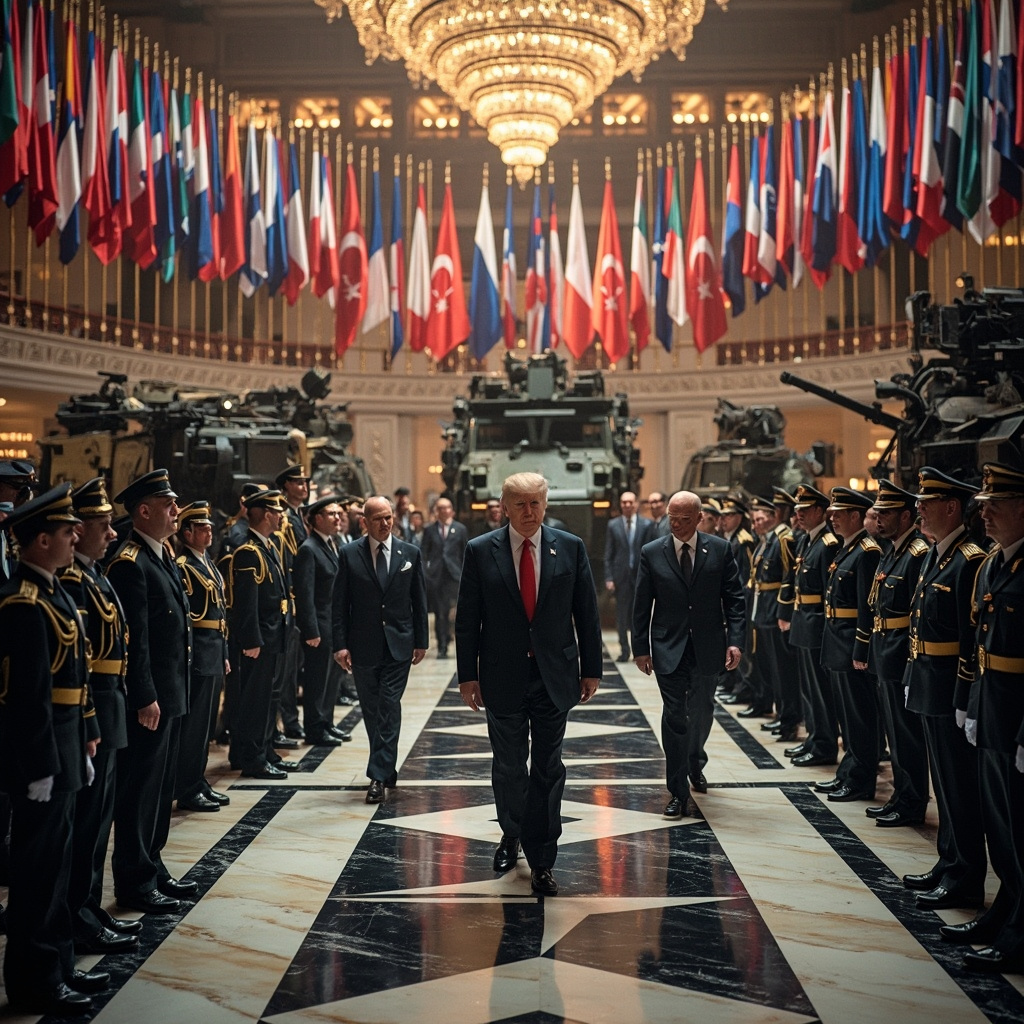
NATO Allies Pledge Billions in Arms Deals as Leaders Gather in Ankara
NATO allies are expected to pledge billions of dollars in new arms contracts and expanded weapons production as leaders gather in Ankara next week, according to five NATO diplomats who detailed the draft summit declaration to POLITICO. The July 7-8 gathering marks the alliance’s most consequential strategic meeting since Russia’s continued incursion into eastern NATO member territories and the ongoing U.S. military campaign in Iran have reshaped the geopolitical landscape. Secretary-General Mark Rutte has made defense industrial production the centrepiece of the agenda, seeking a unifying topic that can bridge persistent rifts within the 32-member coalition.
The joint declaration, currently under negotiation by NATO ambassadors and subject to change before final sign-off by heads of state, will reaffirm the alliance’s commitment to Article 5 collective defence and again designate Russia as a long-term threat to Euro-Atlantic security. Despite repeated pressure from President Donald Trump to increase burden-sharing, European allies are preparing to commit to new procurement frameworks that would see multi-year arms contracts channelled through NATO’s Defence Production Action Plan. The exact volume of the commitments has not yet been finalized, though diplomats indicated the total would surpass the thresholds set at the 2025 Vilnius emergency session.
Trump’s Presence and the Iran Question
Trump will attend the summit in person, according to three people familiar with the planning, a notable shift after his administration spent months publicly questioning NATO’s relevance. His administration has simultaneously prosecuted an aggressive military campaign against Iranian-backed forces across the Middle East, drawing sharp rebukes from allies who say the campaign has destabilised the Hormuz Strait and disrupted global LNG shipping lanes. NATO diplomats told POLITICO that the draft declaration includes language addressing the U.S. military operation in Iran, a topic that has created friction inside the alliance. Several European members have privately expressed concern that the Iran campaign risks drawing NATO into a broader Middle Eastern conflict without explicit Article 5 justification.
“We are not looking for a fight with anyone, but we will not stand by while Iranian proxies threaten our forces in the region,” said a senior NATO official who requested anonymity to discuss internal deliberations. “The question is how we calibrate our response so it deters without escalating.” The official added that Rutte has worked to keep the summit focused on conventional deterrence rather than the Iran question, which remains divisive. Trump is expected to press allies to more explicitly endorse the U.S. operation in the joint statement, according to two diplomats briefed on the negotiating text.
Ukraine Aid Package and the Disputed Southern Flank
A separate track of negotiations is focusing on continued financial and lethal aid to Ukraine, which NATO members have pledged to sustain through at least 2028 under a framework agreed in Vilnius. The alliance’s top military commander, General James McFarlane, told a pre-summit briefing in Brussels that Ukrainian forces are facing their most severe ammunition shortages since 2022, a situation he described as “urgent and getting worse.” Four NATO diplomats said the Ankara declaration will include a new commitment to deliver at least 150,000 artillery shells and 40 main battle tanks to Kyiv by year-end, contingent on ratification by parliamentary defence committees in Germany, Poland and the Czech Republic.
On NATO’s southern flank, Turkey has used its role as summit host to push for a stronger focus on instability in the Sahel and the Horn of Africa, where Russian private military contractors have expanded their footprint in recent years. Ankara has also signalled it will block any language in the declaration that mentions the Kurdish People’s Defence Units by name, insisting the term would amount to interference in Turkish domestic affairs. The issue has threatened to delay the summit’s final communiqué before leaders even arrive, according to two Turkish officials who spoke on condition of anonymity.
What Comes Next: Ratification Battles and Budget Deadlines
The Ankara summit concludes with a leaders’ declaration that carries political weight but requires domestic ratification to translate into concrete commitments. The arms procurement pledges face immediate scrutiny in several NATO parliaments, where opposition parties have already warned they will block deals that do not include offset clauses requiring contractor investment in domestic manufacturing bases. Rutte has warned that failure to deliver on the production commitments could undermine NATO’s credibility at a moment when the alliance faces simultaneous threats on three flanks: Russian aggression in the north, Iranian-backed militancy in the south, and Chinese assertiveness in the Indo-Pacific.
Finance ministers from G7 nations, meeting on the summit’s margins, are expected to finalise a separate mechanism to channel multilateral loans for allied defence spending, a framework that would allow members like Poland and the Baltic states to accelerate procurement without running afoul of EU fiscal rules. Analysts at the International Institute for Strategic Studies said the Ankara summit will serve as a test of whether NATO can translate wartime solidarity into a durable peace-time industrial base. “The hard part is not the declaration,” said Dr. Hanna Sherwood, a senior fellow at the institute. “It is whether these governments can actually deliver the shells, the missiles and the vehicles they are promising, on time, at the scale they are claiming.” The alliance’s next full-scale military exercise, Steadfast Defender 2027, is scheduled to take place in Romania and the Black Sea region.