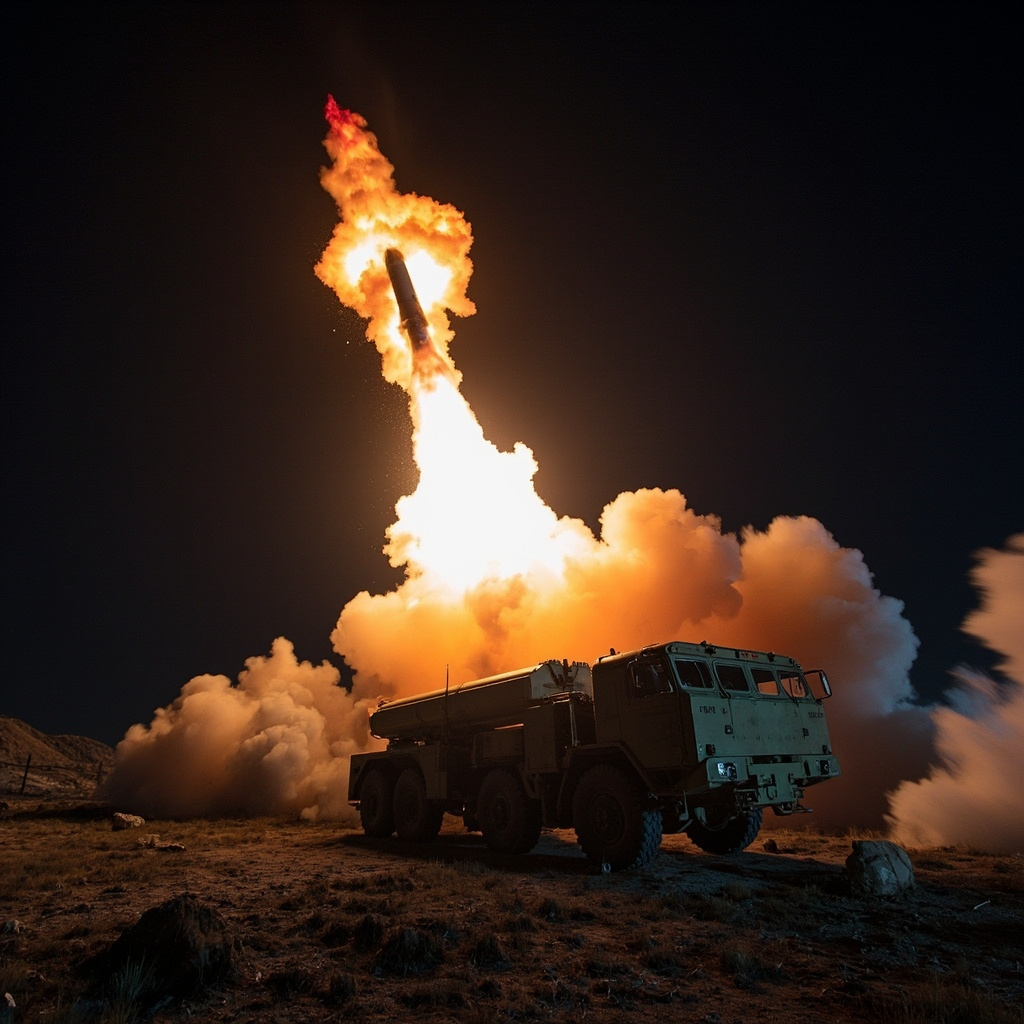
North Korea has unveiled a sweeping expansion of its military arsenal, including ballistic missile warheads designed to strike South Korean airfields, ports and power facilities, upgraded rocket launchers with extended range, and the largest warships ever built for the North Korean navy, state media reported on June 25, 2026. Leader Kim Jong Un observed the tests along the southern border and ordered the armed forces to adopt a “deadly and destructive offensive posture” against the south, according to Korean Central News Agency. South Korea responded the following day by announcing plans to train 500,000 drone warriors as Defence Minister Ahn Gyu-back warned that Pyongyang is receiving technological assistance from Russia and that Seoul cannot afford to fall behind.
Kim Jong Un Oversees Tests, Demands Deadly and Destructive Military Posture
The tests, carried out days after the Pentagon confirmed an unspecified US counter-strike operation in the Middle East, underscored a dangerous acceleration in Pyongyang’s weapons programme and pushed the Korean Peninsula closer to a new phase of open confrontation.
The weapons tested included a “special mission” ballistic missile warhead designed to inflict “fatal damage on major targets including airfields, ports and power facilities of the enemy,” according to the Korean Central News Agency. Also tested were an upgraded rocket launcher with an extended firing range and a self-propelled gun-howitzer. Analysts said the combined capabilities indicated that Pyongyang was building toward the ability to strike the entirety of South Korean territory.
Seoul Responds With Plan to Train 500,000 Drone Warriors
The escalation drew an immediate and substantial response from South Korea. On June 26, 2026, Defence Minister Ahn Gyu-back announced that Seoul would vastly expand its unmanned aerial capabilities in response to the growing threat. The defence ministry said it plans to train 500,000 “drone warriors” — civilians and military personnel equipped to operate attack and reconnaissance drones as what Ahn described as “personal firearms.”
“Pyongyang is receiving technological assistance from Russia, and we cannot afford to fall behind,” Ahn told reporters. The minister framed the drone expansion as an urgent response to a rapidly shifting security environment, one in which North Korea’s new weapons systems could, for the first time, threaten South Korean infrastructure deep behind the front lines.
President Lee Jae Myung said separately that he had spoken with United States President Donald Trump, who told him, according to Lee: “The time had come to pay attention to the North Korea issue.” Lee also announced plans to develop five national defence firms worth a combined 650 million dollars by 2030 to support the broader military build-up. The United States currently maintains roughly 28,500 military personnel at bases throughout South Korea.
Regional Tensions Multiply Across the Peninsula
North Korea’s military push comes after years of stalled negotiations with the United States. Pyongyang abandoned talks in 2019 and has since deepened its nuclear and conventional weapons programmes without interruption. Kim has refused to consider any deal that requires him to surrender his nuclear arsenal, and the latest tests suggest he is instead investing in the means to make that arsenal more usable and harder to defend against.
The weapons unveiled at the commissioning ceremony included what state media described as the largest warships ever built for the North Korean navy. Kim said the fleet would be equipped with nuclear weapons and would be capable of “multifaceted and efficient” operations. Analysts noted that the simultaneous development of naval, aerial and ground-based strike systems pointed to an integrated strategy rather than a collection of individual projects.
What Happens Next
South Korea’s drone programme and its alliance with Washington will be under intense scrutiny in the coming weeks. The US-ROK joint military command is expected to announce enhanced exercises and a possible repositioning of air defence assets on the peninsula. North Korea has previously responded to large-scale US-ROK drills with missile tests and artillery firings, raising the prospect that Pyongyang could conduct additional launches within days of any formal announcement from Seoul or Washington.
Internationally, the involvement of Russia in sharing military technology with North Korea is expected to draw condemnation from the United States and its allies at the United Nations. However, prospects for a binding Security Council resolution remain remote given Russia’s veto position. The broader question is whether the Kim regime is moving toward the operationalisation of short-range nuclear weapons targeting South Korean cities, a scenario that regional security analysts say cannot be answered with certainty from open-source intelligence alone.