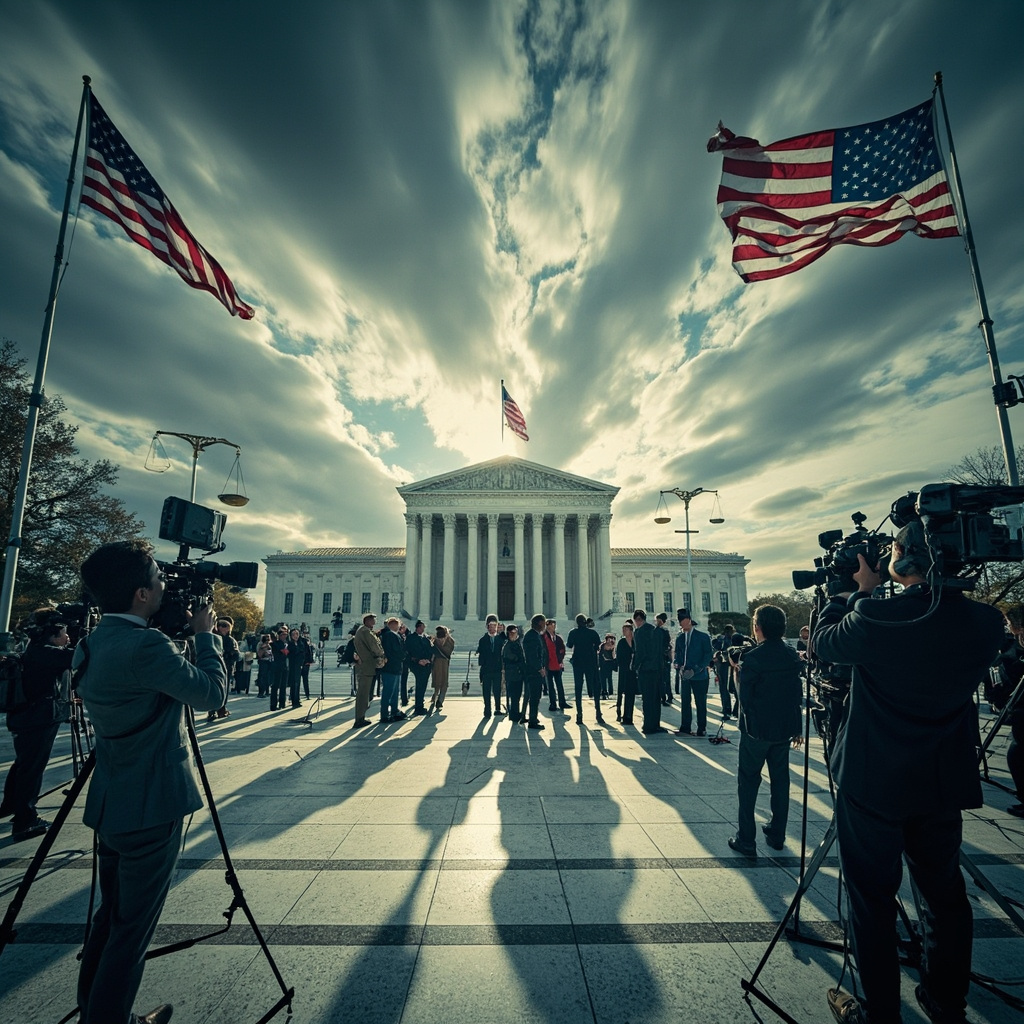
Supreme Court’s 6-3 Ruling on Humanitarian Protections
The Supreme Court handed the Trump administration two major victories Thursday, voting 6-3 along ideological lines to allow the termination of Temporary Protected Status for hundreds of thousands of migrants from Haiti and Syria. The rulings expose roughly 350,000 people to potential deportation — people who fled civil war, natural disasters, and extreme violence. TPS, a decades-old program, grants legal work authorization and protection from removal to nationals of countries deemed too dangerous for safe return.
The court also overturned a lower-court order that had blocked the administration from imposing caps on daily asylum applications at the southern border. That policy, previously used during the first Trump term, limits the number of migrants who can seek humanitarian protection each day. Civil liberties groups immediately condemned both rulings as a gutting of protections that have saved lives.
“These rulings tell hundreds of thousands of families that the United States will no longer recognize their right to stay here, even when conditions in their home countries make return genuinely dangerous,” said Guerda Pipoly, director of the Haitian Community Support Center in Miami. “The human consequences of this will be severe and irreversible.”
Vance Draws Parallels Between Nixon and Trump at Nixon Library
Speaking at the Richard Nixon Presidential Library in Yorba Linda, California, Vice President JD Vance drew a striking comparison between the Watergate scandal and the current political moment, arguing that if Watergate broke today it would barely register as a 12-hour news cycle. “The idea that it would have taken down a presidency is crazy,” Vance said, adding that the same institutional forces he believes toppled Nixon are now arrayed against Donald Trump.
“If you look at the story of how the deep state took down Richard Nixon, it’s not all that different from what the same groups of people, the same institutions tried to do to Donald Trump in the first Trump administration,” Vance said. He even drew a parallel to his own political biography: “Young senator, vice president, writes some bestselling books, is hated by the media. It kind of sounds like JD Vance.” The remarks drew both applause from conservative audiences and sharp criticism from Democrats who noted that Nixon resigned in disgrace after his own party turned on him.
The speech signals a deliberate effort by the White House to reframe historical accountability as institutional overreach rather than legitimate consequence of executive misconduct. Critics say the comparison dangerously rewrites history. “Richard Nixon broke the law and obstructed justice. Comparing that to political opposition is not just misleading — it’s a warning sign,” said former federal prosecutor Karen Kroll in an interview with a political news outlet.
Congressional Chaos: Housing Bill Stalls Over SAVE America Act
Back in Washington, the Trump administration’s influence over Congress was on full display in a different form. Speaker Mike Johnson returned from an hours-long meeting with the president at the Oval Office and announced the House would finally transmit the bipartisan affordable housing package to the White House — but only after Trump demanded that Congress pass the SAVE America Act, a contested voting rights bill, first.
The standoff had paralyzed the House for days. A group of GOP lawmakers answered Trump’s call and refused to vote on unrelated legislation, effectively shutting down House business. Johnson described the outcome as alignment with the president: “We’re on exactly the same page.” Trump, in a post on social media, told Republicans: “No more grandstanding.” The housing bill now faces a 10-day clock for the president to sign or veto it.
Senate Republicans, meanwhile, rejected a war powers resolution that would have restricted the administration’s ability to launch strikes against Iran without congressional approval — a direct rebuke of the escalating tensions in the Persian Gulf. The Senate reversal came hours after Trump berated Republican senators at a private meeting over their earlier hesitation on the issue. The administration’s hard line on Iran, combined with the Supreme Court’s rulings on immigration, marks a period of sustained Republican consolidation of executive power across multiple branches.
What comes next is a period of legal and political turbulence. TPS recipients have already begun organizing legal challenges, and advocacy groups say Thursday’s rulings are likely to generate years of litigation. In the meantime, the administration appears determined to move quickly — on immigration, on Iran, and on reshaping the boundaries of presidential authority in ways that will define the remainder of this term.