South Africa Deploys Security Forces as Anti-Migration Protests Sweep Major Cities
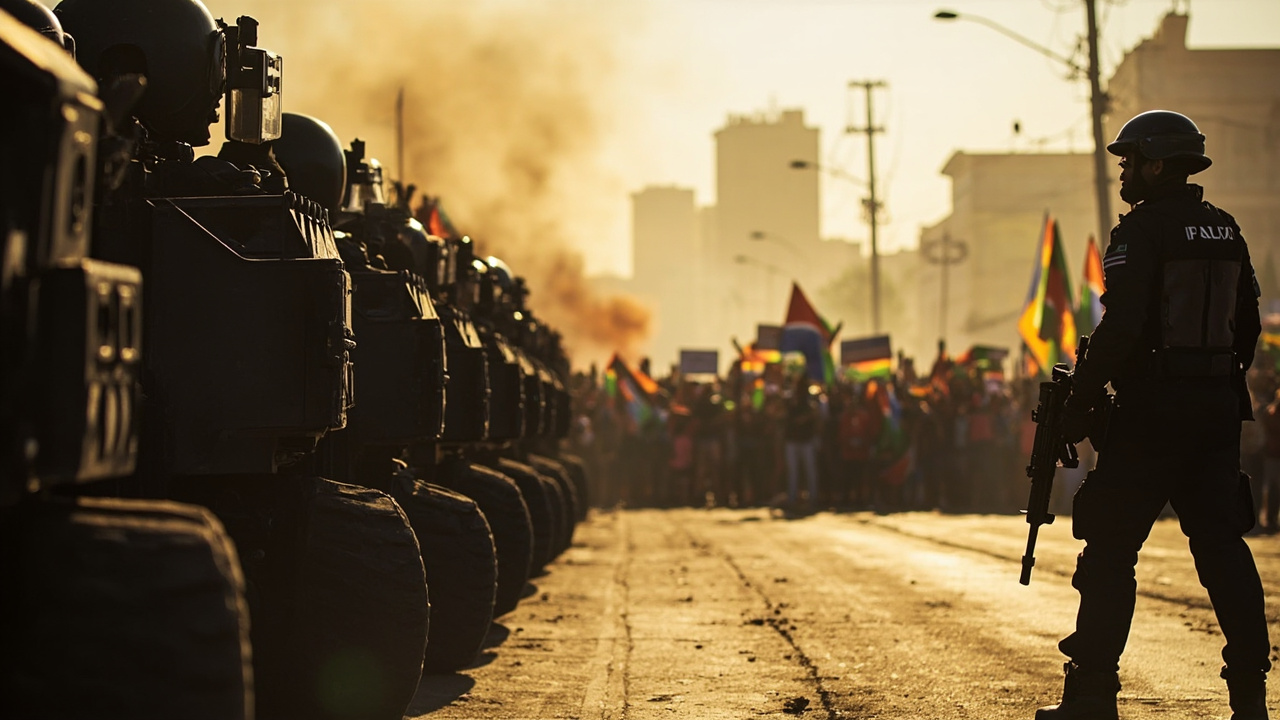
Police units were deployed across South Africa on Tuesday as anti-immigration protests swept through major cities, with authorities on high alert over fears that demonstrations could spiral into xenophobic violence. The protests coincided with an unofficial deadline set by vigilante groups demanding that undocumented foreign nationals leave the country, with organisers insisting the demonstrations would remain peaceful despite widespread reports of targeted harassment against migrants in preceding weeks.
The South African government despatched police and defence force assets to Johannesburg, Durban, and Cape Town in an operation officials described as preventive. Shopkeepers in Johannesburg’s central business district kept their doors shut as security personnel patrolled the streets. In Durban, white tents housing mostly Malawian migrants were being dismantled as authorities raced to clear transit camps before the day’s demonstrations began.
Security Forces Deployed to Prevent Violence
Security personnel were visible on major thoroughfares across the country’s economic heartland. Trucks and assets belonging to the South African National Defence Force were deployed alongside police units, according to local media reports. The operation, estimated to cost R600 million according to government figures, reflected the scale of official concern about potential mass looting and mob violence.
Police said five people were arrested in Johannesburg’s Soweto township for allegedly looting a shop owned by a foreign national, and five more were arrested in Hammarsdale in KwaZulu-Natal province for breaking into a tuck shop. Traditional weapons including sticks and whips commonly carried by Zulu protesters were permitted by police, though at least one machete was seized at a demonstration in Durban.
President Cyril Ramaphosa met with protest leaders on the eve of the marches in an effort to defuse tensions. “The right to protest and freedom of expression does not allow people to threaten or intimidate others, or to engage in acts of vandalism or violence,” he wrote in his weekly newsletter. He has repeatedly warned demonstrators to act peacefully while also acknowledging the need for immigration reform.
Thousands Repatriated as Deadline Approaches
For weeks in May and June, men carrying sticks and chanting “abahambe” — an isiZulu and isiXhosa phrase meaning “they must leave” — were observed going from shop to shop in Johannesburg and Durban, interrogating and in some cases beating migrants. The violence drew sharp condemnation from neighbouring governments and international rights organisations.
Several governments including Nigeria, Ghana, Malawi and Uganda repatriated hundreds of their citizens in the days leading up to the deadline. South African police said approximately 25,000 migrants had been repatriated so far, while about 50,000 migrants had been arrested since January for being in the country illegally. More than three million documented foreign nationals currently reside in South Africa, though the number of undocumented migrants remains unknown.
“We are not calling for violence. No one will be killed on 30 June and no looting will take place in our name,” said Jacinta Ngobese-Zuma, the leader of March and March, one of the main anti-migration groups behind the protests.
Humanitarian Crisis and Regional Fallout
At least five Mozambican nationals were killed during the weeks of unrest, according to Mozambique’s government. Ghana, Malawi, Mozambique, Nigeria and Zimbabwe all organised repatriation flights and ground transport for their nationals. More than 12,000 immigrants have been deported or repatriated since the wave of protests began earlier this year.
Nelson Mbewe, a Malawian national who had sought work in South Africa to support his family, described being caught between two worlds. “We’ve faced challenges — they’re saying we should go back home because we do not have the right documents,” he told the BBC. “They say we are Makwerekwere. It’s their country, so what can we do?”
Crime statistics undermine the narrative pushed by protest organisers: official data shows that only a small fraction of crimes are committed by foreign nationals. Yet in a country where unemployment is among the highest in the world and wealth remains concentrated, African migrants are frequently cast as scapegoates for broader economic malaise. Foreign-born migrants make up an estimated four percent of South Africa’s 62 million people, despite claims by protest groups that they number as many as 15 to 20 million.
Broader Context and What Comes Next
“There is no place for racism, sexism, tribalism, xenophobia, Afrophobia or any other form of intolerance,” President Ramaphosa told a gathering of traditional monarchs. The next seventy-two hours will be decisive in determining whether the continent’s most industrialised economy can pull back from a confrontation that has drawn the concern of governments across Africa and beyond.