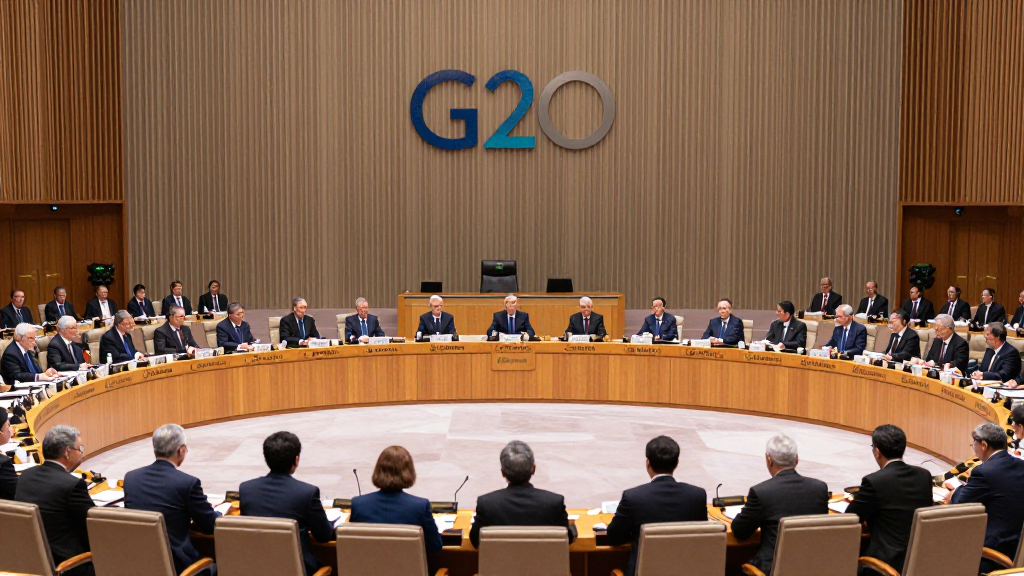
President Donald Trump announced at the G20 summit in Miami on Monday that his administration will impose a 10% baseline tariff on all U.S. trading partners, escalating a trade war that has rattled global markets and strained alliances. The announcement came as talks between major economies collapsed, leaving the summit closing communique in doubt.
What the Tariff Means
The tariff applies universally, not just to countries with trade surpluses. Administration officials said the measure is designed to reset bilateral trade relationships and generate leverage in ongoing negotiations. Commerce Secretary nominees indicated the tariff could take effect within 60 days pending a review period.
“This is about fairness,” a senior administration official said. “Our trading partners have benefited from an asymmetric relationship for decades. This levels the field.”
Global Backlash
The European Union immediately signaled retaliation. European Commission President Ursula von der Leyen said the bloc would respond “proportionally and decisively” to protect European industries. Canada Prime Minister called the move “unacceptable” and summoned trade advisors for an emergency session. China, already operating under previous rounds of tariffs, condemmed the announcement and vowed unspecified countermeasures.
Financial markets fell sharply on the news. The S&P 500 dropped 2.1% in early trading before recovering partially. The dollar weakened against major currencies as investors sought safety.
Summit Collapse
The G20 summit ended without a joint communique for the first time in years, as divisions over trade policy proved insurmountable. The United States blocked language that would have committed members to avoiding protectionist measures. Emerging market economies, many of which rely on export-driven growth, expressed alarm at the sweeping nature of the tariff.
The International Monetary Fund warned that the tariff regime could subtract 0.5% from global GDP growth in 2026, with the heaviest toll falling on lower-income nations already struggling with debt and food insecurity.
What Comes Next
Trading partners have 60 days before the tariff takes effect. During that window, the EU, Canada, and a coalition of Asia-Pacific nations are expected to file formal complaints with the World Trade Organization. Congressional Democrats have also begun drafting legislation to require a congressional vote before new tariffs of this scale can be imposed, though it remains unclear whether such a bill could attract enough Republican support to pass.