May 3, 2026 — Spirit Airlines, the budget carrier that reshaped American air travel with its ultra-low-cost model and distinctive yellow planes, has permanently ceased all operations after failing to secure an eleventh-hour bailout from the Trump administration, marking the largest U.S. airline collapse since the pandemic era and stranding thousands of passengers across the country.
The shutdown, effective Saturday morning, came after CEO Ted Christie confirmed the carrier could no longer secure the financing needed to continue flying. An attempted merger with JetBlue had already collapsed months earlier under antitrust scrutiny, and a last-ditch effort to secure government-backed emergency funding failed to materialize despite direct appeals to Transportation Secretary Sean Duffy.
The Final Hours: What Happened
Spirit’s collapse unfolded with brutal speed over the final 48 hours. On Friday evening, the airline informed the Department of Transportation that it would be unable to continue operations. By Saturday morning, all flights were grounded. The Federal Aviation Administration revoked Spirit’s operating certificate, and the carrier filed for Chapter 7 liquidation — a stark contrast to Chapter 11 reorganizations that have allowed other airlines to keep flying while restructuring.
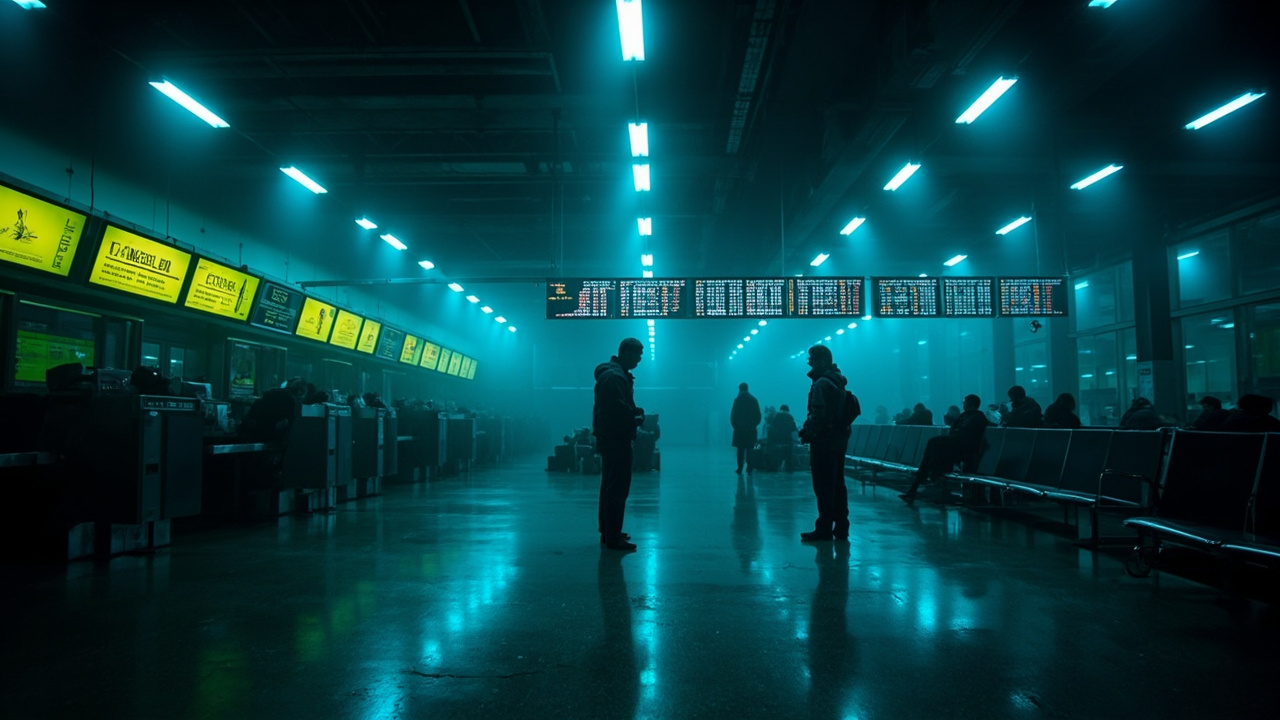
The immediate impact was chaos at airports from Fort Lauderdale to Las Vegas. Spirit operated roughly 500 daily flights to more than 60 destinations, primarily serving leisure travelers and price-sensitive customers. According to the Department of Transportation, approximately 17,000 passengers were affected on the first day alone, with many showing up at airports unaware their flights had been canceled.
“I checked the app this morning and it just said ‘canceled’ — no rebooking, no refund info, nothing,” said Maria Vasquez, a stranded passenger at Orlando International Airport who had been scheduled to fly to Detroit for a family funeral. “I paid $89 for that ticket. I don’t know if I’ll ever see that money again.”
Why Spirit Couldn’t Be Saved
Spirit’s demise is the culmination of years of mounting pressure on the ultra-low-cost carrier model. The airline pioneered a strategy of rock-bottom base fares with fees for everything else — carry-on bags, seat assignments, even water on some routes — and for years the formula delivered profits that rivals envied. But the post-pandemic travel landscape proved unforgiving.
Key factors behind the collapse:
- ▸ JetBlue Merger Blocked: A federal judge blocked the proposed $3.8 billion JetBlue-Spirit merger in January 2024 on antitrust grounds, ruling that eliminating Spirit would harm price-sensitive consumers. The ruling stripped Spirit of its most viable exit strategy.
- ▸ Debt Wall: Spirit carried approximately $3.3 billion in debt, with $1.1 billion in loyalty-program-backed notes coming due in 2025. Efforts to refinance or restructure repeatedly failed as creditors grew skeptical of the airline’s turnaround prospects.
- ▸ Engine Groundings: Pratt & Whitney engine issues forced Spirit to ground dozens of Airbus A320neo aircraft throughout 2024-2025, slashing capacity just when the airline desperately needed to generate cash.
- ▸ Market Shift: Major carriers like Delta, United, and American aggressively competed for budget travelers with basic economy fares, eroding Spirit’s price advantage. Simultaneously, post-pandemic travelers showed a preference for premium experiences that Spirit’s bare-bones model couldn’t provide.
- ▸ Fuel Costs & Iran Conflict: The ongoing U.S.-Iran military confrontation over the Strait of Hormuz sent jet fuel prices surging 22% since March, adding hundreds of millions in unplanned costs to an already-fragile balance sheet.
The Political Dimension
The Trump administration’s refusal to intervene marks a significant departure from precedent. In 2020, the CARES Act provided $50 billion in payroll support to U.S. airlines, and the George W. Bush administration approved $5 billion in loan guarantees after 9/11. But in this case, the White House took a notably hands-off approach.
Transportation Secretary Sean Duffy said in a statement that “the market must be allowed to function” and noted that “other carriers stand ready to absorb Spirit’s routes and workforce.” That market-oriented stance drew sharp criticism from consumer advocates and labor unions, who warned that reduced competition would mean higher fares — especially on routes where Spirit was the only low-cost option.
“This administration just let the largest budget airline in America disappear. Every passenger who flies between Florida and the Northeast is going to feel this in their wallet within months.” — William McGee, American Economic Liberties Project
What It Means for Travelers
The most immediate question for consumers is simple: what happens to ticket prices? Spirit served as a pricing anchor on hundreds of routes, particularly in the eastern United States, the Caribbean, and Latin America. Whenever Spirit entered a market, competitors were forced to lower their fares — a phenomenon economists call the “Spirit Effect.”
With Spirit gone, analysts expect fares to rise 15-25% on formerly Spirit-heavy routes within six months. The biggest impacts will be felt on routes connecting Florida to the Northeast and Midwest, as well as transcontinental routes between the East Coast and Las Vegas/Los Angeles. Frontier Airlines and Allegiant Air, Spirit’s closest remaining competitors in the ultra-low-cost space, lack the fleet capacity to fully backfill Spirit’s network of 500 daily flights.
The Department of Transportation has instructed other carriers to honor Spirit tickets on a space-available basis through May 10, but that offer comes with significant caveats — passengers must pay any fare difference, and many popular routes simply have no available seats during peak travel periods.
17,000 Workers Left in Limbo
Beyond the passenger disruption, Spirit’s shutdown leaves approximately 17,000 employees without jobs — pilots, flight attendants, mechanics, gate agents, and headquarters staff. Unlike previous airline bankruptcies where operations continued through Chapter 11, Chapter 7 liquidation means an immediate and permanent end to employment.
The Air Line Pilots Association, which represented Spirit’s roughly 3,000 pilots, called the shutdown “a devastating failure of corporate leadership and government oversight” and urged major carriers to prioritize Spirit pilots in their hiring pipelines. Flight attendants face a particularly difficult transition, as their seniority-based pay scales mean starting over at the bottom of another airline’s roster.
For the communities Spirit served, the loss extends beyond jobs. Atlantic City International Airport, where Spirit accounted for nearly 80% of all traffic, faces an existential threat. Smaller airports in Latrobe, Pennsylvania; Niagara Falls, New York; and Plattsburgh, New York relied on Spirit for the majority of their commercial service and now confront the real possibility of losing all scheduled flights.
What Comes Next
The liquidation process will unfold over the coming months, with Spirit’s assets — primarily its fleet of roughly 200 Airbus A320 family aircraft — being sold to the highest bidders. Lessors are already moving to repossess planes, and several international carriers have expressed interest in acquiring Spirit’s younger A320neos at distressed prices.
For the broader airline industry, Spirit’s collapse raises uncomfortable questions about the viability of the ultra-low-cost model in an era of volatile fuel prices, rising labor costs, and shifting consumer preferences. Frontier and Allegiant, while better capitalized than Spirit, face many of the same structural headwinds. Sun Country and Breeze Airways, newer entrants with more differentiated business models, may be better positioned to survive.
“The Spirit Effect kept fares honest across the entire industry,” said Henry Harteveldt, a travel industry analyst at Atmosphere Research Group. “Without that downward pressure, the Big Four carriers — Delta, United, American, and Southwest — now control over 80% of the domestic market. That kind of concentration hasn’t been seen since before deregulation in 1978.”