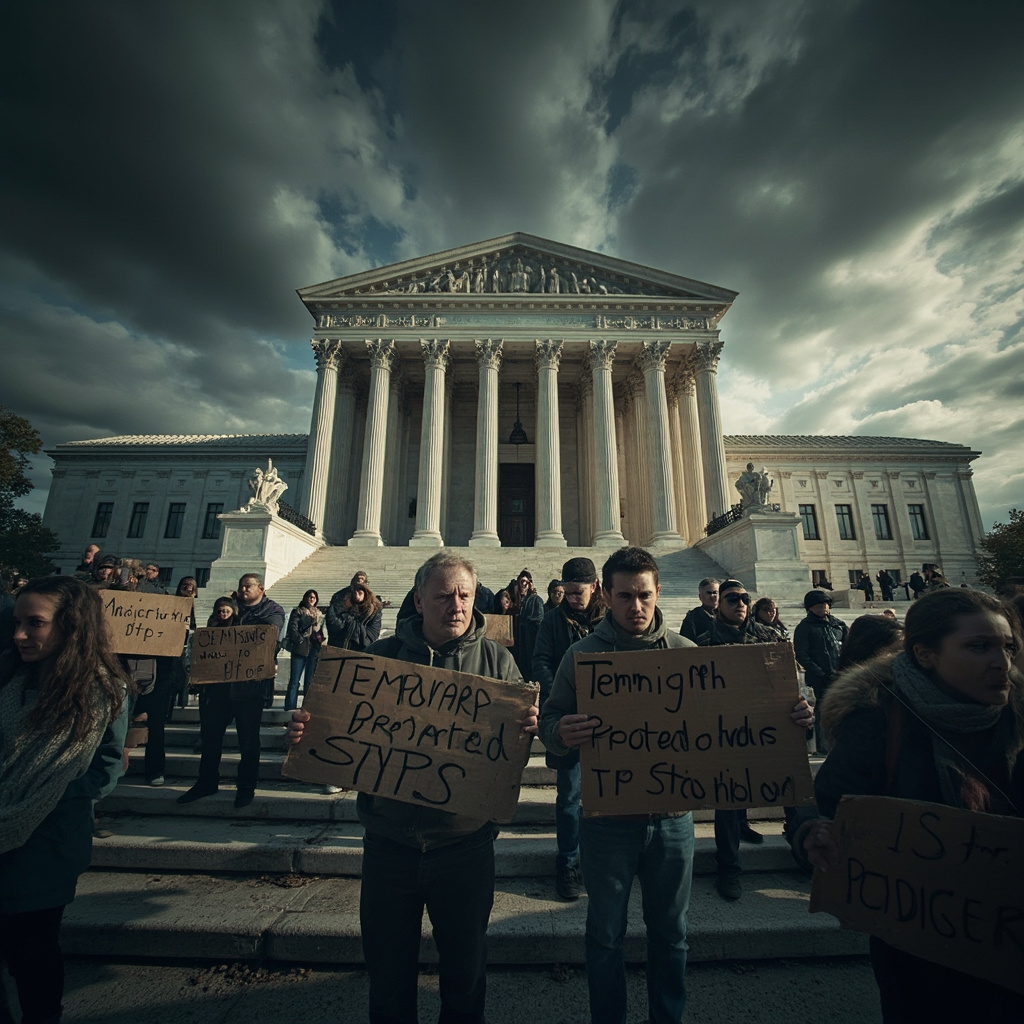
Supreme Court’s 6-3 Ruling Clears Path for Mass Deportations
The Supreme Court handed President Donald Trump two sweeping immigration victories Thursday, rulings that will allow the administration to effectively remove more than one million people from the United States and reshape the legal landscape around humanitarian deportation protections for years to come. The conservative majority, in two separate 6-3 decisions, ruled that the administration can terminate Temporary Protected Status for nationals from Haiti and Syria, and can revive a controversial asylum policy that effectively limits the number of migrants who can remain in the country while their claims are processed. Conservative Justice Samuel Alito wrote both majority opinions over scathing dissents from the court’s three liberal justices.
The TPS ruling, the more consequential of the two decisions, drew particular outrage from immigrant rights groups and state officials who warned the ruling will destabilize communities, devastate local economies, and send vulnerable people back to countries facing active conflicts, gang violence, and natural disasters. Haiti, which has seen more than 2,300 people killed in gang attacks this year and 1.5 million more displaced, was singled out as a nation that rights groups say is unsafe for returnees. A Haitian citizen named Jude Exama, a former medical student living in Atlanta, told CNN he has no intention of returning. “I myself have no choice but to stay in the country,” Exama said. “How do you think I can go and live in a country like that… I would rather starve to death hiding from immigration than live in open hell in Haiti.”
Inside the courtroom, the tension between the justices was unusually visible. Liberal Justice Sonia Sotomayor took the symbolic step of reading her dissent from the bench, a rare move that underscored the gravity of the decision. Alito then retorted publicly, stunning court observers accustomed to the measured decorum of oral arguments. Justice Elena Kagan, in a separate dissent, slammed the majority for downplaying the administration’s own public statements about its intent to target migrants. The court’s three liberal justices all wrote or joined dissents warning that the rulings grant the executive branch unchecked power over humanitarian protections.
Political Fallout and Economic Consequences
The political fallout was immediate. Republican Governor Mike DeWine of Ohio — a state with more than 10,000 Haitian TPS holders — called the ruling “a mistake” that will hurt his state’s economy and healthcare system, where many Haitians work as nurses and home health aides. Ohio is among a handful of Republican-leaning states that have quietly relied on TPS holders to fill critical labor shortages in healthcare, construction, and agriculture. Other Republican governors whose states host large TPS populations, including Florida, Texas, and Tennessee, have remained largely silent, though local officials have warned of similar economic disruptions.
Congressional reaction broke largely along party lines, though a small group of Senate Republicans expressed unease about the administration’s aggressive use of executive power to reverse long-standing humanitarian designations. Senator Bill Cassidy of Louisiana, one of the few Republicans to publicly criticize the ruling, said Congress needs to reassert its authority over immigration policy rather than leaving it entirely to the courts and the White House. “The legislative branch has abdicated its responsibility for decades,” Cassidy told reporters. “The result is that unelected judges and the executive branch are making decisions that Congress should be making.” The mixed Republican response reflects a deeper tension within the party between Trump loyalists who support aggressive immigration enforcement and lawmakers who depend on immigrant labor in their home states.
On the campaign trail, Trump’s opponents seized on the rulings as evidence of what they describe as the administration’s hostility to legal immigration and humanitarian values. Democratic National Committee chair Jaime Harrison issued a statement calling the decisions “a wake-up call for every American who believed our system of laws still protected the most vulnerable.” Several Democratic presidential candidates announced plans to push legislation that would codify TPS protections into law, though such bills face near-certain opposition in the Republican-controlled Congress.
What Comes Next: Timeline and Legal Challenges
The administration faces a compressed timeline to implement both rulings. The TPS decision requires the Department of Homeland Security to formally terminate status for eligible nationals, a process that typically includes a public notice period of at least 60 days. However, the court’s order means DHS can move quickly to begin the formal termination process, and advocates expect the first notices to be issued within weeks. The asylum policy revival will require DHS to reissue regulations that were previously blocked by lower courts — a process that legal experts say could take 30 to 60 days even under expedited review.
Lawyers representing TPS holders from Haiti and Syria have already announced plans to pursue additional legal avenues, including challenges to the specific termination notices and arguments that the administration’s termination notices failed to follow required administrative procedures. Civil rights organizations have also pledged to lobby the incoming Congress to pass legislation that would shield TPS holders from deportation, though the path for such legislation remains narrow. The Supreme Court’s rulings do not affect the underlying statutory framework for TPS, meaning Congress could theoretically restore protections through new legislation.
For the hundreds of thousands of Haitians and Syrians currently living in the United States under TPS, the court’s decisions mark the beginning of a new period of uncertainty. Community organizations in cities with large immigrant populations — including Miami, New York, Houston, and Los Angeles — have set up legal clinics and know-your-rights workshops to help affected individuals understand their options, which include applying for other forms of relief, seeking family-based sponsorships, or preparing for the possibility of deportation. The clock is now ticking, and for many, the window to act is shorter than they ever imagined.