Supreme Court Upholds Birthright Citizenship, Rejecting Trump Executive Order
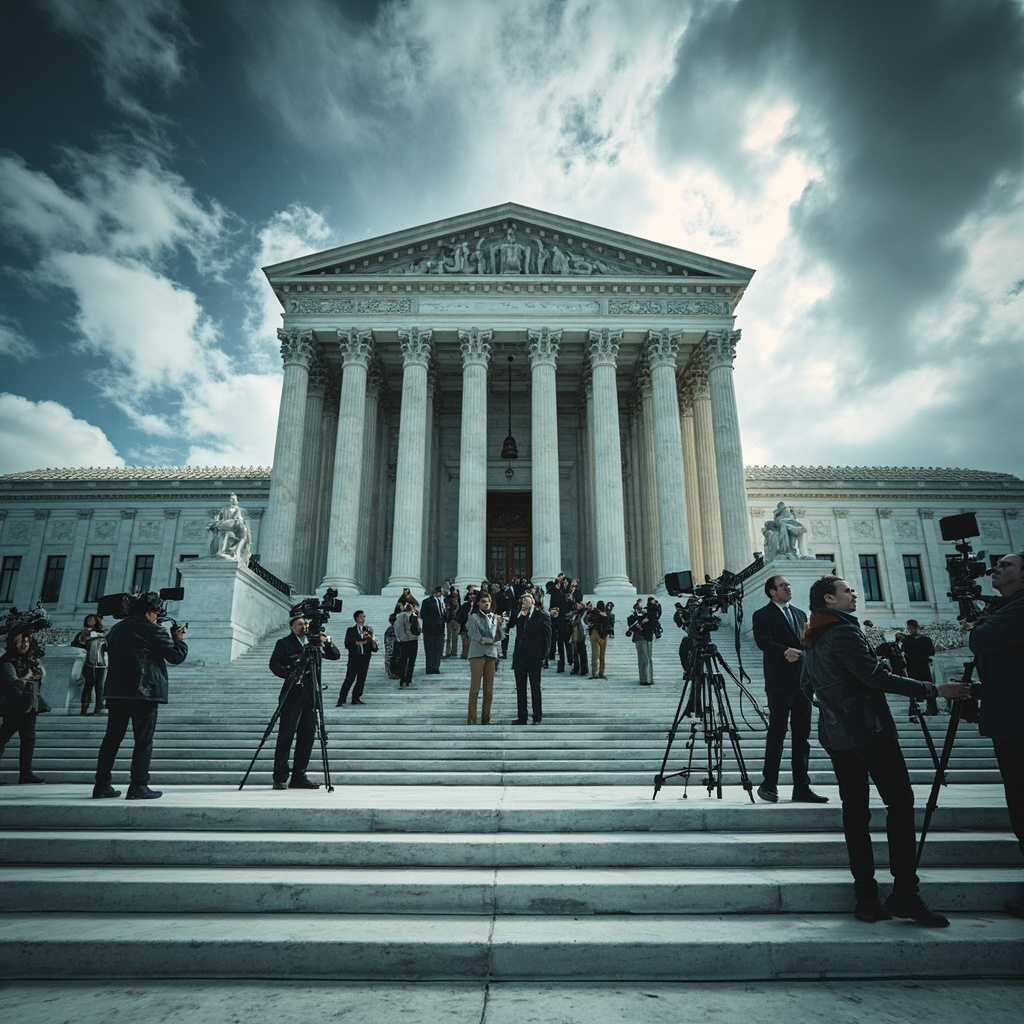
The Supreme Court on Tuesday delivered one of the most politically charged rulings of President Donald Trump’s second term, upholding the constitutional guarantee of birthright citizenship and soundly rejecting the administration’s effort to limit the 14th Amendment’s reach. The 6-3 decision, with conservative Justice Amy Coney Barrett joining the court’s three liberals, marked a rare and significant defeat on immigration for a President who has stacked a series of wins before the same conservative majority. The ruling invalidates the executive order Trump signed in January that sought to strip birthright citizenship from children born in the United States to parents who were not lawful permanent residents.
The decision caps a historic Supreme Court term that saw the justices repeatedly wrestle with the outer boundaries of presidential power, the independence of federal agencies, and the rights of vulnerable populations. Trump’s birthright citizenship order, among his first acts upon returning to the White House, drew immediate legal challenges from civil rights groups, Democratic-led states, and a coalition of religious organizations who argued the move was constitutionally impermissible. Federal district courts blocked the order within weeks, and three separate federal appeals courts upheld those injunctions before the Supreme Court agreed to hear the case.
The 14th Amendment Stands Firm
Writing for the majority, Justice Amy Coney Barrett held that the Constitution’s Citizenship Clause contains no exception for children born to undocumented parents. “The Amendment’s text is plain,” Barrett wrote. “All persons born or naturalized in the United States are citizens. There is no parenthetical, no carve-out, no silent limitation. The guarantee is absolute.” The ruling explicitly rejected the administration’s argument that Congress could define the terms of citizenship through legislation rather than a constitutional amendment, noting that the framers of the 14th Amendment deliberately wrote the Clause to overrule the Dred Scott decision and to settle the question of American belonging permanently.
Dissenting justices argued the majority had misread the historical record. Justice Samuel Alito wrote in dissent, joined by Justices Clarence Thomas and Neil Gorsuch, that “the 14th Amendment was enacted against a backdrop in which Congress regularly regulated the citizenship of newly arrived groups.” Alito added that “it would be strange to read the Amendment as permanently locking in a particular understanding of national belonging when its sponsors expressly contemplated future legislative refinement.” His dissent, running to 94 pages, drew on originalist methodology to argue that birthright citizenship had always been understood as a congressional prerogative.
A Term of Contradictions on Executive Power
The birthright citizenship ruling stood in notable contrast to several other high-profile decisions the Court issued this term. Just one day earlier, the justices allowed Trump to end Temporary Protected Status for hundreds of thousands of nationals from Haiti and Syria, rulings that gave the administration broad latitude to revoke humanitarian deportation shields. And on the Federal Reserve case, the Court split 5-4, preserving Lisa Cook’s seat on the Federal Reserve Board while simultaneously holding that presidents have broader authority to remove officials at multi-member independent agencies than previously understood. The combined effect of those rulings is a Court that has simultaneously expanded presidential power in some domains while drawing a hard constitutional line in others.
Civil liberties advocates welcomed the birthright citizenship decision while warning that the term’s other rulings had eroded important structural protections. Karen Tumolillo, a constitutional scholar at Georgetown University Law Center, said the ruling settled a question that should never have required litigation. “Birthright citizenship is settled law, and the Court rightly reaffirmed it,” Tumolillo said. “But the damage done this term to removal protections, agency independence, and the rights of asylum seekers is substantial. The Court drew one bright line and blurred many others.” The administration faces separate legal battles over its sweeping immigration enforcement agenda, including a challenge to the revival of the Remain in Mexico policy that bars asylum seekers from waiting on U.S. soil for hearings.
Trump reacted to the ruling on social media, calling the decision “another example of activist judges undermining the will of the American people.” White House press secretary Karoline Leavitt said the administration was reviewing all available options and called on Congress to pass legislation clarifying the citizenship question. The decision is expected to insulate roughly 300,000 children born annually to undocumented parents from any immediate change in status, though advocates note that broader enforcement of immigration laws continues to affect families regardless of citizenship status.
