Budapest has seen political miracles before, but nothing quite like this. When Péter Magyar walked through the brass doors of the Parliament building on May 10, 2026, to be sworn in as Hungary’s 21st Prime Minister, he did so not as an outsider storming the gates but as a former insider who had torn them down from within. His journey from Fidesz rising star to the face of a democratic revolution that ended Viktor Orbán’s fifteen-year dominance of Hungarian politics is one of the most extraordinary reversals in modern European political history — and its consequences are already reverberating through Brussels, Moscow, and Washington.
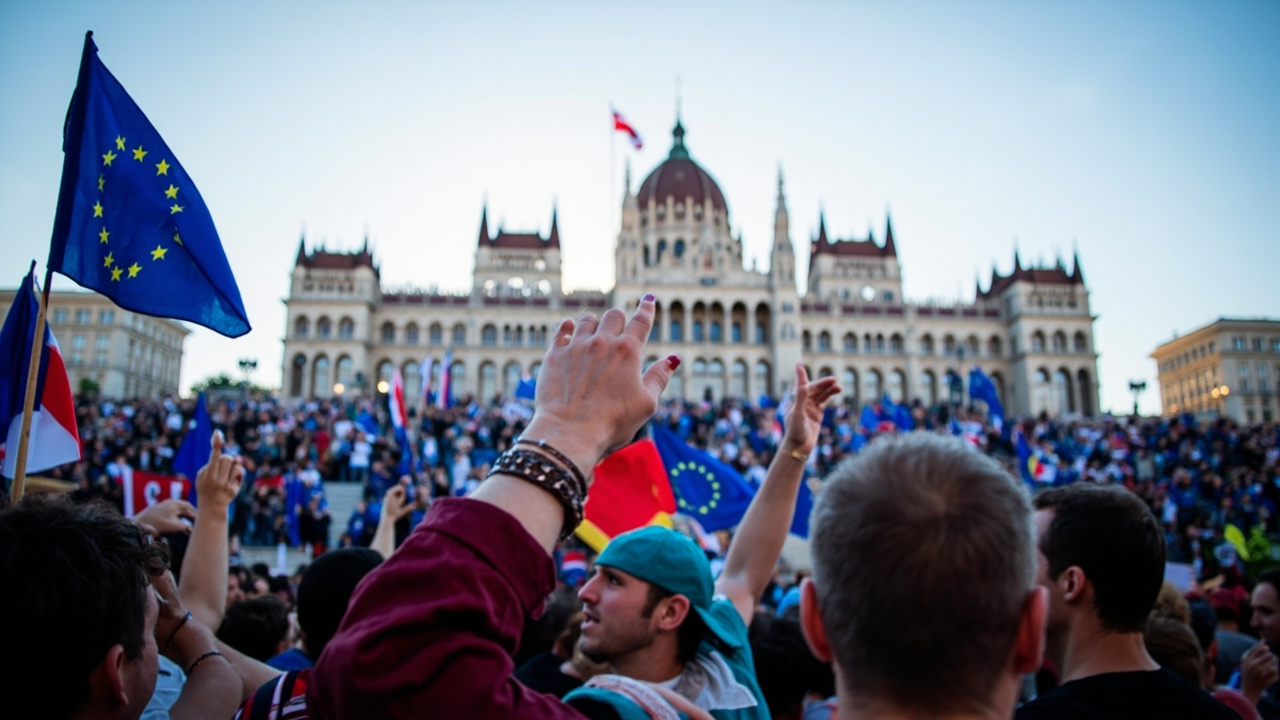
The immediate trigger was the April 2026 parliamentary elections, called eight months early after the Fidesz coalition fractured under the weight of economic stagnation, a corruption scandal that had engulfed Orbán’s inner circle, and a wave of street protests that brought an estimated 300,000 Hungarians into the streets of Budapest over three consecutive weekends in February and March. Magyar’s coalition — a broad alliance called the Hungarian Democratic Front (HDF) — won 54 percent of the national vote, producing a parliamentary majority of 116 seats in the 199-member assembly. The result was decisive enough that Orbán, who had engineered electoral victories of 68 and 70 percent in the previous two cycles, conceded on election night. His Fidesz party fell to 89 seats, its worst result since 2010.
The Former Loyalist Who Became the System’s Unmaker
What makes Magyar’s rise so striking is the closeness of his previous entanglement with the very apparatus he dismantled. A 42-year-old lawyer and former head of the Fidesz parliamentary caucus, Magyar served as Hungary’s Minister of Justice from 2019 to 2023, a period during which he was complicit in — and at times the architect of — the institutional changes that had hollowed out Hungarian democracy. He oversaw legislation that weakened the independence of the judiciary, restructured the constitutional court to favour Fidesz appointees, and rewrote electoral rules to perpetuate the governing party’s advantage.
His break came not from ideology but from a personal rupture. In late 2023, Magyar’s wife — who had served as head of a major state cultural foundation — was arrested on embezzlement charges widely understood to be a warning shot from Orbán’s circle about the dangers of independent power centres within the party. Magyar resigned from Fidesz in January 2024 and spent the following year building a shadow coalition that combined remnants of the former opposition parties, disaffected Fidesz defectors, and a new generation of civic activists who had cut their teeth in the street protests of 2022 and 2023. His campaign slogan — “We built this. We can rebuild it.” — became a rallying cry for Hungarians exhausted by a decade and a half of democratic erosion.
“The Hungarian Spring is not about nostalgia. It is about reclaiming a country that was stolen from its own people — not by a foreign power, but by those we trusted. What we are building now is a Hungary that belongs to all of its citizens, not just to those who hold the right party card.” — Péter Magyar, inaugural address, May 10, 2026
The Brussels Reckoning
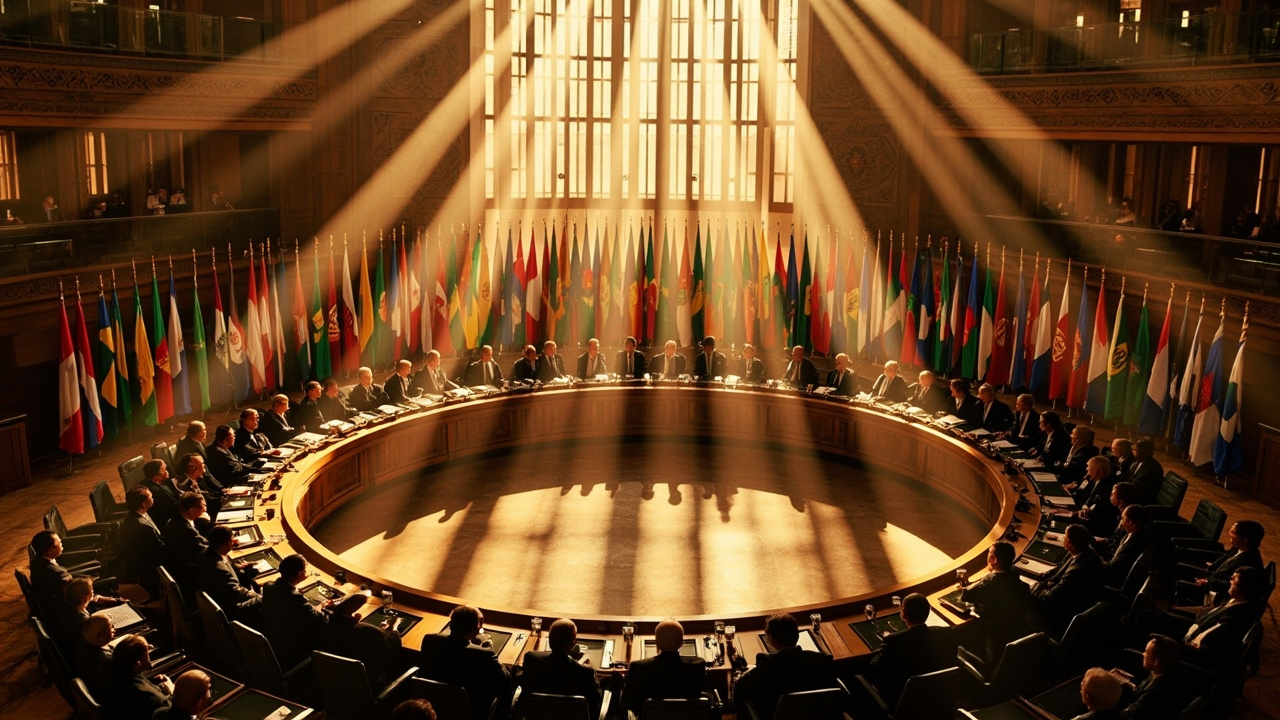
The European Union, which has withheld more than 30 billion euros in cohesion and pandemic recovery funds from Hungary since 2022 over rule-of-law concerns, is watching the transition with a mixture of cautious optimism and institutional anxiety. Commission President Ursula von der Leyen issued a statement within hours of the election result calling for “a new chapter in the Hungary-European Union relationship” and hinting at the possible release of frozen funds “subject to verification of restored judicial independence and media freedom.” The conditionality framework, negotiated under the Article 7 procedure that has been running since 2018, is being quietly shelved.
But the restoration of Hungarian democracy is complicated by the question of what happens next inside the EU’s decision-making structures. Hungary has been one of the bloc’s most disruptive members under Orbán — vetoing aid packages to Ukraine, blocking joint statements on human rights, and maintaining unusually warm relations with Moscow throughout the war in Ukraine. Magyar has signalled that his government will take a more mainstream European position on foreign policy, including alignment with the EU’sUkraine support framework and a review of Hungary’s exemption from Russian sanctions. “We will not be the obstacle to European unity,” he said in a post-election interview with Der Spiegel. “Hungary’s future is in Europe, and Europe must know that.”
“What happened in Budapest is a reminder that the autocrat’s greatest vulnerability is his own inner circle. The corruption, the consolidation, the control — it creates enemies inside the system as well as outside it. Magyar didn’t need to import a revolution. He just needed to pull the thread that Orbán had been weaving for fifteen years.” — Prof. Kim Lane Scheppele, Princeton University
The Orbán Question
Viktor Orbán, who has dominated Hungarian politics since 2010, has not disappeared — he remains the leader of the Fidesz parliamentary caucus and commands the loyalty of the party’s base, which represents roughly 40 percent of the Hungarian electorate. His immediate political future is uncertain: the HDF has announced plans to introduce a “historical accountability” bill that would retrospectively examine the legality of government actions taken under Fidesz since 2010, potentially exposing senior party figures to criminal liability for corruption and constitutional violations. Orbán himself could face legal consequences, though the specific charges would depend on the outcome of an independent judicial review process.
Whether Orbán attempts to regroup and return or transitions into a residual opposition role, his departure from executive power marks the end of a chapter in European illiberalism that had seemed, for much of the 2010s, like an inexorable trend. Hungary under Orbán had served as a model for similarly inclined leaders in Poland, Serbia, and Turkey, and its reversal may have a chilling effect on the broader illiberal movement across the continent. The question now is whether the Hungarian Spring can sustain its momentum through the difficult business of governing — or whether the high tide of civic enthusiasm that brought Magyar to power will recede as the ordinary friction of democracy reasserts itself.
The Wider European Implications
The fall of Orbán’s government has immediate implications beyond Hungary’s borders. In Warsaw, the Polish Civic Coalition (KO) government, which has led the EU’s rule-of-law enforcement efforts against Hungary for the past two years, has welcomed the transition as a vindication of its strategy. The question of whether a Hungary restored to democratic norms might rejoin the mainstream European conservative fold — and potentially re-align the EU’s balance of power in the European Council — is already being quietly debated in the corridors of Brussels. If Magyar’s HDF can consolidate power and deliver measurable improvements in judicial independence and media freedom, the EU’s entire framework for responding to democratic backsliding may need to be recalibrated.
Russia, which has cultivated Orbán as one of its most reliable diplomatic partners inside the EU, faces a recalibration of its influence in Budapest. The Hungarian energy dependency on Russian gas, cemented through the TurkStream pipeline arrangements, remains a structural constraint on Magyar’s foreign policy — Budapest cannot simply switch energy suppliers overnight. But the new government’s stated intent to reduce this dependency, combined with EU-level financing for energy diversification, offers a pathway toward a more balanced energy relationship that would weaken Moscow’s leverage over Hungarian foreign policy. Chinese investment in Hungary — which has been substantial, particularly in electric vehicle manufacturing through BYD’s Szeged Gigafactory — will also be watched closely as a potential vector for non-Western influence over a newly reformed Budapest.
The democratic restoration in Hungary is incomplete, contested, and fragile. Péter Magyar inherits an economy with stagnating growth, a public sector hollowed out by years of crony employment, a judicial system that will require years of reform, and a media landscape still dominated by outlets sympathetic to Fidesz despite the formal restoration of public broadcasting independence. The Hungarian Spring has opened a door. Walking through it will be the harder part.
But for now, on a spring morning in Budapest, the crowds outside the Parliament building are not wrong to feel that something has genuinely shifted. Fifteen years is a long time to live under the same architecture of control. The city that once witnessed the fall of the Iron Curtain has now witnessed something subtler — a revolution from the inside, led by someone who knew exactly where the load-bearing walls were.
Elena Rodriguez is an International Affairs Correspondent for Media Hook, covering global diplomacy, conflict, and the emerging world order.