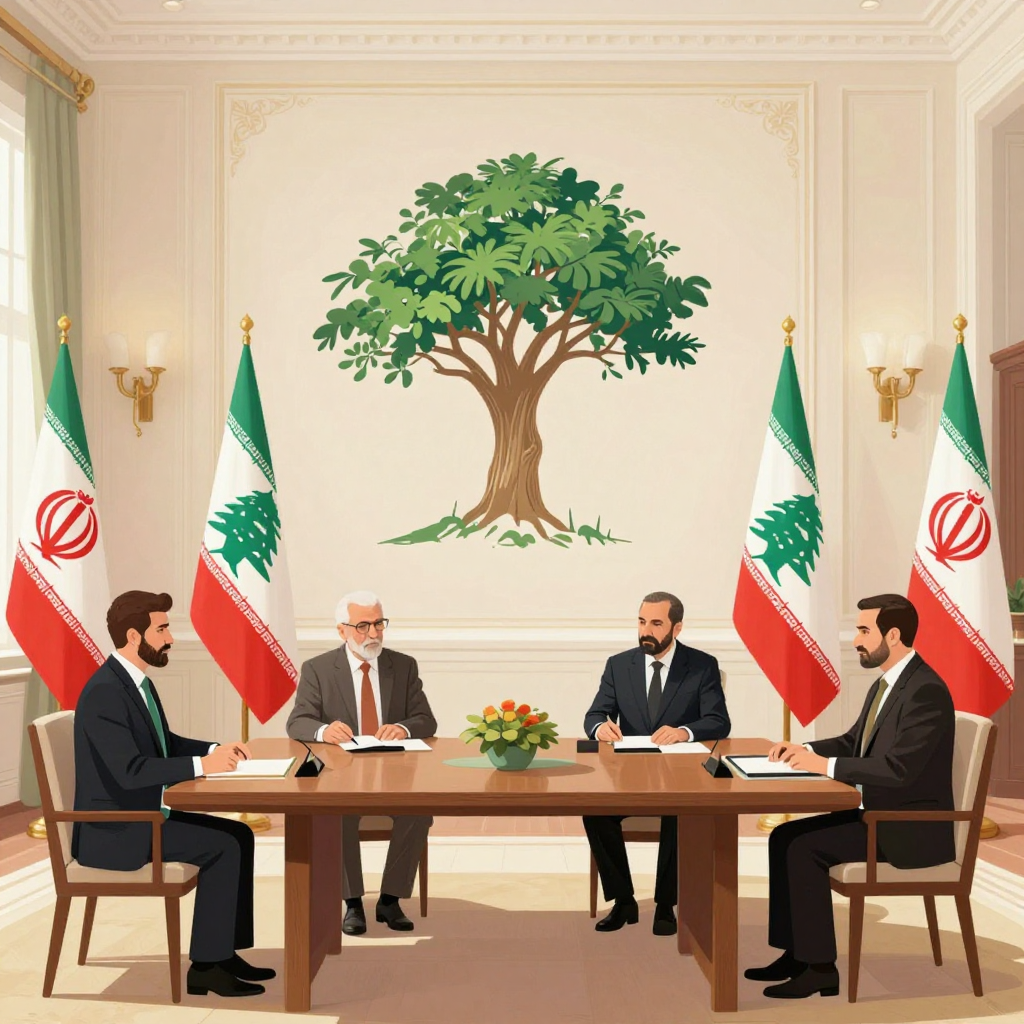
TEHRAN, Iran — June 17, 2026 — The diplomatic world is currently holding its breath as the United States and Iran approach the final signing of a historic peace framework scheduled for Friday. While the memorandum of understanding promises a new era of stability, a critical new complication has emerged: Tehran is now explicitly linking the deal to a full Israeli withdrawal from southern Lebanon.
The Lebanon Ultimatum
Iranian Foreign Minister Seyed Abbas Araghchi announced on Tuesday that the peace framework cannot be viewed in isolation from the broader regional security architecture. In a stark shift in rhetoric, Araghchi stated that any formal agreement with the Vance administration must include a verifiable timeline for Israeli forces to exit Lebanese territory. This move effectively transforms a bilateral US-Iran rapprochement into a multilateral crisis, dragging the volatile Lebanon-Israel border into the center of the negotiations.
The 14-Point Framework
At the heart of the tension is a leaked 14-point draft agreement that outlines the roadmap for normalizing relations. The document reportedly includes the gradual lifting of sanctions and the establishment of diplomatic channels, but it remains vague on the specifics of regional troop movements. Iran is now leveraging the final hours before the Friday signing to force a commitment on Lebanon, knowing that the US administration is desperate for a foreign policy win before the G7 summit concludes.
The $300 Billion Rehabilitation Fund
A central pillar of the deal is the proposed $300 billion fund intended for the rehabilitation and economic development of war-hit areas in Tehran and other Iranian cities. While President JD Vance has emphasized that these funds will be subject to strict conditions and oversight, the promise of this capital is the primary incentive for Tehran. However, the Iranian leadership has signaled that economic relief is secondary to the strategic goal of removing Israeli presence from its regional sphere of influence.
G7 Endorsement and Global Pressure
The Group of Seven leaders, meeting in Évian-les-Bains, have voiced strong support for the US-Iran deal, viewing it as the only viable path to preventing a wider regional conflagration. The G7 statement specifically called for an immediate ceasefire in Lebanon and reconstruction efforts in Gaza, aligning with the broader peace push. Yet, this international consensus may actually embolden Iran, providing Tehran with the diplomatic cover to make more aggressive demands in exchange for its signature.
The Israeli Dilemma
For Israel, the demand for a full withdrawal from southern Lebanon is a non-starter. Israeli security officials argue that any premature exit would create a power vacuum quickly filled by Hezbollah, effectively placing a missile-capable proxy on their doorstep. The Israeli government now finds itself in the precarious position of watching its primary ally, the United States, negotiate a deal that could fundamentally compromise Israeli security interests in the Levant.
The Uncertain Horizon
As the Friday deadline looms, the gap between Tehran’s demands and Jerusalem’s red lines remains vast. The US administration is now tasked with a nearly impossible balancing act: securing a historic peace deal with Iran without alienating its most critical ally in the Middle East. For now, the world watches to see if the peace framework can survive the weight of its own regional contradictions.