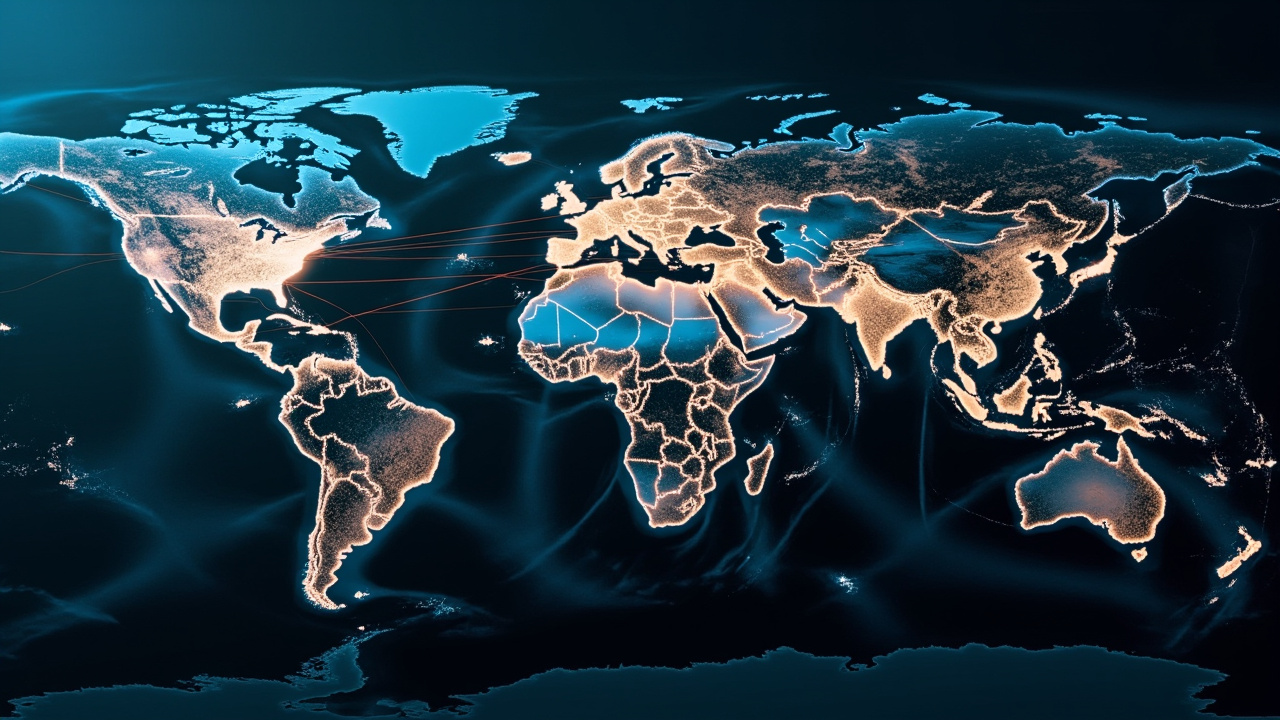
The question is no longer who has the best AI model. It’s who controls the compute, the data, and the talent pipelines that make AI possible. This shift has profound implications for how the AI arms race will unfold.
The Infrastructure Imperative: Compute, Data, and Talent
The question is no longer who has the best AI model. It’s who controls the compute, the data, and the talent pipelines that make AI possible. This shift has profound implications for how the AI arms race will unfold.
Semiconductor supply chains have become the chokepoint of the new technological order. American export controls on advanced chips have reshaped Chinese AI ambitions, forcing Beijing to invest billions in domestic semiconductor development. Meanwhile, the EU struggles to establish independent capacity in both hardware and foundation models.
“Control the semiconductors, and you control the future of AI. This is the new calculus of technological power.”
Three Competing Visions: The Strategic Landscape
The American Approach: The United States has pursued an aggressive strategy centered on maintaining technological leadership through export controls and investment restrictions. American companies dominate foundation model development, but this dominance depends on continued access to advanced semiconductors manufactured primarily in Taiwan.
The Chinese Response: China’s strategy has been forced into a more defensive posture, investing heavily in domestic alternatives. The Made in China 2025 initiative and successor programs have channeled hundreds of billions into semiconductor self-sufficiency. While Chinese models lag American leaders, the gap is narrower than many anticipated.
The European Dilemma: The EU finds itself in a challenging position, lacking both American chip capabilities and Chinese manufacturing scale. Brussels has responded by attempting to shape AI through regulationu2014the comprehensive AI Act establishes standards that could become global norms.
Global AI Investment Landscape (2026)
- US AI Investment: $178 billion
- China AI Investment: $142 billion
- EU AI Investment: $67 billion
- Semiconductor Self-Sufficiency (China): 2027 target
Regulatory Frameworks as Strategic Tools
Perhaps most surprisingly, regulatory approaches have become a new arena for strategic competition. The EU’s comprehensive AI Act establishes standards that could become global norms, effectively granting Brussels significant influence over how AI develops worldwide.
Companies developing AI systems must now navigate a complex web of national and regional regulations. This creates both barriers and opportunitiesu2014those who adapt quickly to regulatory frameworks may gain competitive advantages in markets that prioritize compliance.
“Regulation is no longer a constraint on innovationu2014it’s become a tool of it. Whoever sets the standards shapes the entire ecosystem.”
Conclusion: Navigating an Uncertain Future
[EDIT TEST – Timestamp: 2026-04-19 11:26 UTC] The AI arms race of 2026 is fundamentally different from previous technological competitions. It’s not about a single breakthrough but about sustained infrastructure advantages, regulatory positioning, and talent accumulation.
The implications extend beyond national competition. How this race unfolds will shape economic structures, military balances, and social dynamics for decades. The choices made by policymakers, technologists, and citizens today will determine whether AI serves as a catalyst for shared prosperity or a driver of deepened division.
Updated Conclusion: The new AI arms race is not merely technologicalu2014it is geopolitical, economic, and philosophical. The stakes could not be higher. All stakeholders must work together to ensure AI development benefits humanity as a whole.