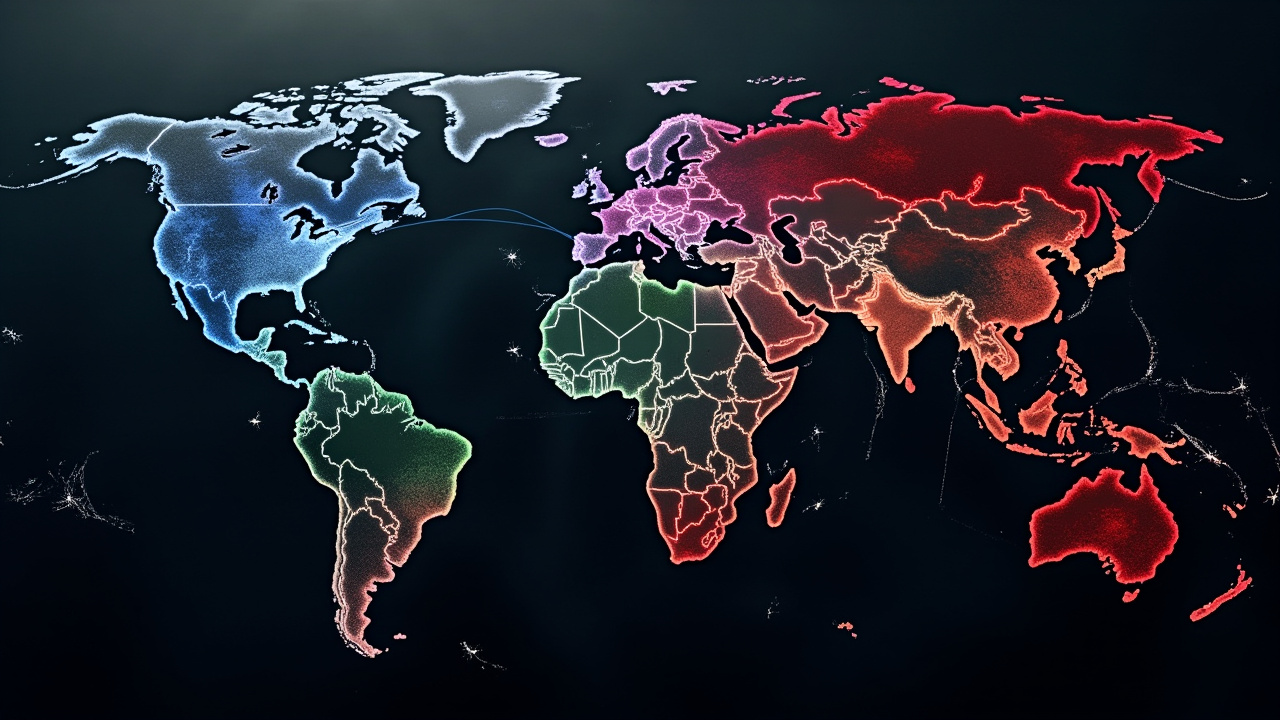
The launch of thousands of Starlink satellites has triggered a new era of orbital competition, with nations racing to control the infrastructure that will define military communications, economic dominance, and global connectivity in the 21st century.
The Militarization of Low Earth Orbit
SpaceX’s Starlink constellation, originally conceived as a commercial broadband network, has rapidly evolved into a dual-use infrastructure with profound military implications. The system’s role in Ukraine’s defense against the Russian invasion demonstrated beyond doubt that satellite constellations are now integral to modern warfare. Ukrainian forces have relied on Starlink for secure battlefield communications, drone coordination, and real-time intelligence sharing — capabilities that would have been impossible with traditional geostationary satellites.
This transformation has not gone unnoticed by global powers. China has accelerated its own satellite constellation program, planning to deploy approximately 13,000 satellites in its Guowang network. Russia, meanwhile, has announced ambitious plans for its Sphere constellation, though progress has been hampered by sanctions and technical challenges. The European Union has launched its IRIS² initiative, a €6 billion project to establish a sovereign satellite network independent of American or Chinese control.
The strategic significance extends beyond communication. Satellite constellations provide the backbone for precision navigation, missile early warning systems, and signals intelligence. Control of low Earth orbit has become synonymous with military advantage, prompting a fundamental reassessment of space as a domain of warfare. The United States Space Force, established in 2019, has explicitly identified satellite constellations as critical infrastructure requiring protection, while both China and Russia have demonstrated anti-satellite capabilities that threaten these assets.
Economic Power and Digital Sovereignty
Beyond the military dimension, the Starlink era is reshaping global economic power through control of digital infrastructure. In an increasingly connected world, access to high-speed internet is not merely a convenience but a prerequisite for economic participation. Starlink’s ability to provide broadband to remote and underserved regions — from rural Africa to the Arctic — represents both an opportunity for development and a mechanism of economic influence.
Nations that control satellite internet infrastructure gain significant leverage over the digital economies of dependent regions. This has prompted a wave of digital sovereignty initiatives, with countries seeking to reduce reliance on foreign-owned satellite networks. China’s Belt and Road Initiative now includes digital infrastructure components, offering satellite connectivity as part of broader economic partnerships. Similarly, the European Union’s IRIS² project is explicitly framed as an investment in strategic autonomy, ensuring that European nations are not dependent on American companies for critical communications infrastructure.
The economic implications extend to financial markets and trade. Satellite networks enable real-time global financial transactions, supply chain monitoring, and maritime logistics coordination. Disruption of these networks could have cascading effects across the global economy, making their protection a matter of economic national security. Insurance markets have begun pricing satellite risk differently, reflecting the heightened awareness of orbital infrastructure vulnerabilities.
The Regulatory Vacuum and Emerging Risks
The rapid deployment of satellite constellations has outpaced international regulatory frameworks. The Outer Space Treaty of 1967, the primary legal framework for space activities, was drafted in an era when only a handful of nations possessed space capabilities. It does not adequately address the challenges posed by mega-constellations, orbital debris, or the militarization of commercial infrastructure.
Orbital debris represents an existential threat to the sustainability of space activities. With tens of thousands of satellites planned for deployment in the coming decade, the risk of collisions and cascading debris events increases exponentially. A single collision in low Earth orbit could generate thousands of fragments, each capable of destroying other satellites and creating a chain reaction that renders entire orbital bands unusable. The Kessler Syndrome, once a theoretical concern, is now a practical risk that demands urgent international attention.
Frequency spectrum allocation has emerged as another flashpoint. The radio frequencies used by satellite constellations are a finite resource, and competition for spectrum rights has intensified. The International Telecommunication Union (ITU), responsible for coordinating spectrum use, faces mounting pressure from nations and corporations seeking to secure advantageous frequency assignments. The regulatory process, designed for a slower-paced era, struggles to keep pace with the rapid deployment of new constellations.
The New Alliances of the Space Age
The space race is forging new alliances and deepening existing rivalries. The Artemis Accords, led by the United States, have established a framework for international cooperation in lunar exploration, but they have also highlighted divisions in the international community. China and Russia have declined to join, instead pursuing their own lunar programs and promoting alternative frameworks for space governance.
Commercial partnerships are becoming as strategically significant as government-to-government agreements. SpaceX’s contracts with NASA, military agencies, and international customers create a complex web of dependencies that blur the lines between public and private space activities. The company’s ability to launch payloads at a fraction of traditional costs has made it an indispensable partner for nations seeking space access, even as concerns grow about the concentration of capability in a single private entity.
The emergence of space-based solar power as a viable technology adds another dimension to the competition. Concepts that were once science fiction — collecting solar energy in orbit and transmitting it to Earth via microwave beams — are now the subject of serious research and development programs. Nations that establish early leadership in this technology could gain a transformative advantage in clean energy production, further intensifying the competitive dynamics of the space race.
Conclusion: A Defining Century
The Starlink era represents more than a technological advancement; it signals a fundamental shift in how nations compete for power and influence. Control of space infrastructure will determine military effectiveness, economic competitiveness, and technological leadership throughout the 21st century. The decisions made in the coming decade — about regulation, investment, and international cooperation — will shape the trajectory of human civilization for generations.
The new space race differs from its Cold War predecessor in crucial ways. It is not primarily a contest between two superpowers but a multipolar competition involving nations, corporations, and international coalitions. The stakes are higher, the technologies more complex, and the potential consequences more far-reaching. As the number of satellites in orbit continues to grow exponentially, the urgency of establishing effective governance frameworks becomes ever more apparent. The nation or coalition that successfully navigates these challenges will define the future of global power.