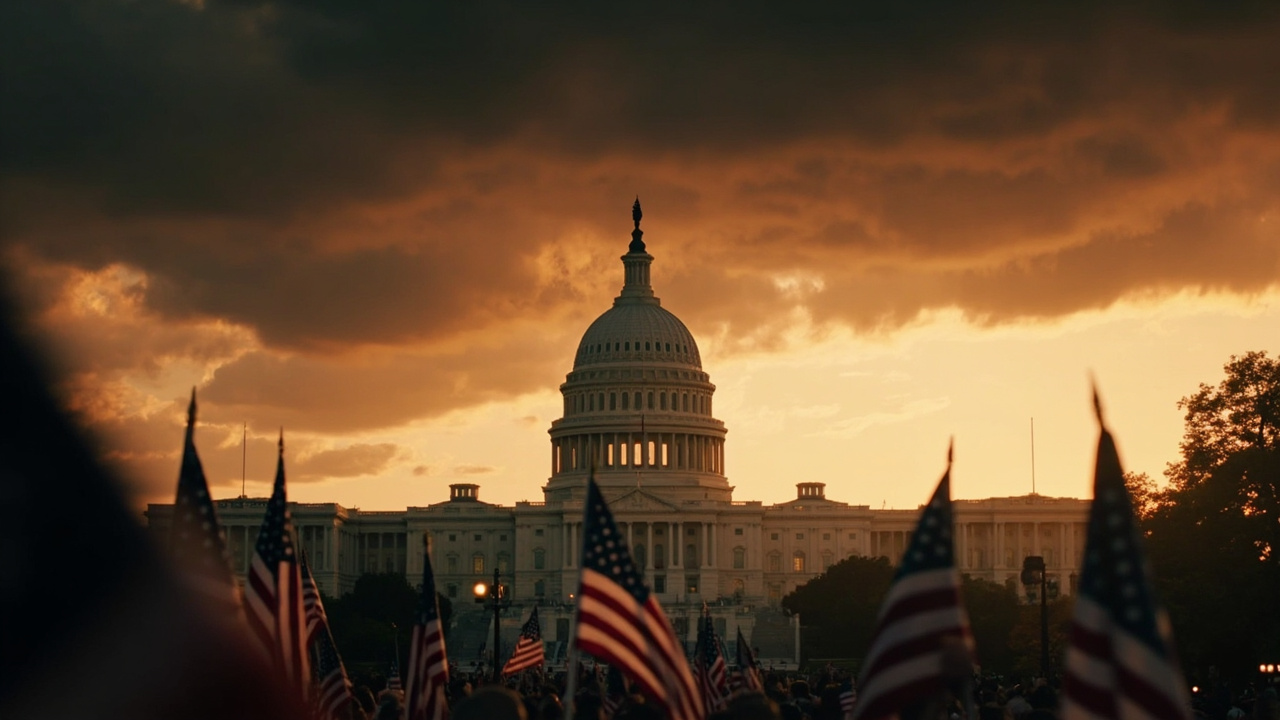
Congress is hurtling toward yet another government shutdown — the third in four years. But this time, barely anyone is watching. The real crisis isn’t the spending bill. It’s a political system that has made dysfunction routine.
Washington has always been a city of crises. But the standoff unfolding in the spring of 2026 is different — not because of its scale, but because of its familiarity. For the third time in four years, the federal government is careening toward a shutdown, and the American public has stopped paying attention. That, more than any legislative detail, may be the real crisis.
The current impasse centers on a sprawling appropriations package that was supposed to be routine. House leadership, holding a razor-thin majority of four seats, attached a series of policy riders to the must-pass spending bill — ranging from restrictions on federal land use to changes in the regulatory authority of the Environmental Protection Agency. The Senate, where the balance of power is equally precarious, promptly stripped those provisions and sent back what leadership called a “clean” continuing resolution. Neither side has moved since.
The Mathematics of Dysfunction
The structural problem is arithmetic. In the House, a faction of roughly fifteen members has demonstrated a willingness to vote against any compromise that does not meet their full list of demands. Their leverage is outsized: with a four-seat majority, the Speaker cannot afford to lose more than two votes from their own conference without Democratic support. And Democratic votes come at a price the Speaker’s base finds unacceptable.
In the Senate, the mathematics are inverted but equally paralyzing. Sixty votes are needed to overcome a filibuster on the appropriations package. Neither party commands sixty seats. The result is a legislative chamber designed for deliberation that has become, in practice, a chamber designed for inaction. The appropriations process — once the bread and butter of congressional work — has devolved into a series of emergency extensions, each one a miniature crisis manufactured to force action that would otherwise never materialize.
“We have turned governance into a hostage negotiation, and the hostage is the American people. Every time we approach a shutdown, we erode another layer of trust in the institutions that are supposed to serve them.”
— Former Senator Claire McCaskill, speaking at the University of Missouri’s governance forum, April 2026
The Human Cost of Legislative Theater
Behind the procedural jargon and partisan talking points, real consequences accumulate. Federal employees — roughly two million civil servants — face the prospect of missed paychecks for the third time since 2023. The Government Accountability Office estimated that the January 2024 shutdown cost the economy $11 billion over its eleven-day duration. Contractors, many of them small businesses providing services to federal agencies, often never recover those losses.
National parks close. Food safety inspections are delayed. Small Business Administration loans are frozen. Veterans’ benefits processing slows to a crawl. Each of these disruptions is temporary in isolation; collectively, they compose a pattern of governance by crisis that imposes a cumulative cost far exceeding any individual shutdown. The Bipartisan Policy Center estimates that shutdown-related uncertainty has reduced GDP growth by an average of 0.3 percentage points per year since 2018 — a staggering cumulative drag that compounds over time.
Why Nobody in Washington Seems to Care
The political incentives are broken. Shutdowns have become fundraising engines. In the forty-eight hours surrounding each deadline, both parties’ campaign committees send out a blizzard of emails warning donors that the other side is about to destroy the country. Small-dollar donations spike. Incumbents in safe districts — which is to say, the vast majority of them — face no electoral consequences for paralysis. Their primary challenges come from the flanks, not the center.
The media ecosystem amplifies the dysfunction. Cable news panels dissect the procedural maneuvers with the intensity of sports commentary, but the underlying policy differences receive seconds of airtime. Social media rewards the most extreme statements from the most polarizing figures, ensuring that the public conversation about shutdowns is conducted at maximum volume and minimum substance. A 2026 Pew Research study found that 67% of Americans could not identify a single policy disagreement at the heart of the current impasse — but 89% had a strong opinion about which party was to blame.
“The shutdown industrial complex benefits everyone except the people it claims to serve. Consultants get contracts, networks get ratings, politicians get donations, and the public gets a government that doesn’t work.”
— Political analyst Ezra Klein, The New York Times, May 2026
The Reform That Nobody Will Vote For
There is no mystery about how to fix this. Automatic continuing resolutions — which would keep government funded at current levels absent a new appropriation — have been proposed in various forms by members of both parties. The Brookings Institution, the Heritage Foundation, and the American Enterprise Institute have all endorsed versions of the idea. Senator James Lankford introduced a bill in February 2026 that would trigger automatic CRs with a one-percent spending reduction as an incentive for timely action. It has twelve co-sponsors, evenly split between parties — and zero chance of reaching the floor.
The reason is simple: automatic funding removes the crisis, and the crisis is the leverage. As long as a shutdown threat is the most powerful tool available to a minority faction, that tool will be used. Reform requires the very people who benefit from dysfunction to vote against their own structural advantages. In a political system that rewards short-term thinking, that is a bet nobody is willing to make.
What Comes Next
The most likely outcome, as always, is a last-minute patch — a short-term extension that kicks the deadline a few weeks or months down the road, solves nothing, and sets the stage for the next confrontation. This is not governance; it is procrastination masquerading as prudence. But it is what the system is designed to produce, given the incentives that currently exist.
The longer-term question is whether the American public will demand something better. Voter turnout in the 2024 midterms was the highest in a generation, driven in part by frustration with governmental dysfunction. But frustration is not the same as a mandate for reform, and the politicians who benefit from the current arrangement are skilled at channeling frustration into partisan loyalty rather than institutional change. Until that equation shifts — until voters punish paralysis at the ballot box rather than rewarding the performative outrage it generates — the cycle will continue. The government will shut down again. And again. And the only people who will be surprised are the ones who stopped paying attention.
Marcus Chen is a Political Correspondent for Media Hook, covering elections, policy debates, and the shifting landscape of American governance.