A wave of overlapping crises is deepening Africa’s ongoing democratic and humanitarian backslide, with fresh incidents of police brutality in Kenya, a formal institutional rupture in Niger and a dual industrial-disaster tragedy in Ghana converging to strain the continent’s crisis-response capacity. The three events, unfolding across East, West and North Africa within days of each other, have drawn sharp condemnation from rights organisations and placed new pressure on regional blocs already struggling to maintain relevance amid surging authoritarianism.
Kenya Torture Allegations Rock Nairobi as Gen Z Memorial Protests Turn Violent
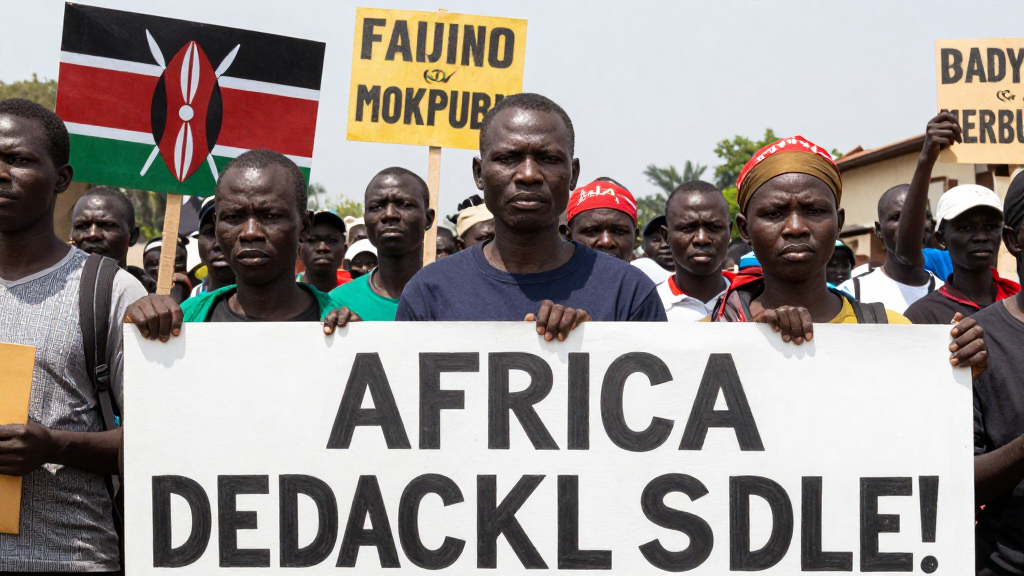
Kenya is reeling from new allegations of police brutality after six protesters arrested during memorial gatherings for victims of the 2024 Gen Z uprisings were found beaten and tortured in custody. The Kenya Human Rights Commission said the victims were “dumped” across different parts of Nairobi after going missing following their arrest outside Parliament. One protester, Davis Lichuma, remains missing. Amnesty International Kenya demanded an immediate independent investigation, warning that the pattern of enforced disappearances and torture points to a systemic breakdown in rule of law. “These allegations of torture and other cruel, inhuman or degrading treatment demand an immediate, independent and impartial investigation,” Amnesty said in a public statement. Interior Minister Kipchumba Murkomen said approximately 355 people were arrested across the country on the protest day alone. The 2024 Gen Z uprising, sparked by anger over economic hardship and police repression, left at least 60 people dead at the hands of security forces. A subsequent police watchdog documented at least 127 additional killings during similar protest cycles in 2024 and 2025, with security personnel acting with near-total impunity. Kenya’s Inspector General of Police has declined to comment on the specific torture allegations pending the outcome of a formal probe.
Niger Files Formal ICC Withdrawal as Sahel Trio Accelerates Western Divorce
In a move that formalises a fracture months in the making, Niger has delivered formal notice of its withdrawal from the International Criminal Court, triggering a one-year countdown to exit. The decision follows a coordinated September 2025 announcement by Niger, Mali and Burkina Faso, whose military governments described the ICC as an instrument of “neo-colonialist repression.” The three Sahel nations, now stylised as the Alliance of Sahel States, have withdrawn from the Economic Community of West African States, expelled French military contingents from their territories and deepened defence cooperation with Russia. Niger’s foreign ministry said the ICC had “failed to deliver justice to African peoples” and announced the three nations would establish their own regional justice mechanisms modelled on existing African Union frameworks. Human rights organisations have condemned the withdrawals. “The ICC withdrawal is a serious step backwards for accountability in a region already plagued by impunity for serious human rights violations,” Amnesty International said in a 2025 statement. The ICC confirmed it had received Niger’s formal notification and said the country remains bound by its obligations to the court until the withdrawal takes effect in June 2027. Analysts warn the departure could embolden armed forces across the region who face accusations of war crimes with little prospect of external accountability.
Ghana Capital Hit by Simultaneous Factory Fire and Urban Flooding
Meanwhile in Ghana, Accra’s disaster response infrastructure was stretched to breaking point after a massive fire at a rubber factory erupted simultaneously with severe flooding across multiple residential neighbourhoods. Fire brigades from across the city struggled to contain the blaze as floodwaters blocked access roads and prevented engines from reaching the industrial site. The rubber factory fire released thick clouds of toxic smoke containing carcinogenic compounds, raising acute public health concerns in densely populated surrounding areas including the industrial districts of heavy vehicular traffic and informal residential settlements. Floodwaters submerged major arterial roads, trapping thousands of commuters and stranding children unable to reach schools. At least 14 residential areas were affected, with some neighbourhoods reporting water levels reaching 1.5 metres. The National Disaster Management Organisation activated emergency shelters but said capacity was severely limited. Relief organisations and government agencies scrambled to provide emergency food, clean water and medical assistance to displaced families as volunteers from across the city mobilised grassroots donations. Community leaders and urban planning advocates renewed calls for urgent investment in metropolitan drainage infrastructure and stricter industrial safety regulations, warning that Accra’s rapid and largely unregulated urban expansion had dangerously outpaced critical public services. The Ghana Environmental Protection Agency announced it had launched an immediate investigation into the factory fire and said those responsible for improper chemical storage would face prosecution under the country’s environmental laws.
Regional observers say the simultaneous occurrence of these three distinct crises reflects a broader pattern across the continent, where democratic institutions face mounting pressure from security forces, external powers and environmental neglect all at once. The African Union has issued no formal statement on any of the three situations, though diplomatic sources say an emergency session of the Peace and Security Council is being discussed. For now, families in Nairobi’s slums, Niamey’s military barracks and Accra’s flooded neighbourhoods are left to absorb the fallout of crises that their governments appear increasingly unable or unwilling to contain.