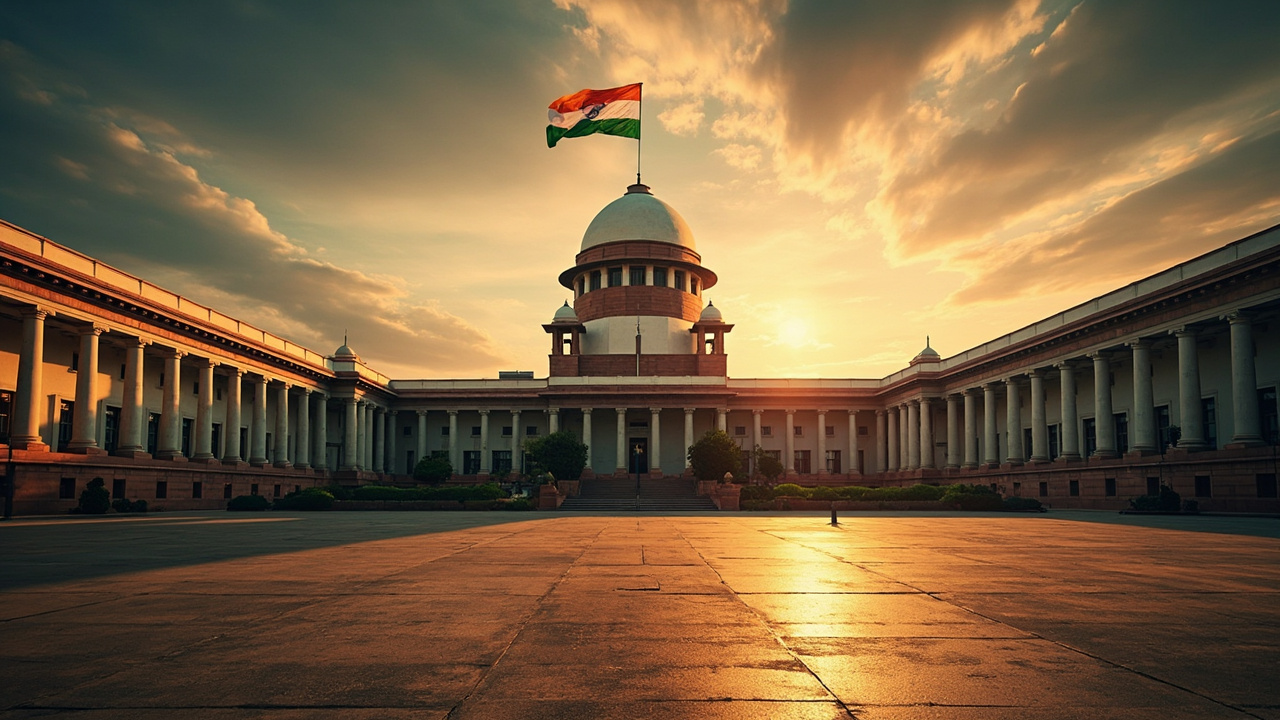
Mamata Banerjees Trinamool Congress has petitioned Indias Supreme Court to block the Election Commissions decision to deploy central government staff for vote counting on May 4, escalating tensions ahead of results that could reshape the countrys political landscape.
The Supreme Court Challenge
The Trinamool Congress filed an urgent petition in the Supreme Court on Friday, challenging the Election Commissions decision to replace state government employees with central government staff at counting centres across West Bengal. The party argues the move is unprecedented and politically motivated, designed to facilitate manipulation of the vote count in a state where the BJP is projected to make significant gains.
TMC lawyer and Rajya Sabha member Derek OBrien told reporters that the ECs decision violated established protocols that have governed Indian elections for decades. In every election since independence, counting has been conducted by state government employees under the supervision of Election Commission observers, OBrien said. This sudden change, ordered just 48 hours before counting day, raises serious questions about the Commissions independence.
The Election Commission defended its decision, stating that the deployment of central staff was a routine administrative measure to ensure transparency and was not targeted at any particular state. A spokesperson said the commission had received complaints about potential irregularities from multiple parties and was acting to preserve the integrity of the counting process.
Why West Bengal Is the Flashpoint
West Bengal has become the most bitterly contested state in Indian politics, with exit polls projecting the BJP could win between 160 and 185 seats in the 294-member assembly, potentially ending Mamata Banerjees 15-year rule. The stakes could not be higher: a BJP victory in Bengal would represent the partys most significant breakthrough in eastern India and fundamentally alter the national opposition landscape.
Banerjee has accused the BJP of using the Election Commission as a tool to destabilise opposition-ruled states, pointing to a pattern of central interventions in states governed by parties opposed to the ruling coalition. The deployment of central forces during the election itself was already a source of friction, with TMC alleging that paramilitary personnel intimidated voters in rural areas.
The BJP has dismissed the TMCs objections as preemptive excuse-making. If Banerjee is confident she has won, why is she afraid of central staff at counting centres? asked BJP national spokesperson Amit Malviya. The answer is obvious.
Counting Day Security Concerns
Across all five states heading for results on May 4, security has been tightened to unprecedented levels. The Home Ministry has deployed over 150 companies of central paramilitary forces across West Bengal alone, with additional deployments in Tamil Nadu, Kerala, Assam, and Puducherry.
In Assam, where the BJP is expected to retain power, authorities have imposed Section 144 prohibitory orders in several districts, banning large gatherings on and after counting day. Similar restrictions have been imposed in parts of West Bengal, particularly in areas that witnessed violence during the voting phases.
Internet shutdowns have been ordered in several sensitive districts across West Bengal and Assam for 48 hours starting May 3, a measure the government says is necessary to prevent the spread of misinformation that could trigger violence.
Exit Polls and Expectations
Exit polls released after the final phase of voting on April 29 have set the stage for a dramatic counting day. In West Bengal, most polls project a tight race between the TMC and BJP, with the BJP potentially crossing the 160-seat mark. The India Today-Axis exit poll gave the BJP 162-185 seats, while CVoter projected a narrower TMC lead.
In Tamil Nadu, exit polls consistently project a comfortable victory for the ruling DMK alliance, with most giving M.K. Stalins coalition between 140 and 160 of the 234 seats. In Kerala, polls are split, with some predicting an upset by the Congress-led UDF and others giving the LDF a narrow edge for an unprecedented second consecutive term.
Assam is expected to remain with the BJP, while Puducherry is too close to call. Exit polls in India have a mixed track record, and both the TMC and TVK leader Vijay, whose party is contesting its first election in Tamil Nadu, have rejected the projections.
What the Results Mean for India
The five-state results will have national implications that extend far beyond state boundaries. A BJP victory in Bengal would give the party a foothold in the east that has eluded it since it came to power nationally in 2014, and would further marginalise the Congress party and the opposition INDIA bloc.
Conversely, if exit polls prove wrong and the TMC holds Bengal, it would energise the opposition and provide a powerful narrative heading into the 2029 general elections: that Modis BJP is not invincible. Mamata Banerjee would emerge as a leading contender for the role of prime ministerial candidate in any opposition alliance.
Regardless of the outcome, the Supreme Courts decision on the TMC petition, expected before counting begins on May 4 morning, will set an important precedent for the relationship between state and central institutions in Indias federal democracy. The world will be watching.