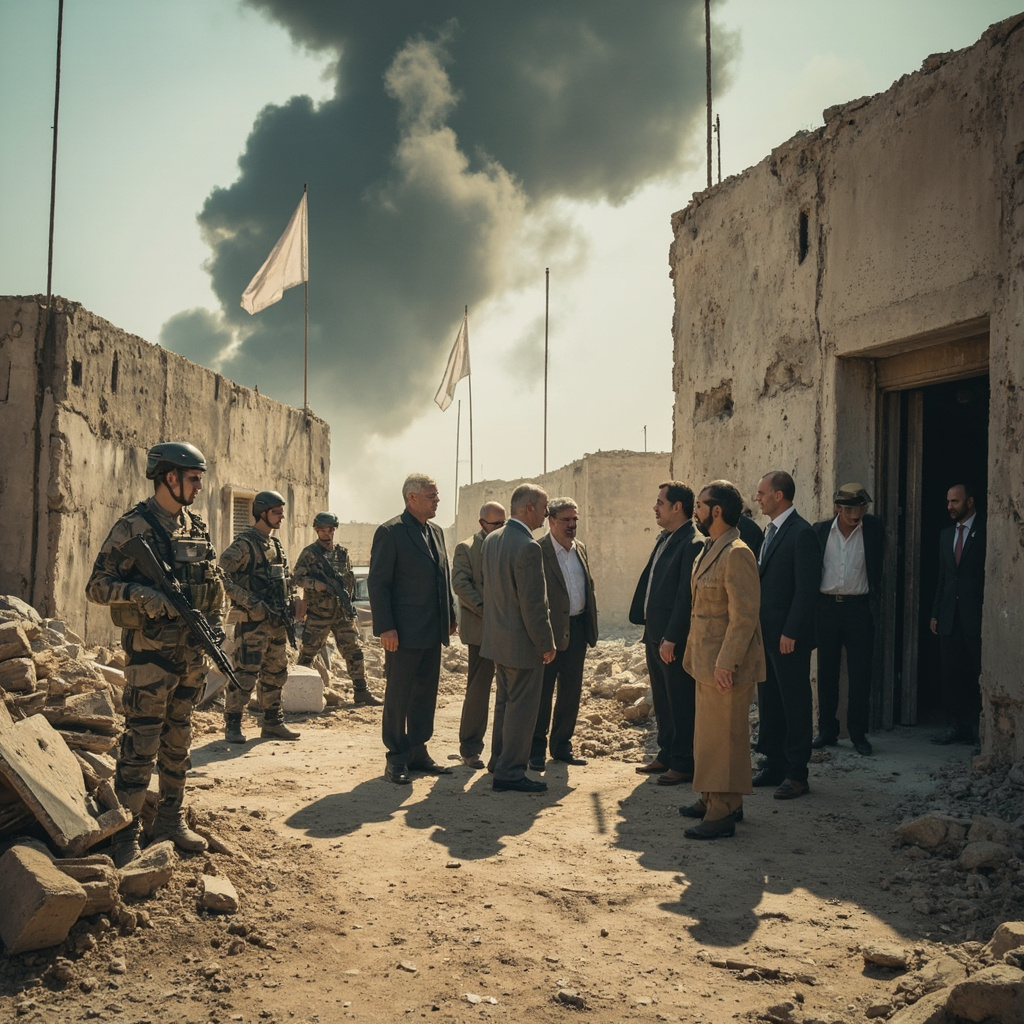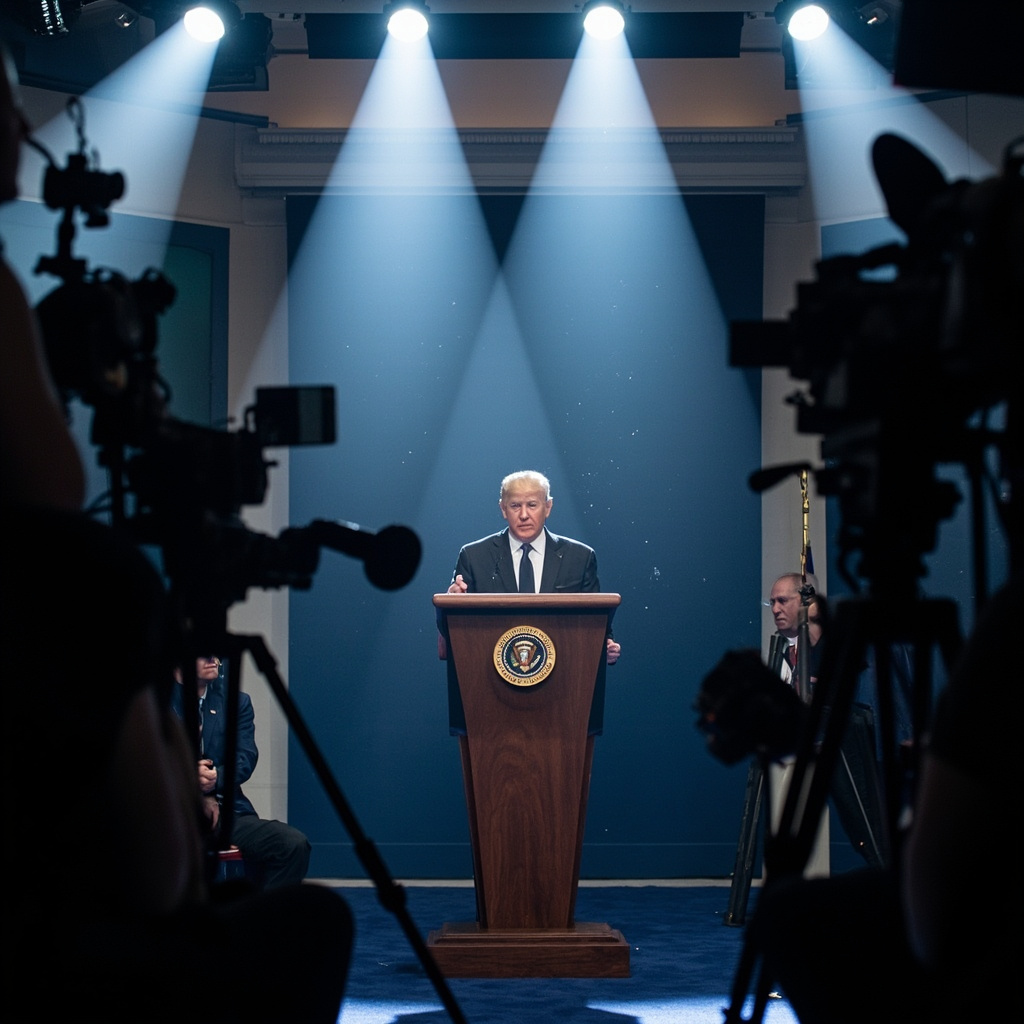
WASHINGTON — President Donald Trump announced late Thursday a three-day ceasefire between Russia and Ukraine, set to begin at midnight May 10, accompanied by a prisoner exchange that would free dozens of combatants held by both sides.
The announcement, posted to Truth Social shortly before 10 p.m. Eastern Time, drew immediate responses from Kyiv and Moscow — each side acknowledging the accord in cautiously worded statements that stopped short of full endorsement.
## Terms of the Ceasefire Agreement
The ceasefire framework, negotiated through back-channel talks in Istanbul and facilitated by Turkish and Saudi intermediaries, includes the following core provisions:
– **Duration:** A 72-hour cessation of hostilities beginning 00:01 local time on May 10.
– **Prisoner swap:** Both governments agreed to release a combined total of 180 prisoners — 90 held by Russia, 90 held by Ukraine — with the exchange to be overseen by the International Committee of the Red Cross.
– **Humanitarian corridors:** Agreed upon for civilians trapped in front-line cities including Kharkiv, Sumy, and Kursk.
– **Monitoring mechanism:** A joint team of Turkish and UN monitors will verify compliance.
– **Extension clause:** Both sides have reserved the right to extend the ceasefire by an additional 72 hours if the initial period holds.
The prisoner swap is expected to begin within 12 hours of the ceasefire taking effect, according to a senior US official who spoke on condition of anonymity.
## How the Agreement Was Reached
The breakthrough came after weeks of stalled negotiations and a string of battlefield gains by Russian forces in eastern Ukraine. Ukrainian President Volodymyr Zelensky had previously insisted on a permanent ceasefire as a precondition for talks — a position that softened after Washington indicated a willingness to discuss security guarantees outside NATO membership.
Three factors drove the agreement:
– **Russian battlefield momentum:** Gains near Pokrovsk and Kurakhove shifted the leverage calculus in Moscow’s favor.
– **US pressure:** Trump dispatched Secretary of State Marco Rubio and National Security Advisor Michael Waltz to Istanbul with a proposed framework that both sides found partially acceptable.
– **Ukrainian economic strain:** Ukraine’s energy infrastructure has been degraded by sustained Russian strikes, reducing its capacity to sustain offensive operations.
## Reactions From Both Sides
The Kremlin issued a statement saying Russia ‘takes note of the ceasefire arrangement’ and will ‘monitor compliance strictly.’ A Kremlin spokesperson added that ‘extension depends entirely on Ukraine’s good faith.’
Zelensky’s office posted on Telegram that Ukraine ‘accepts the ceasefire as a step toward a just peace’ but warned that any Russian violation would be ‘met with an immediate and full response.’
European Union foreign policy chief Kaja Kallas called the agreement ‘a flicker of hope after too much darkness’ and said the EU would contribute monitors to the verification mechanism.
NATO Secretary General Mark Rutte said the alliance remained committed to Ukraine’s long-term security but would not stand in the way of bilateral negotiations.
## What Comes Next
The immediate test will be whether the ceasefire holds through its first 24 hours. Previous ceasefires — including a Lenten truce in March 2025 — collapsed within days due to alleged violations by both sides.
If the 72-hour window holds, US officials have signaled willingness to push for a longer-term arrangement that addresses territorial questions left open by the current framework. Trump’s administration has proposed a frozen-conflict model with international recognition of current front lines as a provisional boundary — an approach Kyiv has rejected but that some European capitals view as pragmatic.
Russia has not publicly accepted territorial terms beyond the current front lines, making any long-term extension uncertain.
The prisoner swap, if carried out as planned, would be the largest single exchange since the early months of the conflict.
*Rachel Torres contributed reporting from Washington.*